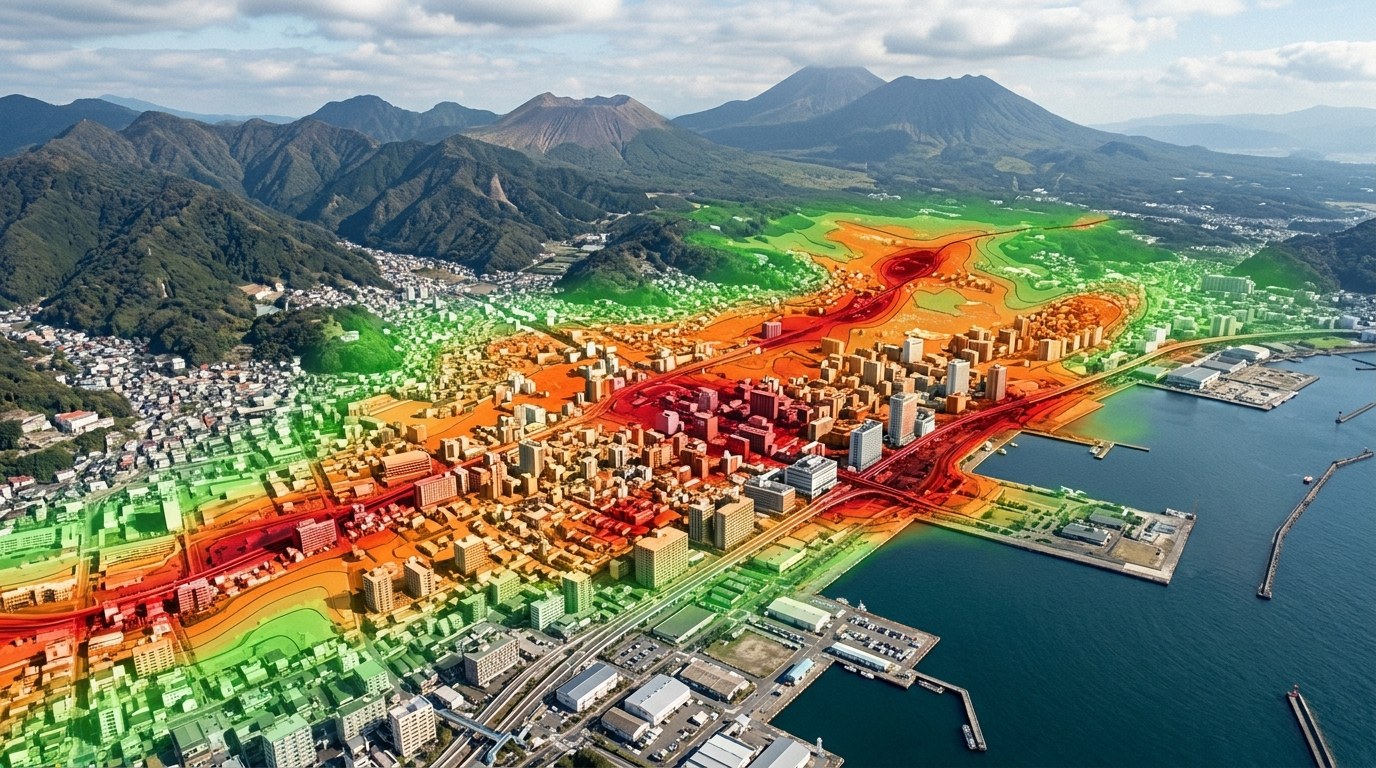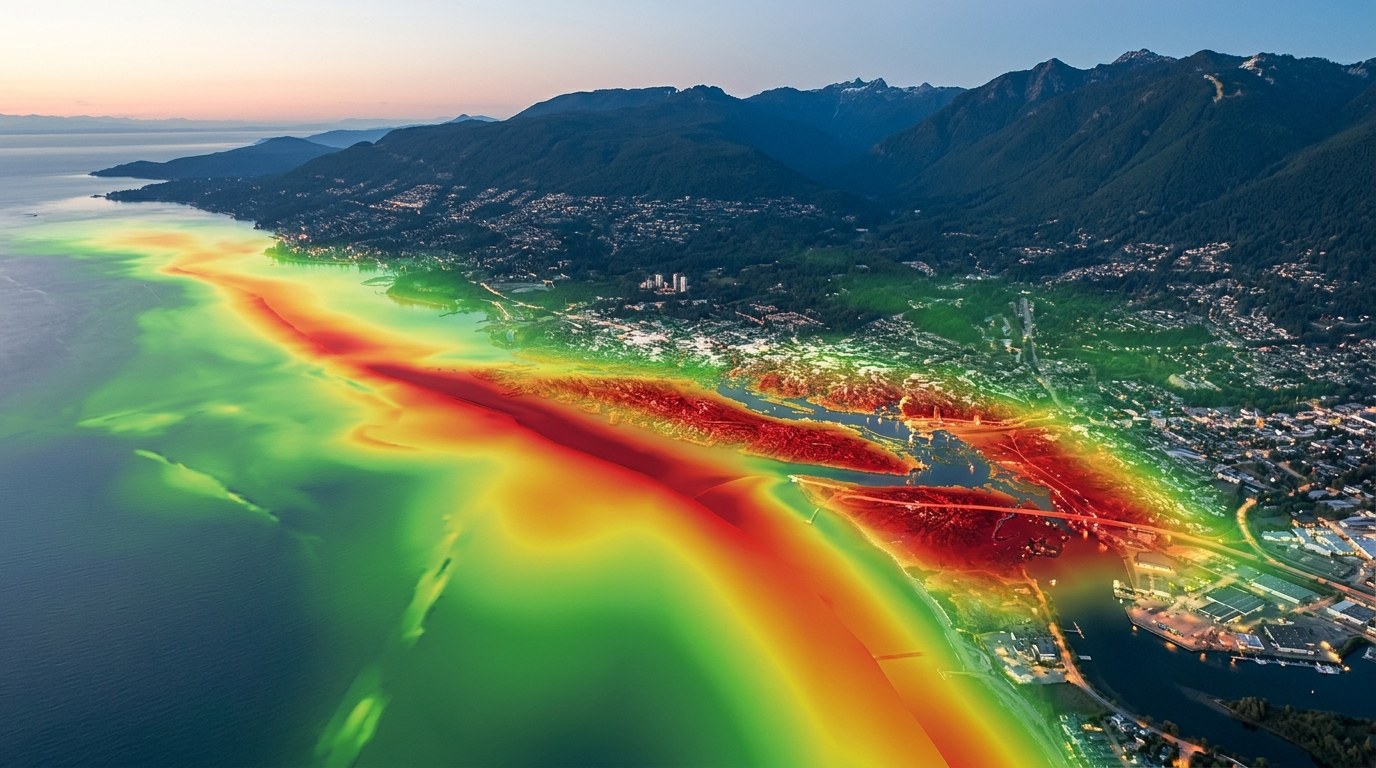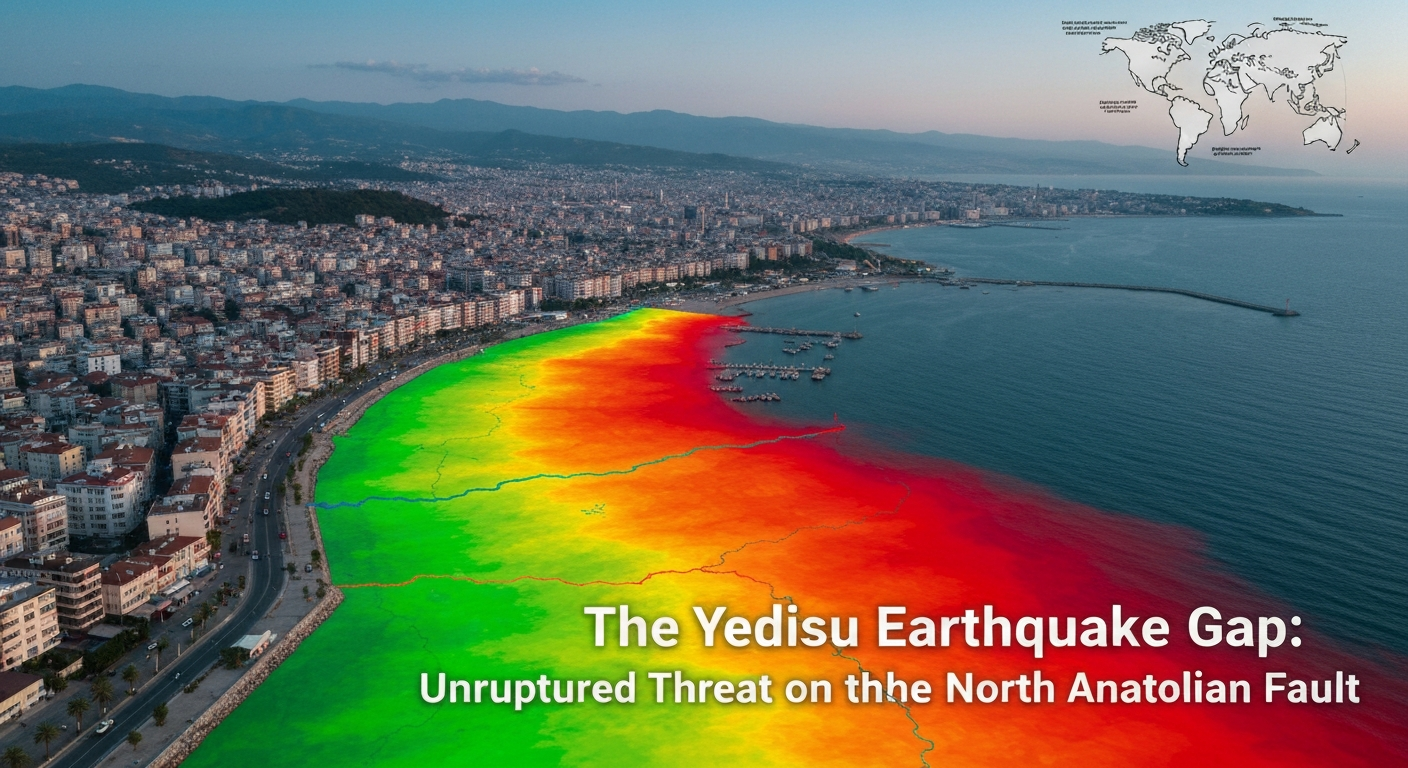
The North Anatolian Fault (NAF) stands as one of the world's most active and well-studied strike-slip fault systems, a relentless boundary where the Anatolian microplate grinds against the Eurasian plate. Its history is etched with a devastating sequence of large earthquakes, particularly a westward-propagating rupture sequence throughout the 20th century. Within this dynamic system lies a segment of profound concern: the Yedisu Seismic Gap. This unruptured stretch represents a critical zone of accumulated tectonic stress, holding the potential for a future major earthquake that could significantly impact the region.
At Talivio, our mission is to harness the power of artificial intelligence and advanced seismological data to provide actionable insights into seismic risk. This post will explore the complex geology and historical seismicity of the Yedisu Seismic Gap, detailing why it remains a focal point for seismic hazard assessment and how Talivio's AI-driven platform contributes to understanding and mitigating this silent threat.
The North Anatolian Fault and the Yedisu Gap's Critical Location
Spanning approximately 1200 kilometers across northern Turkey, the NAF accommodates roughly 20-25 mm/year of right-lateral strike-slip motion. Its historical activity is characterized by a series of large, often magnitude 7 or greater, earthquakes that have ruptured adjacent segments, progressively migrating westward. Notable events include the 1939 Erzincan (M7.9), 1942 Niksar (M7.0), 1943 Tosya (M7.2), 1944 Bolu-Gerede (M7.3), 1957 Abant (M7.1), 1967 Mudurnu (M7.1), and the devastating 1999 Izmit (M7.6) and Düzce (M7.2) earthquakes.
The Yedisu Seismic Gap is located in the eastern part of the NAF, specifically between the Karlıova triple junction to the east and the western termination of the 1939 Erzincan earthquake rupture zone. Geodetic measurements and seismic slip deficit analyses consistently indicate that this segment has been accumulating strain for centuries without a major release. Research suggests that this segment has not experienced a major earthquake since at least 1784, leading to a significant build-up of elastic energy [Hubert-Ferrari et al., 2002 — 10.1016/S0012-821X(02)00539-7]. The fact that it is bounded by segments that have ruptured in large events underscores its critical status as a potential site for a future large earthquake.
Historical Seismicity and the Accumulation of Strain
The concept of a 'seismic gap' arises from the observation that segments of major fault zones that have not experienced large earthquakes for a long time, while adjacent segments have, are often considered prime candidates for future ruptures. The Yedisu Gap perfectly fits this definition. The 1939 Erzincan earthquake, one of Turkey's largest recorded events, ruptured a segment immediately to the west of Yedisu, likely transferring significant stress onto the unruptured Yedisu segment. Similarly, events to the east have also contributed to the stress loading.
Historical records, while sometimes sparse for earlier centuries, combined with modern paleoseismological studies, confirm a prolonged period of seismic quiescence within the Yedisu segment. Geodetic studies, utilizing Global Navigation Satellite System (GNSS) data, provide compelling evidence of ongoing crustal deformation and strain accumulation. These data reveal that the Yedisu segment is currently locked, meaning it is not creeping aseismically but rather accumulating elastic strain energy that must eventually be released through an earthquake [Aktuğ et al., 2009 — 10.1016/j.jog.2008.08.002]. The estimated slip deficit over the past two centuries suggests that the segment has accumulated enough energy to generate an earthquake in the range of M7.0-M7.4, a magnitude consistent with the NAF's historical pattern of major ruptures.
Talivio's AI-Powered Assessment of Yedisu's Seismic Risk
Understanding the complex dynamics of seismic gaps like Yedisu requires more than historical analysis; it demands continuous, multi-faceted monitoring and advanced predictive modeling. Talivio's platform is engineered precisely for this purpose, integrating a vast array of seismic and geodetic data with state-of-the-art machine learning algorithms to provide dynamic risk assessments.
Our models process 102 distinct seismic features, offering a comprehensive view of subsurface processes. For the Yedisu Gap, key features informing our analysis include:
- GNSS Strain Rate: Direct measurements of crustal deformation from satellite data reveal the rate at which stress is accumulating across the fault segment. Talivio's analysis of GNSS data in the Yedisu region consistently indicates high strain accumulation rates, corroborating its locked status.
- b-value Anomaly: The b-value, a parameter in the Gutenberg-Richter law, describes the relative number of small to large earthquakes. Anomalously low b-values can sometimes precede large earthquakes, indicating a build-up of stress. Talivio's real-time monitoring of microseismicity in and around the Yedisu Gap actively tracks b-value variations, providing critical insights into the stress state.
- Coulomb Stress Transfer: This feature quantifies how stress changes from past earthquakes influence adjacent fault segments. Our models rigorously calculate the Coulomb stress changes imparted by historical NAF ruptures, particularly the 1939 Erzincan event, on the Yedisu segment. These calculations consistently show an increase in Coulomb stress, indicating that the Yedisu Gap has been loaded by previous earthquakes, increasing its susceptibility to rupture.
- ETAS Parameter Estimation: The Epidemic Type Aftershock Sequence (ETAS) model helps characterize earthquake clustering. Changes in ETAS parameters can indicate shifts in the underlying tectonic stress field. Talivio's continuous estimation of these parameters provides a nuanced understanding of seismic activity patterns around the gap.
These features are fed into an ensemble of advanced machine learning algorithms, including LightGBM, Random Forest, ExtraTrees, and Calibrated Logistic Regression. This algorithmic competition approach enhances the robustness and reliability of our predictions, mitigating the biases inherent in any single model. Talivio's models do not predict exact earthquake times; instead, they provide probabilities of events occurring within specific magnitude bands (M4-5, M5-6, M6-7, M7+) over defined time windows. Our current analyses for the Yedisu Gap indicate an elevated long-term probability for a M7+ event, consistent with the geological and historical evidence of significant stress accumulation.
For example, Talivio's real-time risk assessments for the Yedisu region consistently show a higher probability signature for M6-7 and M7+ bands compared to other less stressed segments of the NAF, reflecting the model's interpretation of accumulated strain and historical seismic patterns. The models indicate that the region is under significant tectonic loading, a finding supported by independent academic research [Emre et al., 2018 — 10.1016/j.tecto.2018.06.015].
Implications and Future Outlook
A major earthquake in the Yedisu Seismic Gap would have profound implications for the surrounding provinces, including Erzincan, Tunceli, Bingöl, Sivas, and Erzurum. The potential for widespread damage to infrastructure, loss of life, and long-term societal disruption necessitates proactive preparedness and robust risk management strategies. The U.S. Geological Survey (USGS) has cataloged numerous significant earthquakes globally, and understanding the characteristics of events like the 2023 Turkey-Syria earthquakes (e.g., usgs:us6000jllz for the M7.8 event) underscores the devastating power of major fault ruptures.
Continued, high-resolution monitoring of the Yedisu Gap is paramount. This includes maintaining dense networks of seismometers and GNSS stations, conducting paleoseismological investigations, and advancing computational models. Talivio’s commitment lies in refining our AI algorithms and expanding our data ingestion capabilities to provide ever more precise and timely assessments of seismic hazard. While predicting the exact timing of an earthquake remains an elusive goal, our platform significantly enhances our ability to understand where and with what magnitude future events are most probable.
Conclusion
The Yedisu Seismic Gap stands as a compelling reminder of the Earth's dynamic nature and the persistent threat of major earthquakes. Its history of quiescence amidst a highly active fault system, coupled with robust geodetic evidence of strain accumulation, positions it as a critical area of seismic hazard. Through the integration of diverse seismic features and advanced machine learning, Talivio provides a data-driven framework for assessing this complex risk. Our models indicate a sustained, elevated probability of a significant earthquake in the Yedisu Gap, emphasizing the urgent need for continued scientific investigation, public awareness, and preparedness efforts. By leveraging AI, we aim to transform our understanding of seismic processes, moving closer to a future where communities are better equipped to face the silent threat from beneath.