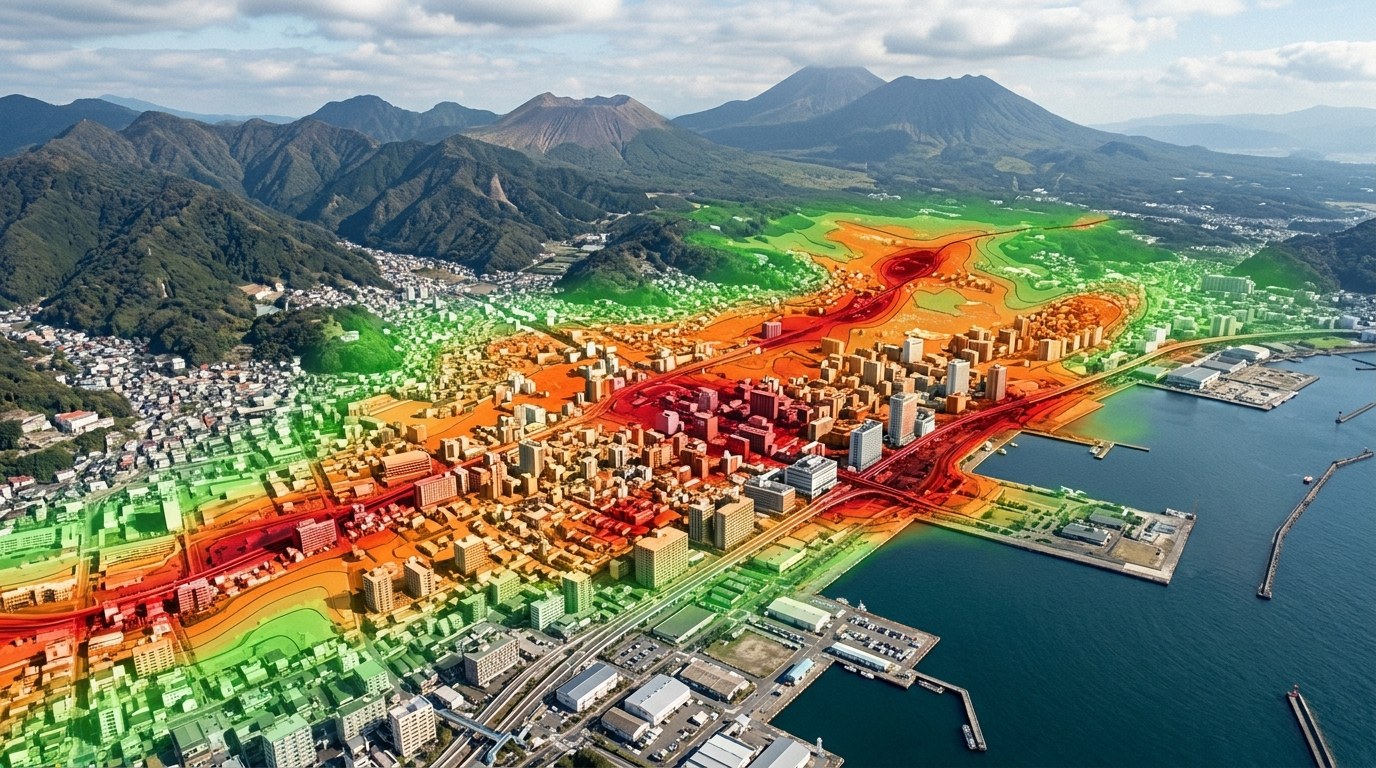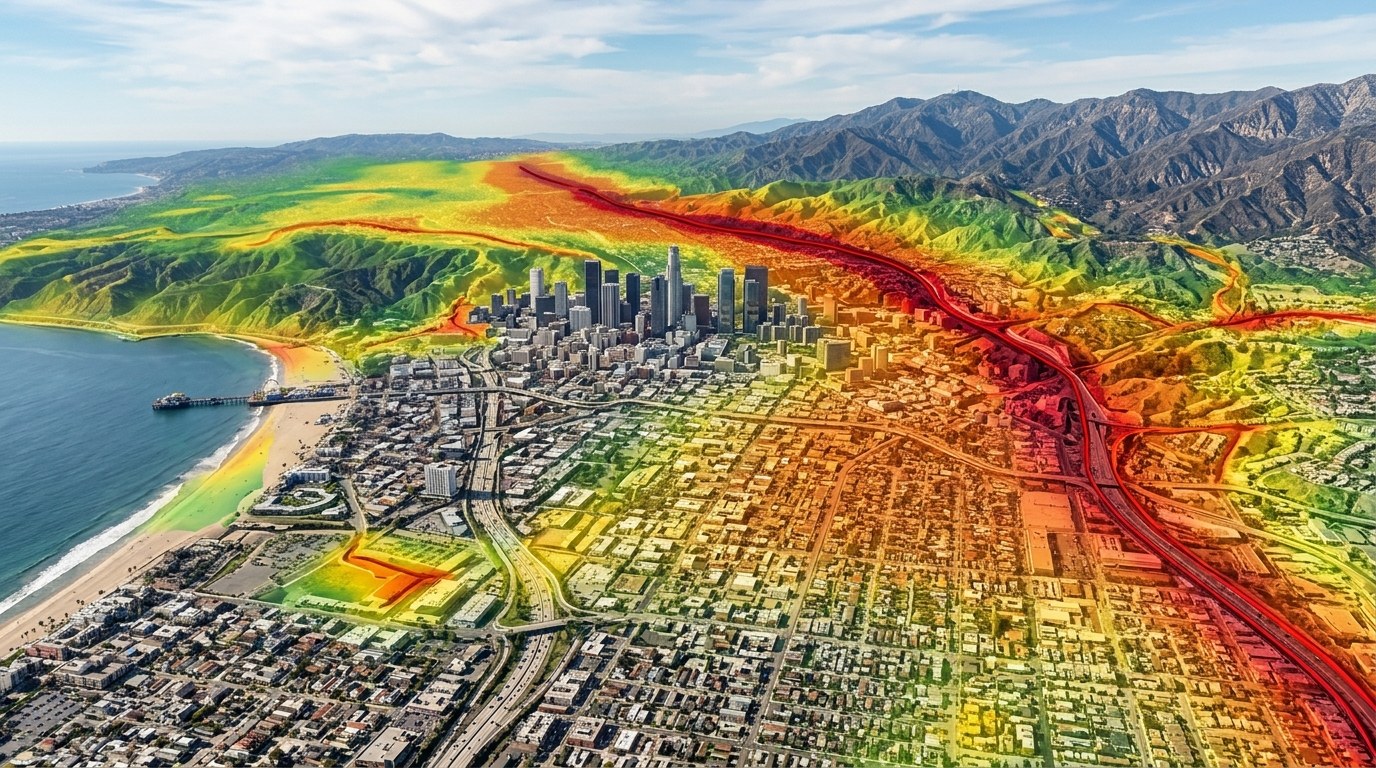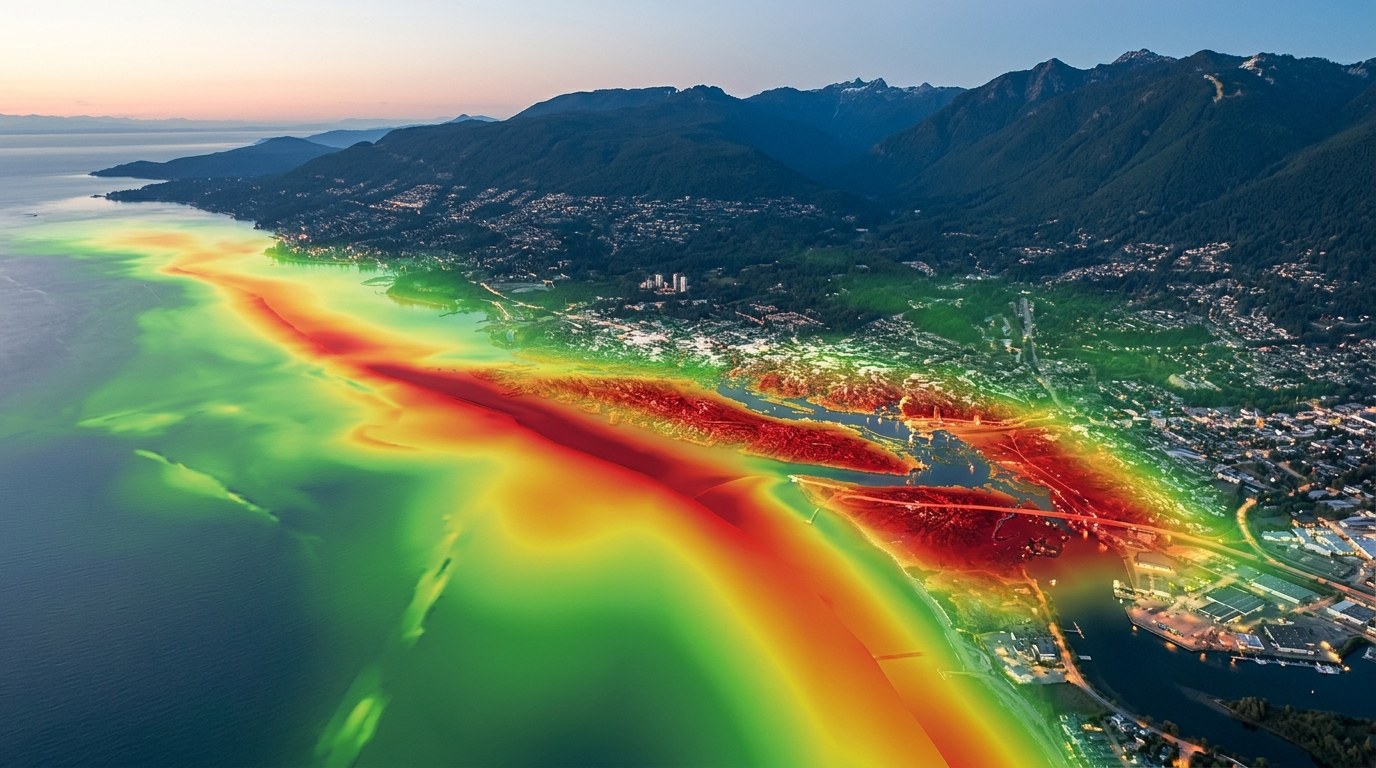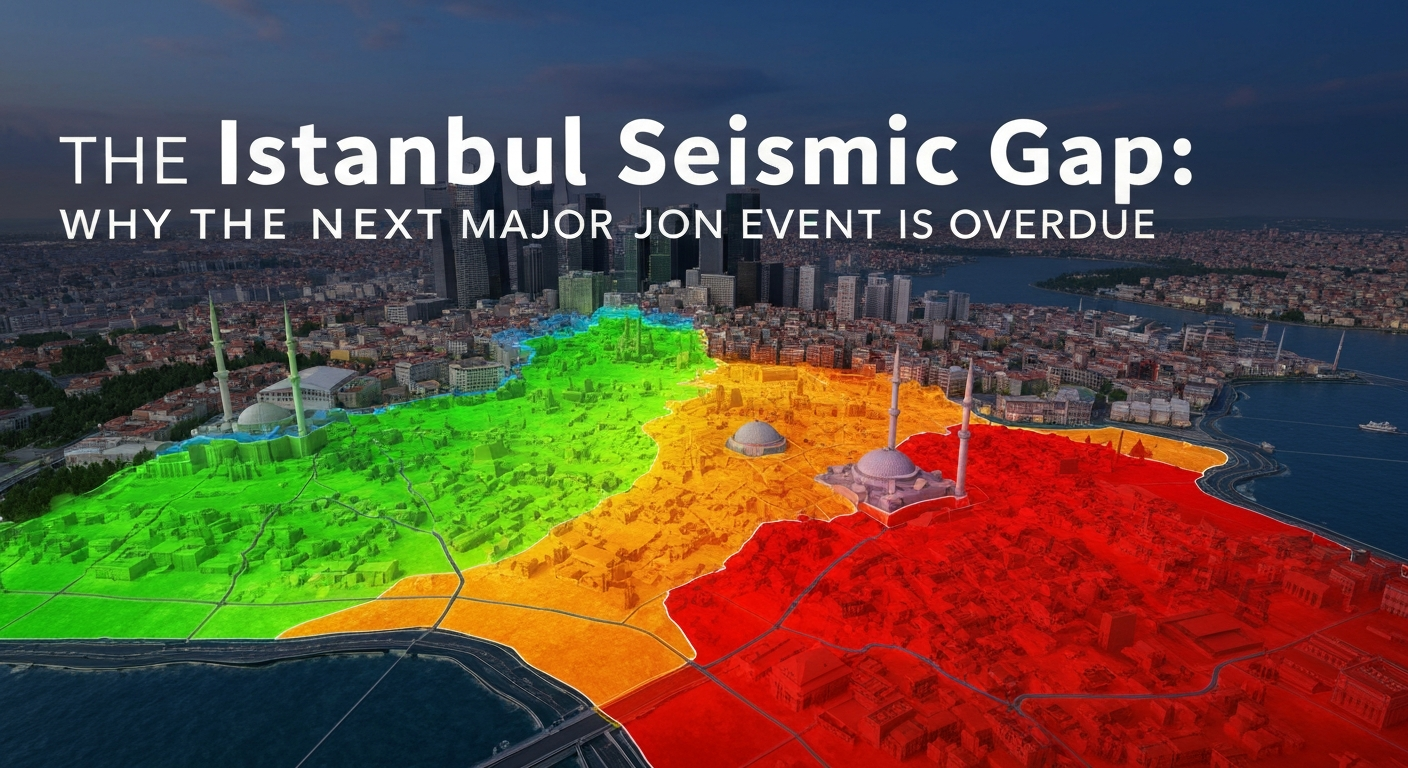
The North Anatolian Fault stretches ~1,500 km across northern Turkey, accommodating the westward movement of the Anatolian plate at roughly 24–27 mm/year. Most of this fault has ruptured in a famous eastward-propagating sequence that began in 1939 and marched toward Istanbul through a series of major earthquakes.
The 1766 Gap
The Marmara segment — directly beneath the Sea of Marmara, south of Istanbul — last ruptured in August 1766 with an estimated magnitude of 7.1. That's over 250 years of accumulated strain. At 24 mm/year, roughly 6 meters of right-lateral displacement has built up since the last rupture.
Historical records and paleoseismic trenching confirm the segment has a recurrence interval of 200–400 years. We are firmly inside that window.
The Prince Islands Segment
The critical section runs from the entrance of the Dardanelles through the Marmara basin, with the highest locking degree observed on the Prince Islands segment. GPS data from the CORS-TR network show 20–25 mm/year of interseismic loading with minimal creep — a fully locked fault accumulating elastic strain.
Probabilistic Estimates
Multiple research groups, including KOERI and the USGS, have estimated the probability of an M≥7.0 event on this segment within 30 years at 35–70%. The wide range reflects uncertainty in fault segmentation models and locking depth. Talivio's M 6.0–7.0 band consistently shows this as the highest-risk region globally in its comparative benchmark table.
Istanbul's seismic risk is not hypothetical. It is a measured, quantified accumulation of elastic energy that will eventually be released.
What Would a Rupture Look Like?
A 120–150 km rupture of the Marmara segment could generate peak ground accelerations of 0.4–0.8g in densely built coastal districts. Simulations suggest 20,000–80,000 casualties and 50,000–200,000 building collapses — ranges that depend heavily on time of day and building code compliance.
Talivio tracks 32 major faults in the region, using GNSS-derived locking models and Coulomb stress calculations updated nightly from the NGL network. The Istanbul segment appears prominently in both the fault risk ranking and the daily band probability outputs.