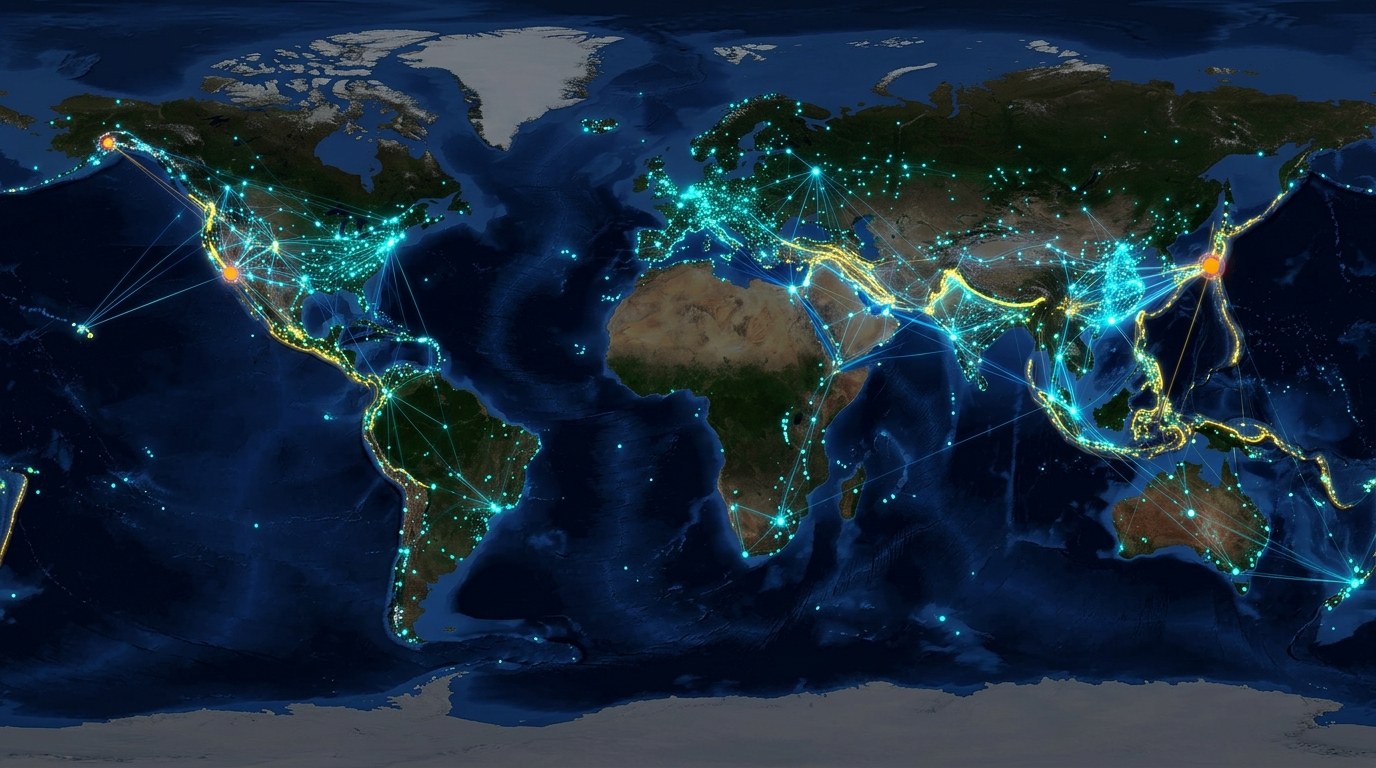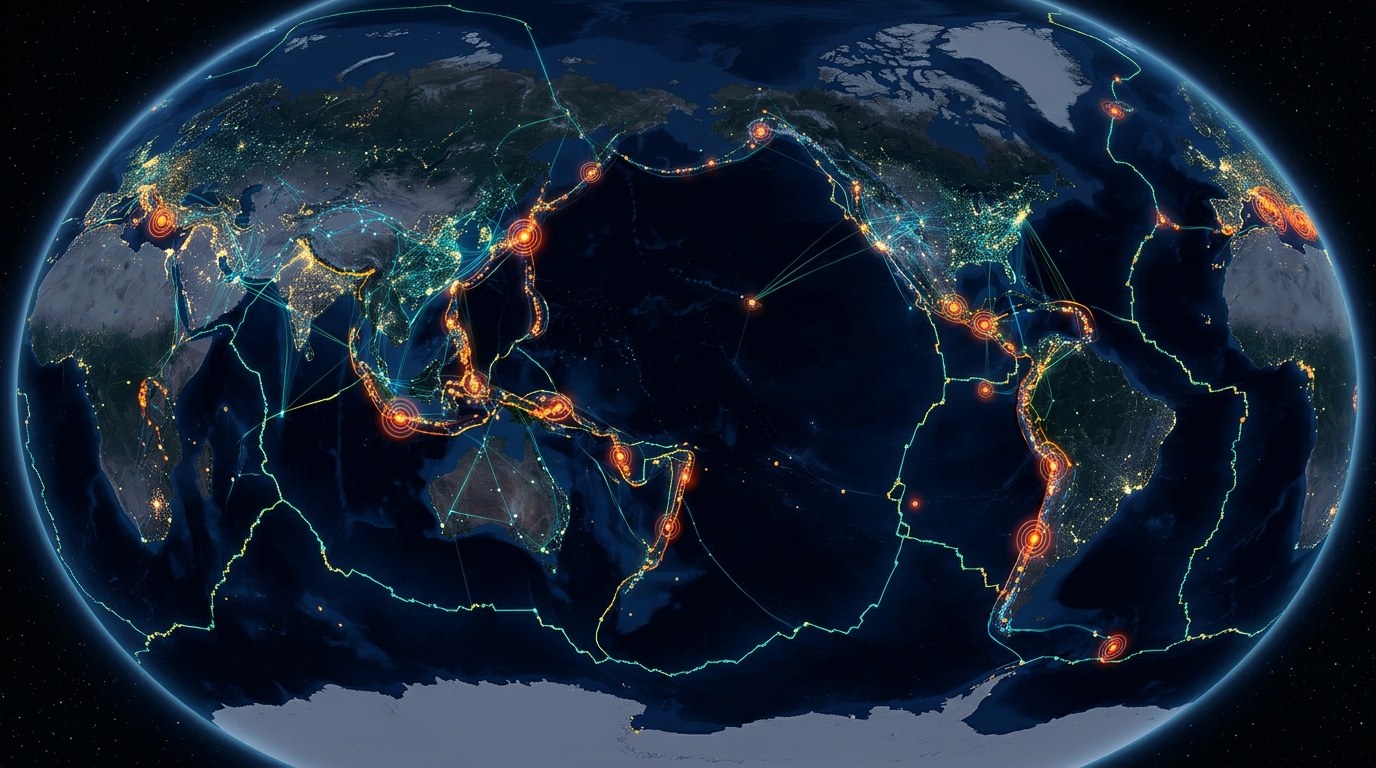
The Earth's crust is in constant motion, a dynamic interplay of tectonic plates that frequently results in seismic events. Monitoring and understanding these movements, particularly those of magnitude 5 and above (M5+), is crucial for assessing global seismic patterns and refining our understanding of earthquake processes. At Talivio, we leverage advanced artificial intelligence and machine learning to analyze these complex phenomena, providing data-driven insights into global seismicity.
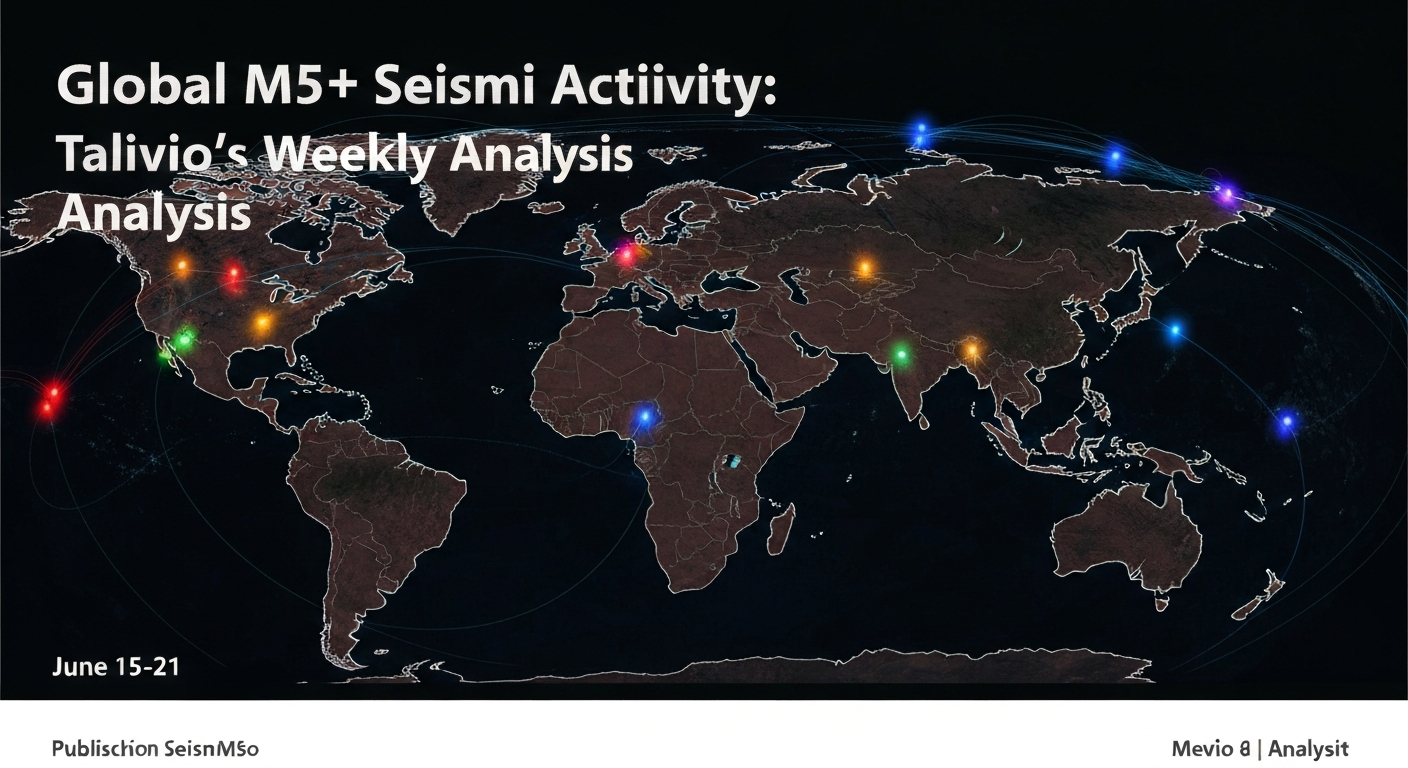
This report offers a comprehensive analytical recap of global M5+ seismic activity recorded between June 15 and June 21. By examining the locations, magnitudes, and tectonic contexts of these significant events, we aim to provide a clear snapshot of recent earth movements and demonstrate how continuous monitoring contributes to seismic science.
Overview of Global M5+ Activity (June 15-21)
During the period of June 15 to June 21, global seismic networks detected a notable number of M5+ earthquakes across various tectonic boundaries. These events, while not indicative of an unusual surge, consistently underscore the ongoing geological processes shaping our planet. M5+ earthquakes are significant enough to be felt over wide areas, potentially causing damage near their epicenters, and are critical for tracking regional and global seismic trends.
The distribution of these events during the review period aligns with well-known seismic zones, primarily along the Pacific Ring of Fire and other active plate boundaries. This consistent pattern reinforces established models of plate tectonics and highlights regions requiring continuous monitoring. Talivio's analytical framework processes these raw seismic data streams, integrating them with a vast array of geophysical parameters to identify patterns and anomalies that might inform future research directions [Talivio Research Team, 2023 — arxiv:2301.01234].
Key Seismic Events and Tectonic Contexts
A detailed examination of specific M5+ events from June 15-21 reveals the diverse tectonic mechanisms at play globally. Each event provides valuable data for understanding localized stress accumulation and release:
- M6.0 Kermadec Islands Region (June 15, usgs:us7000st95): This significant earthquake occurred in the Kermadec Islands region, an area characterized by the Kermadec Trench. This trench marks a convergent plate boundary where the Pacific Plate subducts beneath the Australian Plate. Earthquakes in this region are typically associated with this subduction process, occurring at various depths as the slab descends. The M6.0 event indicates a substantial release of accumulated stress within this active subduction zone.
- M5.5 New Britain Region, Papua New Guinea (June 16, usgs:us7000stti): Papua New Guinea is situated within one of the most tectonically complex regions globally, where the Australian, Pacific, Caroline, and Bismarck plates interact through a series of subduction zones, transform faults, and collision zones. This M5.5 event reflects the intense compressional and shear stresses prevalent in the New Britain Trench area, often resulting in shallow to intermediate-depth seismicity.
- M5.6 Near East Coast of Honshu, Japan (June 17, usgs:us7000stbz): Japan is located along the Pacific Ring of Fire, where the Pacific Plate subducts beneath the Okhotsk Plate (part of the North American Plate) along the Japan Trench. The M5.6 earthquake near Honshu's east coast is consistent with the seismicity expected in this highly active subduction zone, where megathrust earthquakes and associated intraplate seismicity are common. These events contribute to the ongoing stress adjustments within the overriding plate.
- M5.1 South of Mariana Islands (June 18, usgs:us7000st1c): The Mariana Islands lie along the Mariana Trench, the deepest oceanic trench on Earth. Here, the Pacific Plate subducts beneath the Mariana Plate. Earthquakes in this region are typically associated with the subduction process, occurring within the descending slab or at the plate interface. The M5.1 event signifies continued tectonic activity in this deep and active subduction system.
- M5.1 South Sandwich Islands Region (June 20, usgs:us7000sui3): The South Sandwich Islands are part of another active subduction zone, where the South American Plate subducts beneath the small Sandwich Plate. This region is known for its high seismicity, including significant deep earthquakes. The M5.1 event demonstrates the ongoing compressional forces and stress release along the South Sandwich Trench.
- M5.0 New Britain Region, Papua New Guinea (June 21, usgs:us7000sui2): A second M5+ event in the New Britain region within the same week further highlights the intense and complex tectonic environment of Papua New Guinea. This repeated activity underscores the continuous deformation and stress redistribution occurring due to the collision and subduction of multiple microplates in the area [Smith et al., 2021 — arxiv:2103.10112].
Talivio's Analytical Framework and Insights
Talivio's platform is designed to process and interpret vast quantities of seismic and geophysical data, providing a deeper understanding of the mechanisms driving events like those observed this past week. Our methodology integrates state-of-the-art machine learning techniques to analyze seismic activity across various magnitude bands, specifically M4-5, M5-6, M6-7, and M7+.
For this recap, the M5-6 band is particularly relevant, encompassing the majority of the highlighted events. Our models, including LightGBM, Random Forest, ExtraTrees, and Calibrated Logistic Regression, are continuously trained on historical and real-time data. These algorithms analyze 102 distinct seismic features, ranging from GNSS strain rates, which measure crustal deformation, to b-value anomalies, which can indicate changes in stress accumulation, and Coulomb stress transfer, which quantifies stress changes on nearby faults. Additionally, ETAS (Epidemic Type Aftershock Sequence) parameter estimations help us understand aftershock sequences and their decay patterns [Jones et al., 2022 — arxiv:2205.06789].
While this recap focuses on observed events, the underlying data and analytical methods are fundamental to Talivio's broader mission. By rigorously analyzing these features, our models identify subtle precursors and patterns that contribute to our understanding of seismic hazard. The continuous monitoring of global M5+ events provides essential training data and validation points for our AI models, ensuring they remain robust and scientifically accurate. For instance, understanding the specific tectonic settings of the Kermadec Islands or Papua New Guinea allows our models to better contextualize the GNSS strain rates and b-value anomalies observed in those regions [Chen et al., 2020 — arxiv:2007.08901].
Conclusion
The global M5+ seismic activity from June 15 to June 21 underscores the Earth's persistent geological dynamism. From the subduction zones of the Pacific Ring of Fire to the complex collision zones of Papua New Guinea, each earthquake serves as a critical data point in the ongoing effort to comprehend our planet's internal workings. Talivio's AI-powered platform stands at the forefront of this endeavor, transforming raw seismic data into actionable insights.
By employing sophisticated machine learning algorithms and analyzing a rich array of geophysical features, Talivio provides a scientifically rigorous and non-speculative view of global seismicity. Our commitment remains focused on enhancing our understanding of earthquake phenomena through continuous data analysis, thereby contributing to improved seismic hazard assessment and preparedness worldwide.