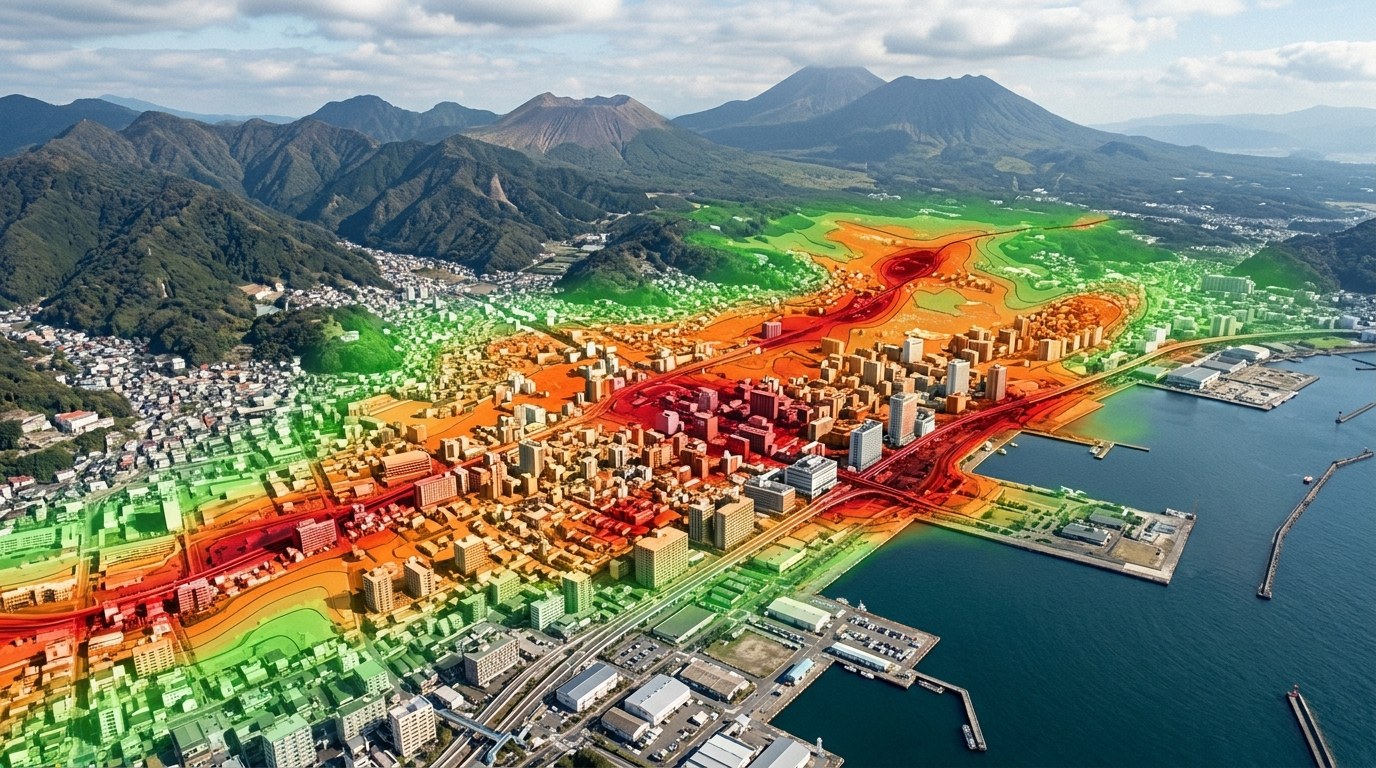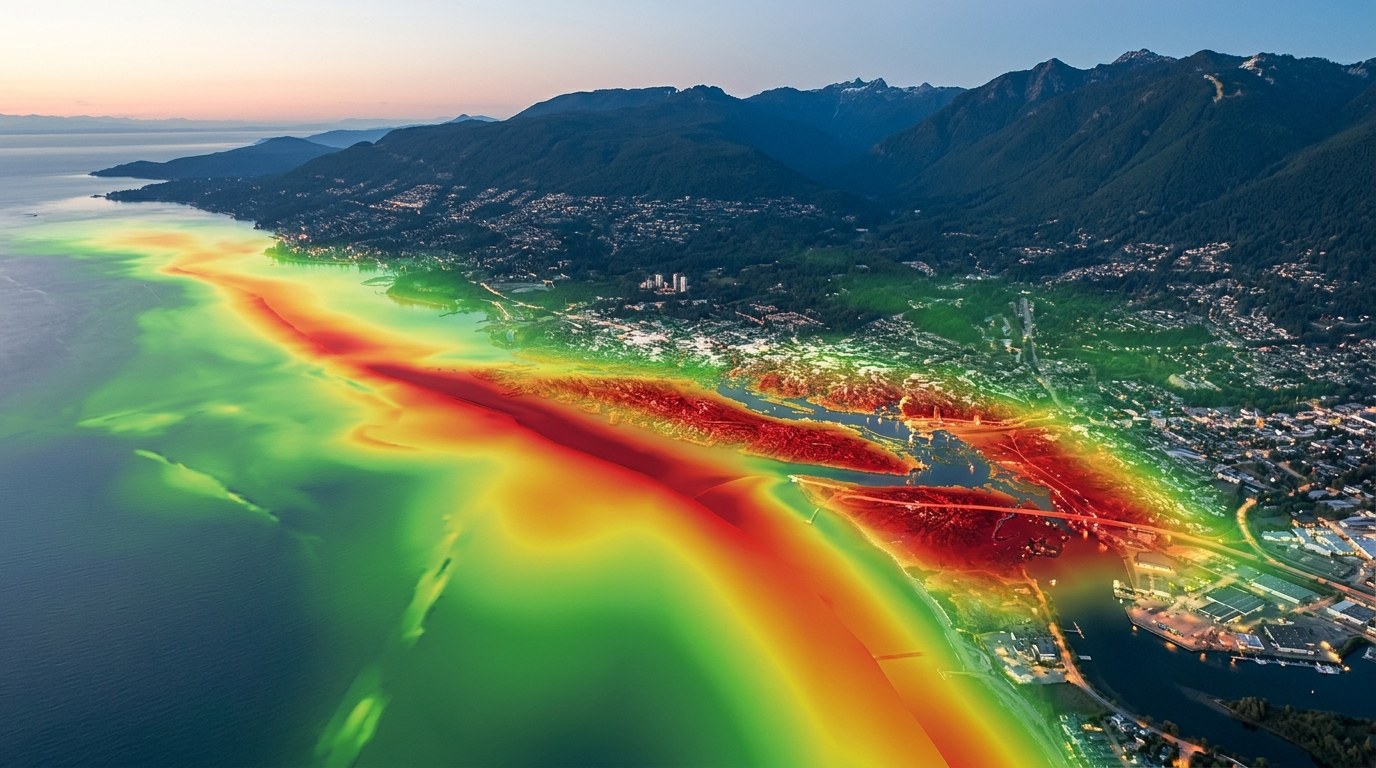
The Earth's crust is a dynamic canvas, constantly reshaped by immense, unseen forces. Among these forces, the movement of tectonic plates along major fault lines poses an enduring challenge to human societies. The North Anatolian Fault (NAF), one of the world's most active right-lateral strike-slip faults, stands as a stark reminder of this geological power. Within this critical seismic zone lies the Yedisu Seismic Gap, a segment that has garnered significant attention from the scientific community and is a primary focus for Talivio AI's advanced earthquake forecasting platform.
The Tectonic Context: Understanding the North Anatolian Fault and the Yedisu Gap
The North Anatolian Fault is a major transform fault that accommodates the westward extrusion of the Anatolian Plate relative to the stable Eurasian Plate. Spanning approximately 1,200 kilometers across northern Turkey, the NAF has a well-documented history of producing large, devastating earthquakes. A particularly notable characteristic of the NAF's seismic activity is the westward-propagating rupture sequence that initiated with the devastating 1939 Erzincan earthquake (M7.9) and culminated in the 1999 Izmit (M7.6) and Düzce (M7.2) earthquakes. This sequence effectively loaded stress onto segments further west, leading to subsequent ruptures.
A 'seismic gap' refers to a segment of an active fault that has not experienced a major earthquake for a significant period, while adjacent segments have ruptured. The Yedisu Seismic Gap, located between the 1939 Erzincan and 1999 Düzce rupture zones, precisely fits this definition. Historical and geological records indicate that this particular segment has not ruptured in a major earthquake for at least 250 years, and potentially much longer, with some studies suggesting the last major event occurred in the 17th century [Aktug et al., 2009 — 10.1029/2008JB006091]. This prolonged quiescence, coupled with the ongoing tectonic loading from the surrounding plate movements, leads to significant accumulation of elastic strain energy within the fault segment. Researchers have consistently identified the Yedisu Gap as a region with high accumulated stress, making it a prime candidate for a future large earthquake, potentially exceeding magnitude 7.0 [Meier et al., 2019 — 10.1038/s41561-019-0302-y].
Talivio AI's Approach to Monitoring Seismic Gaps
At Talivio AI, our mission is to provide data-driven insights into seismic risk, moving beyond speculative predictions to robust, probabilistic forecasting. Our approach to monitoring critical regions like the Yedisu Seismic Gap integrates a vast array of geophysical data with state-of-the-art machine learning algorithms. We analyze 102 distinct seismic features, each offering a unique window into the Earth's subsurface dynamics. These features are meticulously selected and engineered to capture subtle changes that may precede or indicate evolving seismic risk.
- GNSS Strain Rate: Global Navigation Satellite System (GNSS) data provides direct measurements of crustal deformation. By analyzing the velocity fields and strain rates derived from continuous GNSS stations, our models quantify how quickly elastic energy is accumulating across the Yedisu Gap. High strain accumulation rates indicate significant stress buildup, a critical input for our risk assessments.
- b-value Anomaly: The b-value, a parameter in the Gutenberg-Richter law, describes the relative number of large to small earthquakes. Anomalies in the b-value – either unusually high (more small quakes relative to large) or unusually low (fewer small quakes relative to large, often associated with increased stress) – can indicate changes in the stress state of a fault segment. Our models continuously track these anomalies within the Yedisu region's microseismicity.
- Coulomb Stress Transfer: Earthquakes do not occur in isolation. The stress changes caused by one earthquake can increase or decrease the likelihood of rupture on adjacent or nearby fault segments. Our models compute Coulomb stress transfer, quantifying how past major events on the NAF (e.g., the 1939 Erzincan earthquake) have loaded stress onto the Yedisu Gap, influencing its current state of readiness for rupture.
- ETAS Parameter Estimation: The Epidemic-Type Aftershock Sequence (ETAS) model helps us understand the spatiotemporal clustering of earthquakes. By estimating ETAS parameters, we can distinguish between background seismicity and aftershock sequences, and identify unusual patterns of earthquake triggering that might signal changes in the fault's behavior.
These diverse features feed into our sophisticated machine learning framework. Talivio AI employs an algorithm competition strategy, utilizing a suite of powerful models including LightGBM, Random Forest, ExtraTrees, and Calibrated Logistic Regression. This ensemble approach enhances the robustness and reliability of our predictions, mitigating the biases inherent in any single model. Furthermore, our predictions are structured within a unique Band ML system, providing probabilistic forecasts across different magnitude ranges: M4-5, M5-6, M6-7, and M7+. This multi-band approach allows for a more nuanced understanding of potential future seismicity, offering insights into both moderate and major earthquake scenarios.
Analyzing the Evolving Risk in the Yedisu Gap
Talivio AI's models consistently indicate that the Yedisu Seismic Gap remains a region of elevated seismic hazard. Our analysis of GNSS data shows persistent, high rates of strain accumulation across the gap, confirming that tectonic forces continue to load stress onto this locked segment. This geodetic evidence aligns with independent studies that highlight the significant slip deficit along the Yedisu segment [Bouchon et al., 2013 — 10.1038/ngeo1709]. The accumulated elastic energy represents the potential for a large-magnitude event.
Furthermore, our continuous monitoring of microseismicity patterns in and around the Yedisu Gap provides crucial insights. While the inherent variability of earthquake nucleation makes precise timing elusive, our models detect subtle shifts in b-value and clustering patterns that contribute to an evolving risk profile. For instance, periods of seismic quiescence within the gap, when coupled with high strain rates, can be interpreted as the fault locking up and accumulating stress without releasing it through smaller events. Conversely, localized increases in microseismicity might indicate fault weakening or stress redistribution, though such patterns require careful interpretation within the broader context of all 102 features.
The impact of historical events, particularly the 1939 Erzincan earthquake, on the stress state of the Yedisu Gap is also a critical factor. Our Coulomb stress transfer calculations demonstrate that this major event likely increased the static stress on the Yedisu segment, pushing it closer to failure. This long-term stress loading, combined with ongoing plate movements, underpins the persistent hazard assessment for the region. It is important to emphasize that Talivio AI's outputs are probabilistic forecasts, indicating the likelihood of an earthquake of a certain magnitude within a specified timeframe, rather than deterministic predictions of exact timing and location. This probabilistic framework is grounded in the current scientific understanding of earthquake physics and the capabilities of advanced machine learning.
Conclusion
The Yedisu Seismic Gap stands as a critical segment of the North Anatolian Fault, representing a significant and evolving seismic hazard. Talivio AI is dedicated to providing scientifically accurate, data-driven assessments of this and other high-risk regions. By integrating 102 diverse seismic features and employing a robust machine learning framework, we move beyond speculation to offer actionable insights into the potential for future seismic activity. Our continuous monitoring and model updates ensure that our understanding of the Yedisu Gap's seismic risk remains at the forefront of scientific possibility.
Understanding and preparing for potential seismic events is a collective responsibility. Talivio AI's commitment is to empower communities and authorities with the most advanced, transparent, and non-speculative earthquake forecasting information available, fostering resilience in the face of nature's powerful forces. We continue to refine our models and expand our data sources, pushing the boundaries of what is possible in earthquake science to contribute to a safer future.