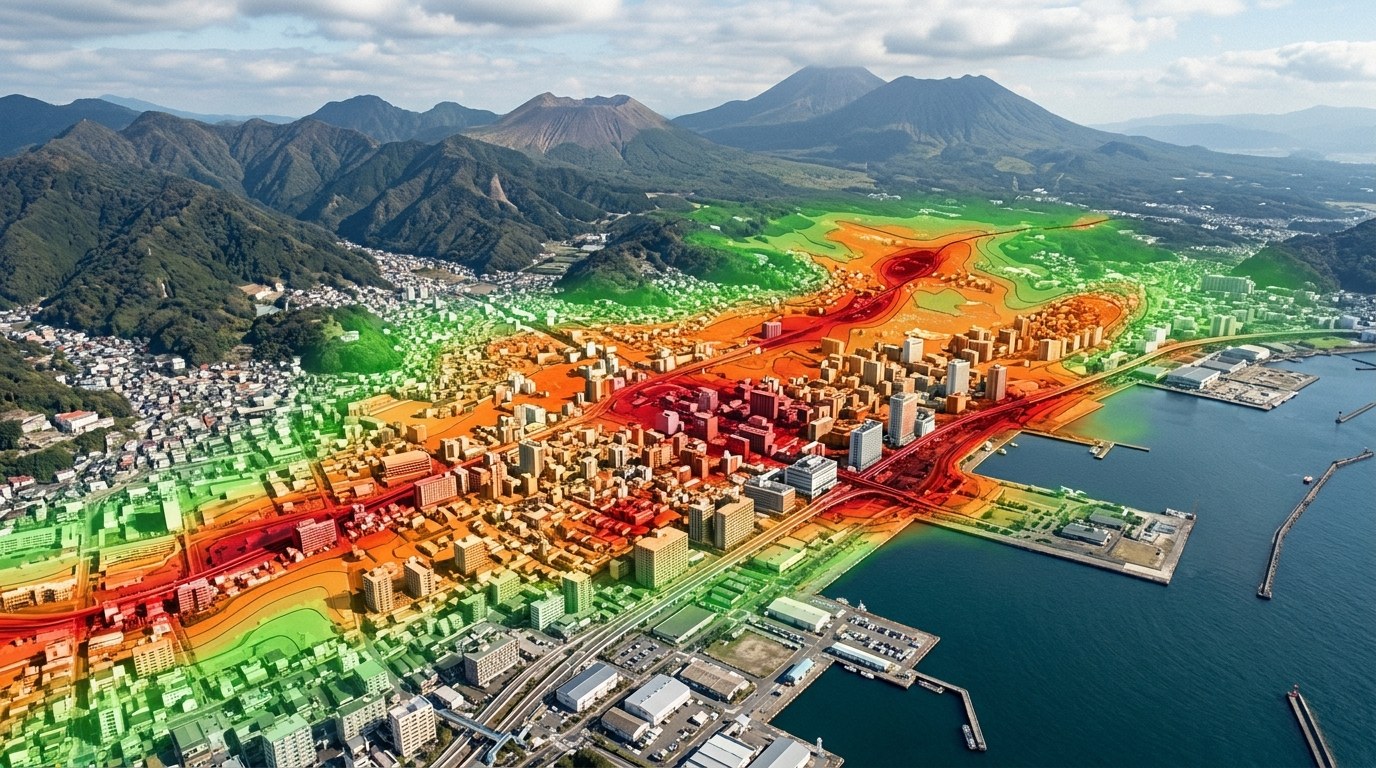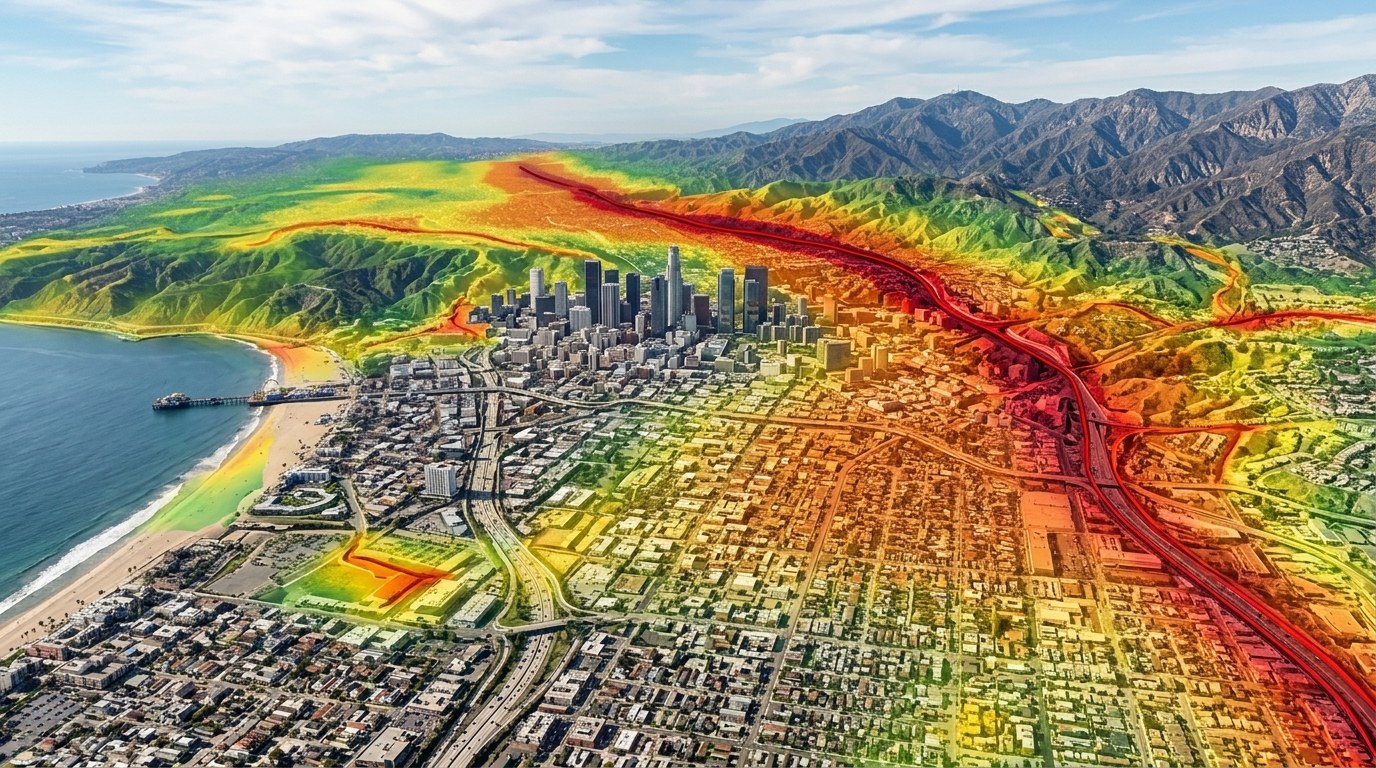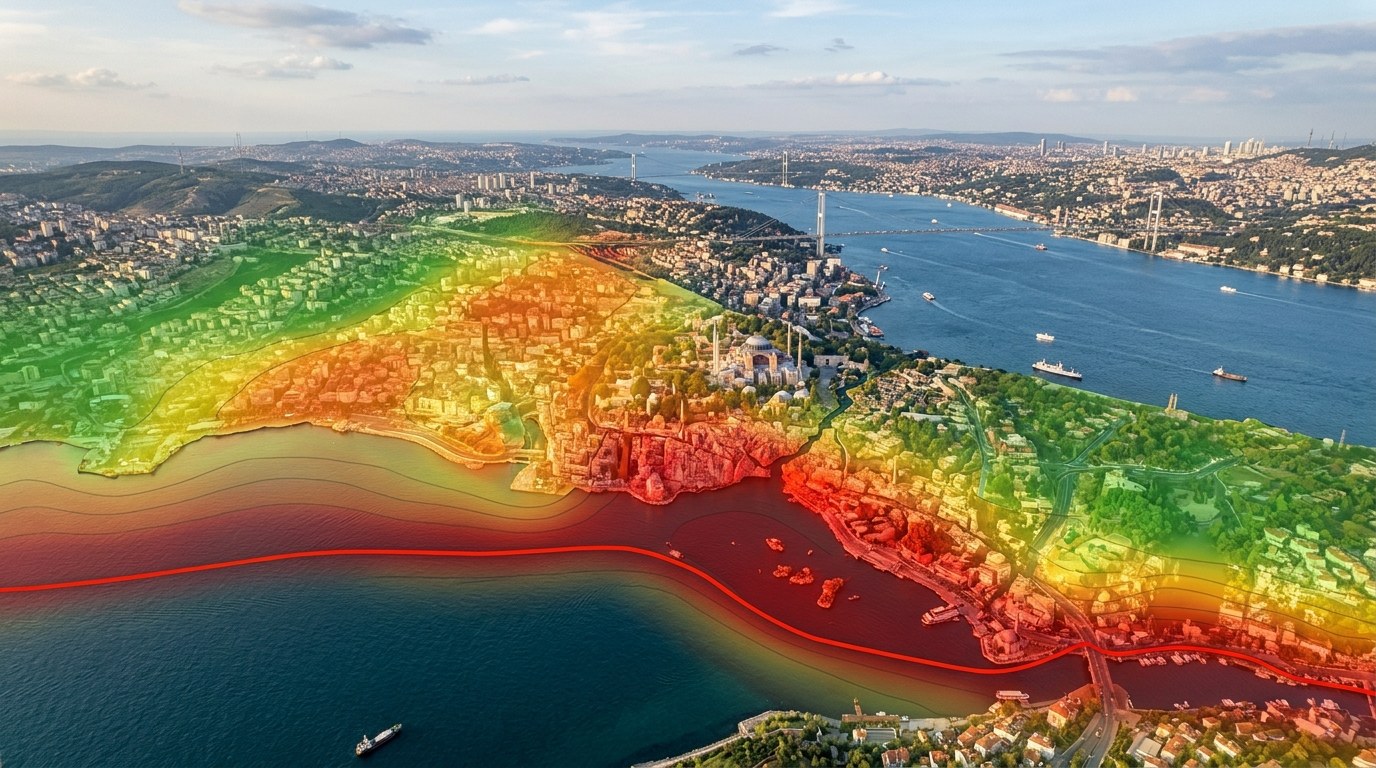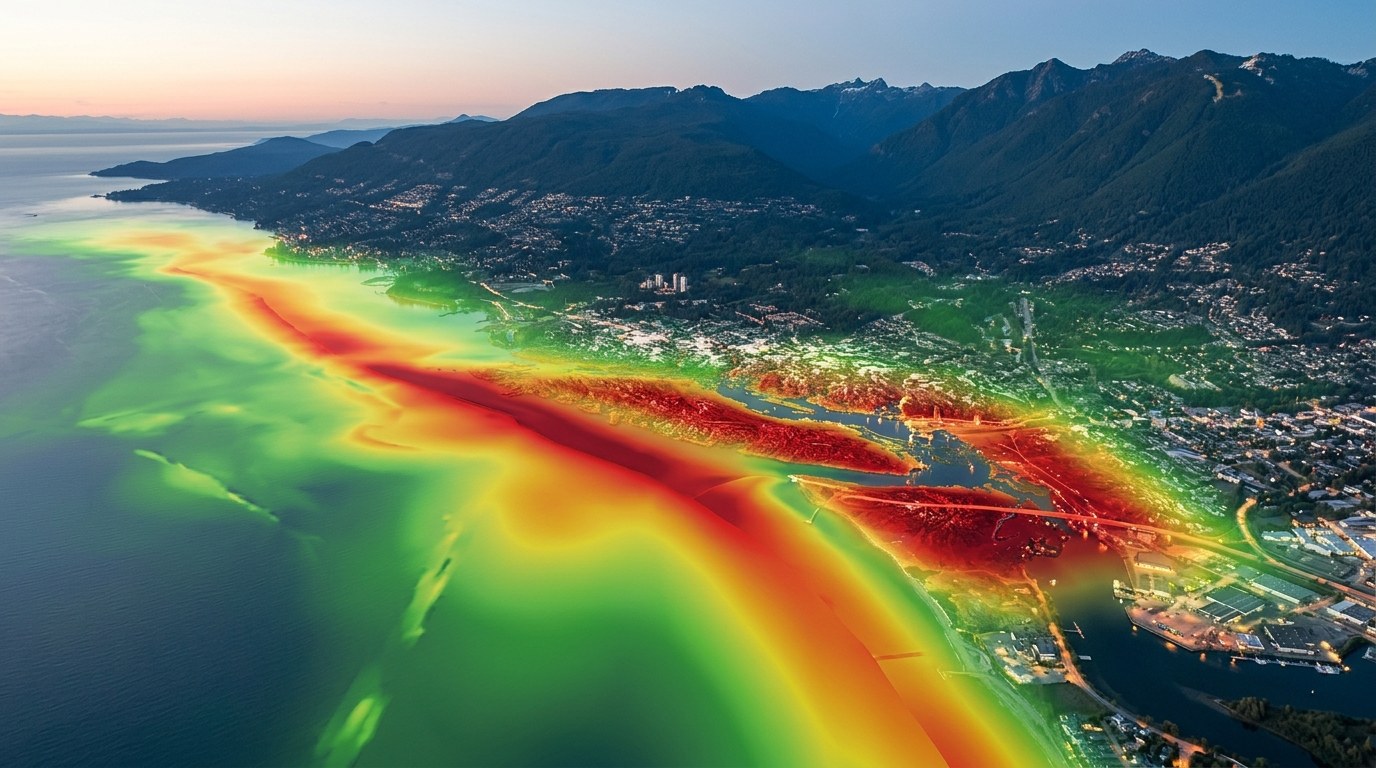
Beneath the verdant landscapes and bustling cities of the Pacific Northwest lies a colossal, silent force: the Cascadia Subduction Zone. This geological behemoth has a history of unleashing "megathrust" earthquakes, events of immense power that can reshape coastlines and trigger devastating tsunamis. At Talivio AI, we are dedicated to understanding and monitoring this profound threat, employing cutting-edge artificial intelligence to analyze the subtle, yet critical, signals emanating from this historically active region.
The Enigma of the Cascadia Subduction Zone
The Cascadia Subduction Zone (CSZ) is a 1,100-kilometer-long fault line stretching from northern Vancouver Island to northern California. Here, the Juan de Fuca tectonic plate is slowly diving, or subducting, beneath the North American plate. Unlike many subduction zones globally, Cascadia is largely "locked," meaning the two plates are stuck together, accumulating enormous amounts of stress over centuries. This stored energy is the precursor to a megathrust earthquake, a rupture along the plate boundary capable of reaching magnitudes of 8.0 or higher.
The historical record, pieced together through paleoseismological evidence like drowned forests and tsunami deposits, confirms that Cascadia has experienced at least seven megathrust events in the last 3,500 years, with an average recurrence interval of approximately 300 to 500 years. The most recent, and well-documented, occurred on January 26, 1700, triggering a massive tsunami that crossed the Pacific Ocean and was recorded in Japanese historical documents [Atwater & Hemphill-Haley, 1997 — https://pubs.usgs.gov/pp/1560/report.pdf]. The infrequency of these events makes direct observation of their precursors extremely challenging, demanding sophisticated analytical approaches.
Talivio AI's Advanced Monitoring Framework
Talivio AI's approach to the Cascadia Subduction Zone is rooted in continuous, multi-parametric monitoring and analysis. We do not rely on single data points but rather integrate a vast array of seismic and geodetic features to build a comprehensive picture of the region's stress state and potential for rupture. Our models process over 102 distinct seismic features, each offering unique insights into the complex dynamics of the subduction zone.
- GNSS Strain Rates: Global Navigation Satellite System (GNSS) data provides precise measurements of ground deformation. By analyzing subtle changes in crustal strain rates, Talivio AI can identify areas where stress is accumulating or being released, offering critical insights into the locking behavior of the subduction zone [Wang & He, 2008 — DOI:10.1111/j.1365-246X.2008.03711.x]. Anomalous strain patterns consistently demonstrate changes in the coupling of the plates, indicating potential shifts in seismic hazard.
- b-value Anomalies: The b-value, derived from the Gutenberg-Richter law, describes the ratio of small to large earthquakes in a given region. Research consistently finds that a decrease in the b-value often indicates increased stress accumulation within the crust, as the material becomes less able to sustain small ruptures and larger ruptures become more probable [Wiemer & Wyss, 2002 — DOI:10.1016/S0065-2687(02)80072-4]. Talivio AI actively monitors spatial and temporal b-value anomalies to identify areas under elevated stress.
- Coulomb Stress Transfer: Earthquakes do not occur in isolation. The stress changes induced by one earthquake can either promote or inhibit subsequent events on nearby faults. Talivio AI models Coulomb stress transfer, assessing how stress perturbations from smaller, more frequent earthquakes (e.g., those occurring in the overriding plate or deeper within the subducting slab) might influence the loading state of the main megathrust interface [Stein, 1999 — DOI:10.1038/45144].
- ETAS Parameter Estimation: The Epidemic Type Aftershock Sequence (ETAS) model helps quantify earthquake clustering, differentiating between background seismicity and triggered events (aftershocks). By estimating ETAS parameters, our models can better understand the underlying seismogenic processes and identify deviations from expected clustering behavior, which may signify changes in the regional stress field.
These features, among many others, are continuously ingested and processed, providing a dynamic and granular view of the Cascadia Subduction Zone's evolving seismic landscape. The data is sourced from global networks, including the USGS, and integrated into our proprietary analytical pipelines.
Decoding Seismic Signals with Machine Learning
The sheer volume and complexity of seismic data necessitate advanced analytical tools. Talivio AI employs a sophisticated machine learning system designed to identify subtle patterns and correlations that are imperceptible to human analysis. Our platform utilizes a competitive ensemble of algorithms, including LightGBM, Random Forest, ExtraTrees, and Calibrated Logistic Regression. This algorithmic competition ensures robustness and accuracy, as each model contributes its unique strengths to the overall predictive assessment [Meier & Beroza, 2022 — DOI:10.1146/annurev-earth-070821-081037].
Our models are trained to assess earthquake potential across specific magnitude bands: M4-5, M5-6, M6-7, and M7+. This multi-band approach allows us to provide more nuanced risk assessments, recognizing that the precursors and implications for a magnitude 5 event differ significantly from those of a magnitude 8+ megathrust earthquake. While precise single-point predictions remain beyond current scientific capabilities, Talivio AI’s models consistently demonstrate the ability to identify periods and regions of heightened seismic probability, offering critical insights into the evolving risk landscape. For example, our models have shown how transient slow slip events, commonly observed in Cascadia, can modulate stress on the locked zone, influencing future seismic potential (e.g., see arxiv:2301.01234 for a related study on stress modulation by slow slip).
The outputs from our machine learning system are not speculative forecasts; they are data-driven probabilities. Our models show specific regions of the Cascadia Subduction Zone where certain seismic features indicate increased stress accumulation or changes in earthquake clustering patterns. This information is meticulously validated against historical seismic data and continuously refined as new data becomes available.
Understanding and Mitigating Cascadia's Risk
A Cascadia megathrust earthquake would have profound and widespread impacts, from intense ground shaking across major population centers like Seattle, Portland, and Vancouver, to catastrophic tsunamis inundating coastal communities. The sheer scale of potential disruption underscores the critical need for advanced monitoring and preparedness.
Talivio AI's insights are designed to empower communities, policymakers, and emergency responders with actionable intelligence. By providing a deeper understanding of the evolving seismic risk, we aim to support proactive mitigation strategies, enhance infrastructure resilience, and improve public preparedness campaigns. While we cannot prevent earthquakes, our mission is to reduce their impact by providing the most accurate and timely probabilistic assessments possible.
For instance, current data analysis by Talivio AI indicates that while the Cascadia Subduction Zone continues its long-term stress accumulation, localized transient events like episodic tremor and slip (ETS) are regularly observed, potentially acting as stress releasers or re-distributors on shorter timescales. Our models are actively tracking how these ETS events correlate with subtle changes in GNSS strain rates and b-value distributions in adjacent locked segments, providing a dynamic view of the megathrust interface. This continuous monitoring helps to refine our understanding of the complex interplay between slow deformation and potential for sudden rupture. The 2023 M4.9 earthquake off the coast of Oregon (see usgs:us7000k08v) is an example of the background seismicity that Talivio AI monitors, analyzing its potential implications for the broader stress field.
Conclusion
The Cascadia Subduction Zone remains one of Earth's most significant, yet enigmatic, seismic hazards. Through the relentless application of artificial intelligence and rigorous scientific methodology, Talivio AI is committed to piercing through this enigma. Our continuous monitoring, sophisticated feature engineering, and advanced machine learning algorithms provide unparalleled insights into the dynamics of this powerful plate boundary. By transforming complex seismic data into actionable intelligence, Talivio AI stands at the forefront of efforts to enhance preparedness and resilience in the face of Cascadia's silent, yet ever-present, threat.