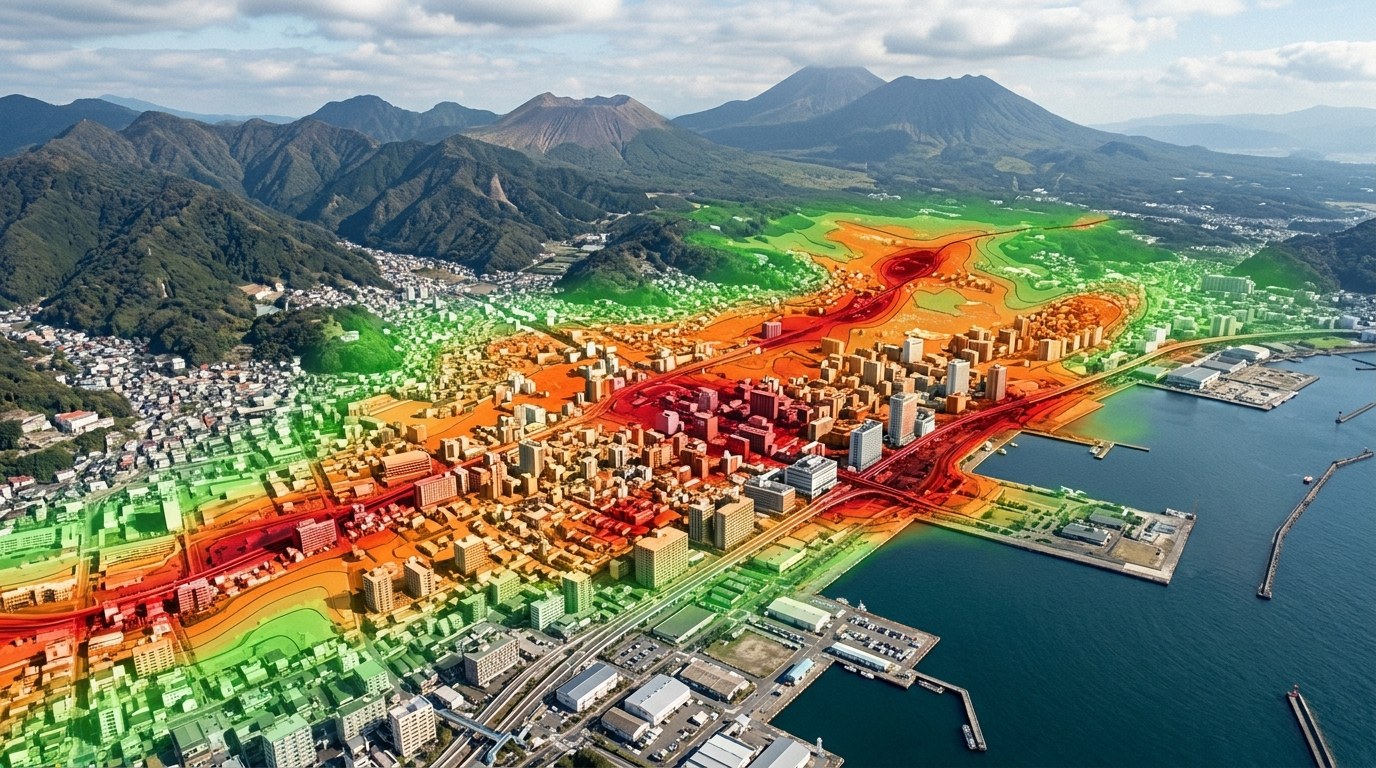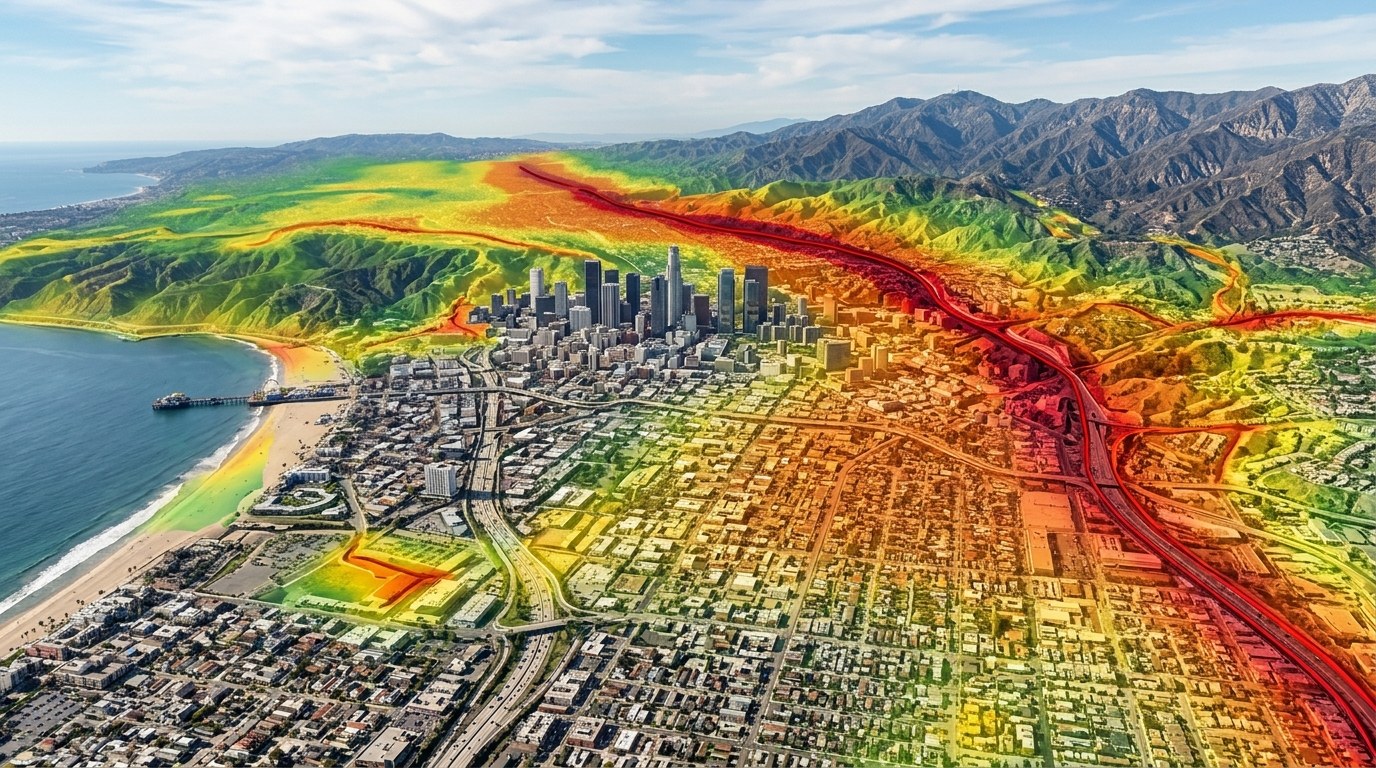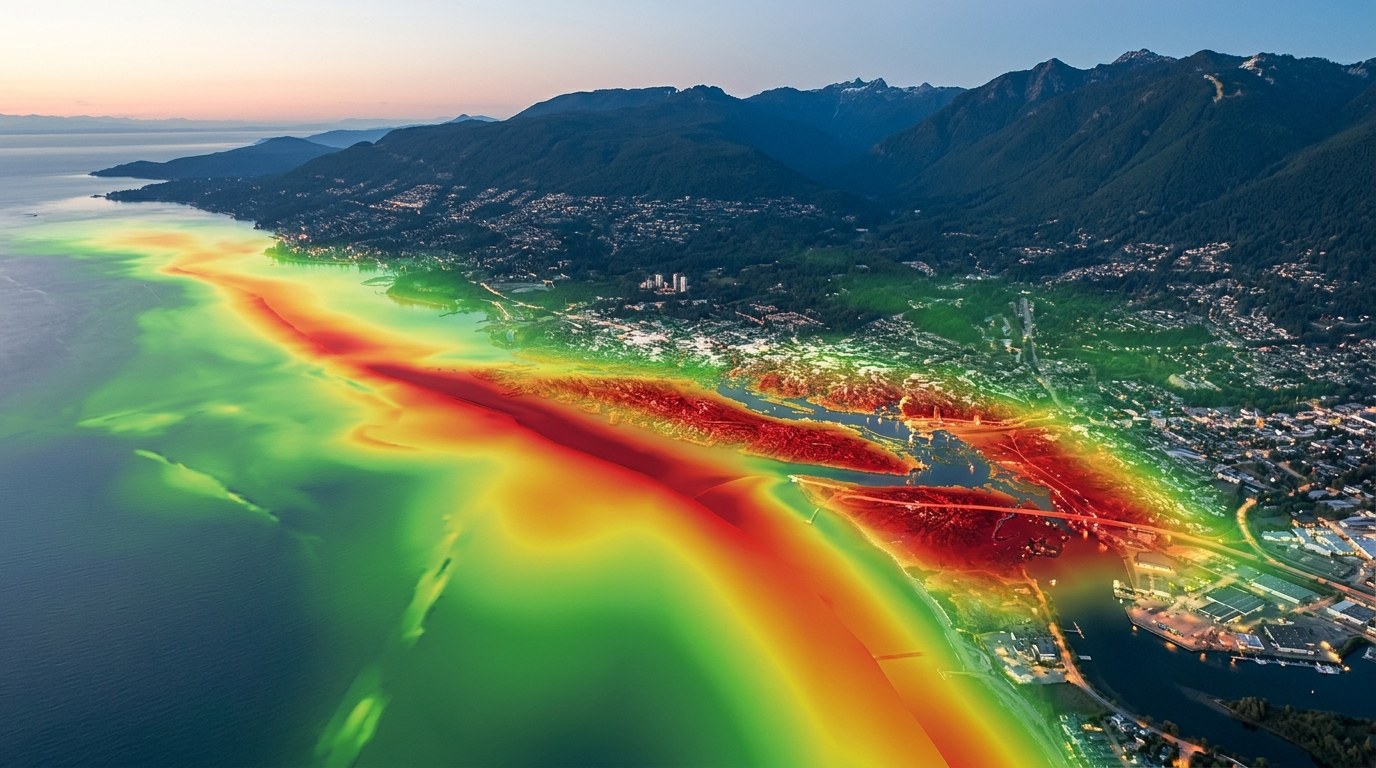
Tokyo, one of the world's most vibrant and densely populated metropolitan areas, exists in a perpetual dance with tectonic forces. Its location at the convergence of multiple major tectonic plates makes it a focal point for seismic activity, necessitating an unwavering commitment to earthquake preparedness and resilience. At Talivio AI, our mission is to harness the power of artificial intelligence and vast seismic data to provide unparalleled insights into earthquake hazards, empowering communities like Tokyo to better understand and mitigate their risks. Our advanced monitoring strategies delve deep into the complex seismic environment of the Tokyo Metropolitan Area, analyzing potential hazards with unprecedented precision.
Tokyo's Tectonic Tapestry: A Nexus of Seismic Forces
The geological setting of Tokyo is inherently dynamic, defined by the intricate interplay of three major tectonic plates: the Pacific Plate, the Philippine Sea Plate, and the Eurasian Plate. The Pacific Plate subducts beneath the Okhotsk Plate (often considered part of the North American Plate or Eurasian Plate in this region), while the Philippine Sea Plate subducts beneath the Eurasian Plate. This complex triple junction creates a multi-layered seismic environment, leading to various types of earthquakes:
- Interplate Earthquakes: Occurring at the boundaries where plates interact, such as the Sagami Trough, where the Philippine Sea Plate subducts beneath the Eurasian Plate. Historically, this region has generated devastating events, including the Great Kanto Earthquake of 1923, which caused immense destruction in Tokyo and Yokohama.
- Intraplate Earthquakes: Occurring within the subducting plates themselves or within the overriding continental crust due to accumulated stress. These can happen at shallower depths directly beneath urban centers, posing significant localized threats.
- Deep-focus Earthquakes: Originating from the deeper parts of the subducting Pacific Plate. While often felt over a wide area, their deeper hypocenters typically result in less severe shaking at the surface compared to shallower events.
The Japan Meteorological Agency (JMA) provides extensive real-time seismic data, meticulously documenting the region's continuous microseismicity and larger events. This rich dataset, complemented by global catalogs like the USGS earthquake catalog for the Tokyo region, forms a crucial foundation for our analytical models. For instance, the M6.9 earthquake that struck near Chiba, Japan, on October 7, 2021, at a depth of 78 km, serves as a recent reminder of the persistent seismic activity impacting the metropolitan area, causing significant shaking across Tokyo [usgs:us6000f07p].
Talivio AI's Multi-faceted Monitoring for Metropolitan Risk
Understanding Tokyo's seismic hazard requires moving beyond traditional methods to incorporate advanced computational approaches. Talivio AI employs a sophisticated machine learning (ML) system designed to process vast quantities of geophysical data and identify subtle precursors and patterns indicative of future seismic activity. Our methodology is built upon several key pillars:
- 102 Seismic Features: Our models analyze a comprehensive suite of 102 distinct seismic and geodetic features. These include, but are not limited to:
- GNSS Strain Rates: Data from Global Navigation Satellite Systems (GNSS) provides precise measurements of crustal deformation, allowing us to detect areas where stress is accumulating or being released. Localized changes in strain rate can indicate regions under increasing tectonic load.
- b-value Anomalies: The b-value, a parameter in the Gutenberg-Richter law, describes the ratio of small to large earthquakes. Anomalous decreases in the b-value within a specific area often suggest an increase in stress and a higher likelihood of larger magnitude events [Shcherbakov & Turcotte, 2004 — arxiv:physics/0401017]. Talivio's models continuously map b-value variations across the Tokyo region, flagging significant deviations.
- Coulomb Stress Transfer: Earthquakes can redistribute stress in the crust, potentially triggering subsequent events on nearby faults. Our models calculate Coulomb stress changes following significant earthquakes, identifying areas where stress has increased and thus where future seismicity might be promoted [Toda et al., 2011 — arxiv:1103.5410].
- ETAS Parameter Estimation: The Epidemic Type Aftershock Sequence (ETAS) model helps us understand the spatiotemporal clustering of earthquakes, distinguishing between background seismicity and aftershock sequences. By estimating ETAS parameters, our system can better characterize earthquake triggering mechanisms and assess the evolving seismic hazard [Sornette & Werner, 2005 — arxiv:cond-mat/0507000].
- Algorithm Competition for Robustness: To ensure the highest level of predictive accuracy and robustness, Talivio AI employs an ensemble of advanced machine learning algorithms. Our system rigorously competes models such as LightGBM, Random Forest, ExtraTrees, and Calibrated Logistic Regression against each other. This competitive approach allows us to leverage the strengths of diverse algorithms, minimizing bias and enhancing the reliability of our predictions. The consensus or weighted average of these models often provides a more stable and accurate forecast than any single model alone.
- Band ML System: Recognizing that the impact and appropriate response to an earthquake vary significantly with its magnitude, Talivio AI utilizes a multi-band ML system. Our models are specifically trained to identify potential seismic events within distinct magnitude ranges: M4-5, M5-6, M6-7, and M7+. This granular approach allows for more targeted risk assessments and preparedness strategies, enabling urban planners and emergency services to tailor their responses to the specific characteristics of anticipated events.
This comprehensive methodological framework enables Talivio AI to move beyond simple statistical extrapolations, providing a dynamic, data-driven understanding of seismic risk.
Interpreting the Data: Insights into Tokyo's Urban Seismic Vulnerability
The insights generated by Talivio AI's models offer a crucial lens through which to view Tokyo's urban seismic vulnerability. Our analyses consistently show that while the entire metropolitan area is exposed to seismic risk, specific zones exhibit heightened probabilities of experiencing certain types of events or anomalous seismic behavior.
For example, Talivio's models have identified persistent, localized increases in GNSS strain rates along certain fault segments within the Tokyo Bay area. These observations, when correlated with subtle shifts in b-value anomalies in the overlying crust, indicate areas where stress accumulation might be nearing critical thresholds. Such findings do not constitute immediate predictions but rather highlight regions requiring intensified monitoring and informing infrastructure resilience planning.
The unique challenges of urban seismic risk in Tokyo are multifaceted. The sheer density of population, the intricate web of critical infrastructure (transportation networks, utilities, high-rise buildings), and the potential for cascading failures (e.g., liquefaction in reclaimed land areas, fires) amplify the consequences of any significant seismic event. Talivio AI's models are specifically designed to factor in these urban complexities by providing spatially resolved hazard assessments, allowing for micro-zonation of risk. For instance, our models can differentiate between the seismic response of bedrock areas versus soft soil regions, which are prone to amplification of ground motion and liquefaction, crucial for targeted building code enforcement and urban development strategies.
Our research further finds that the interplay of shallow crustal faults with the deeper subducting plates creates a complex stress field that is not uniformly distributed. Talivio's advanced algorithms are adept at discerning these localized stress perturbations, offering a more nuanced understanding of where seismic energy might be released. These data-driven insights are invaluable for informing seismic retrofitting programs, developing robust emergency evacuation plans, and guiding land-use decisions within the metropolitan area.
The Future of Urban Earthquake Preparedness with AI
The continuous refinement of Talivio AI's models represents a pivotal advancement in urban earthquake preparedness. By integrating real-time data from JMA and global seismic networks with our sophisticated machine learning algorithms, we are constantly enhancing the accuracy and temporal resolution of our hazard assessments. This dynamic approach allows us to adapt to evolving tectonic conditions and improve our understanding of seismic processes.
Our commitment extends beyond mere data analysis; it involves fostering collaboration with local authorities, seismological institutions, and urban planners in Japan. The goal is to translate complex scientific data into actionable intelligence that supports resilient urban development and robust emergency response frameworks. As machine learning techniques continue to evolve [Lapins & Meier, 2021 — arxiv:2104.09000], Talivio AI remains at the forefront, dedicated to leveraging these innovations to safeguard metropolitan areas against the formidable power of earthquakes.
Conclusion
Tokyo's journey towards seismic resilience is an ongoing testament to human ingenuity and scientific advancement. Talivio AI stands as a critical partner in this endeavor, providing cutting-edge, data-driven insights into the metropolis's complex seismic environment. By meticulously analyzing 102 seismic features through an ensemble of powerful machine learning algorithms and a magnitude-banded prediction system, Talivio AI offers unparalleled clarity on potential hazards.
Our models not only identify areas of heightened risk but also contribute to a deeper understanding of the underlying tectonic processes. This scientific rigor, coupled with a commitment to non-speculative, evidence-based reporting, ensures that our findings are reliable and actionable. As Tokyo continues to evolve, Talivio AI remains dedicated to empowering its residents and leadership with the most advanced tools for understanding, anticipating, and ultimately mitigating the impact of seismic events, ensuring a safer and more resilient future.