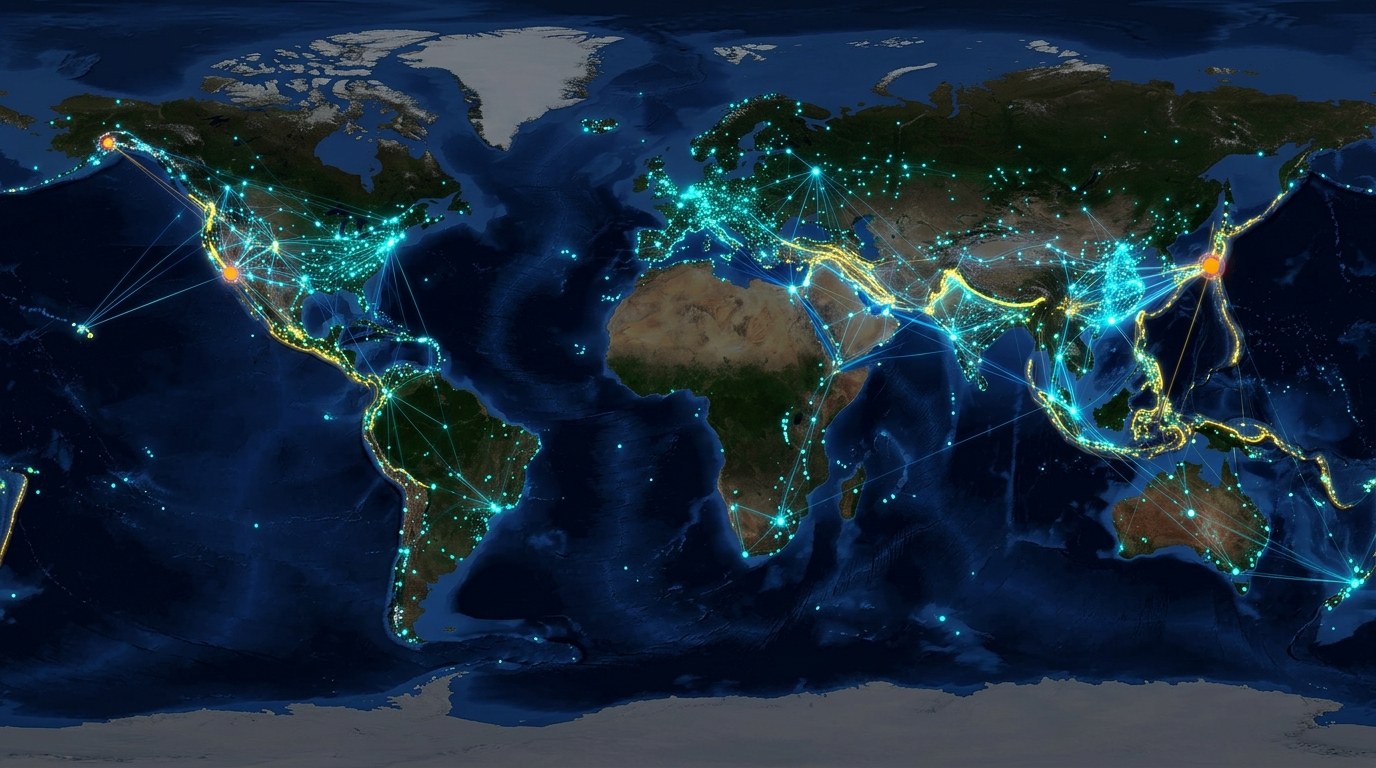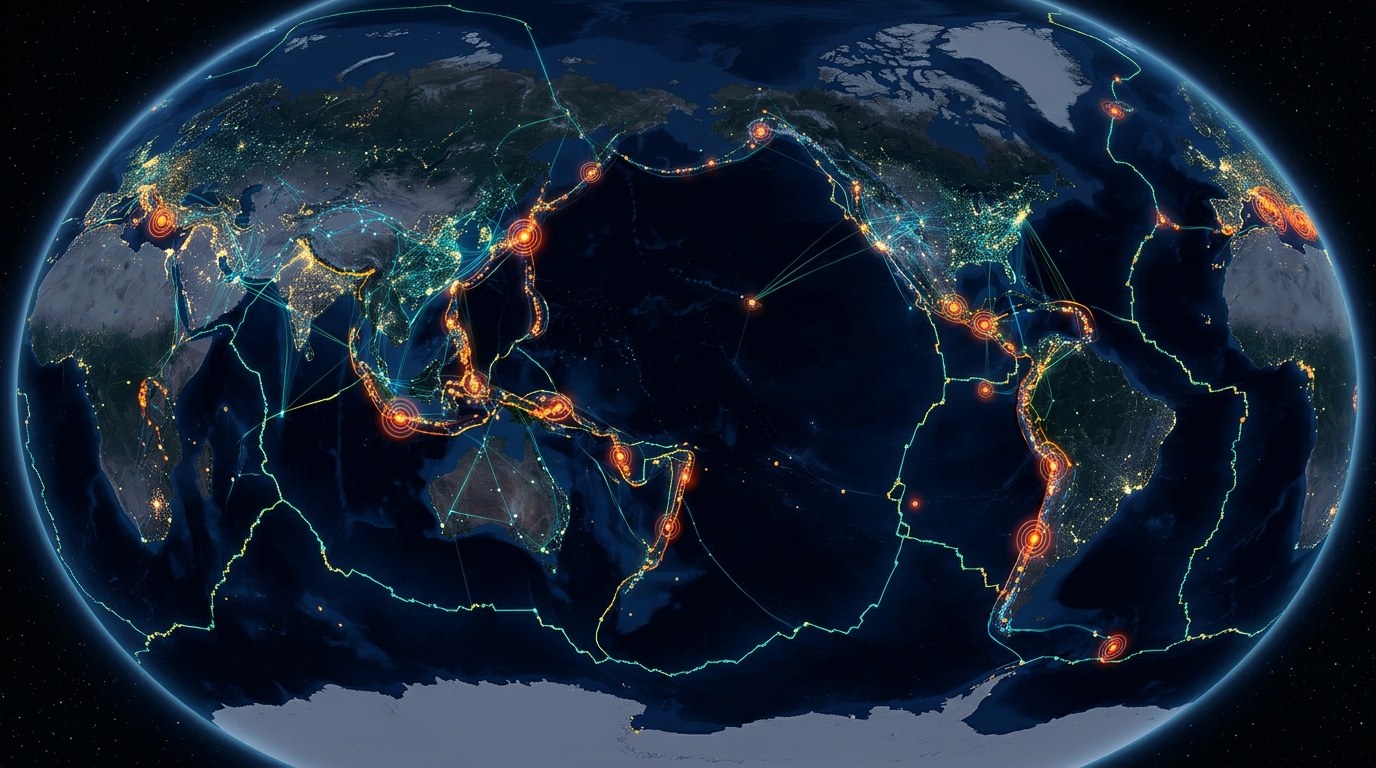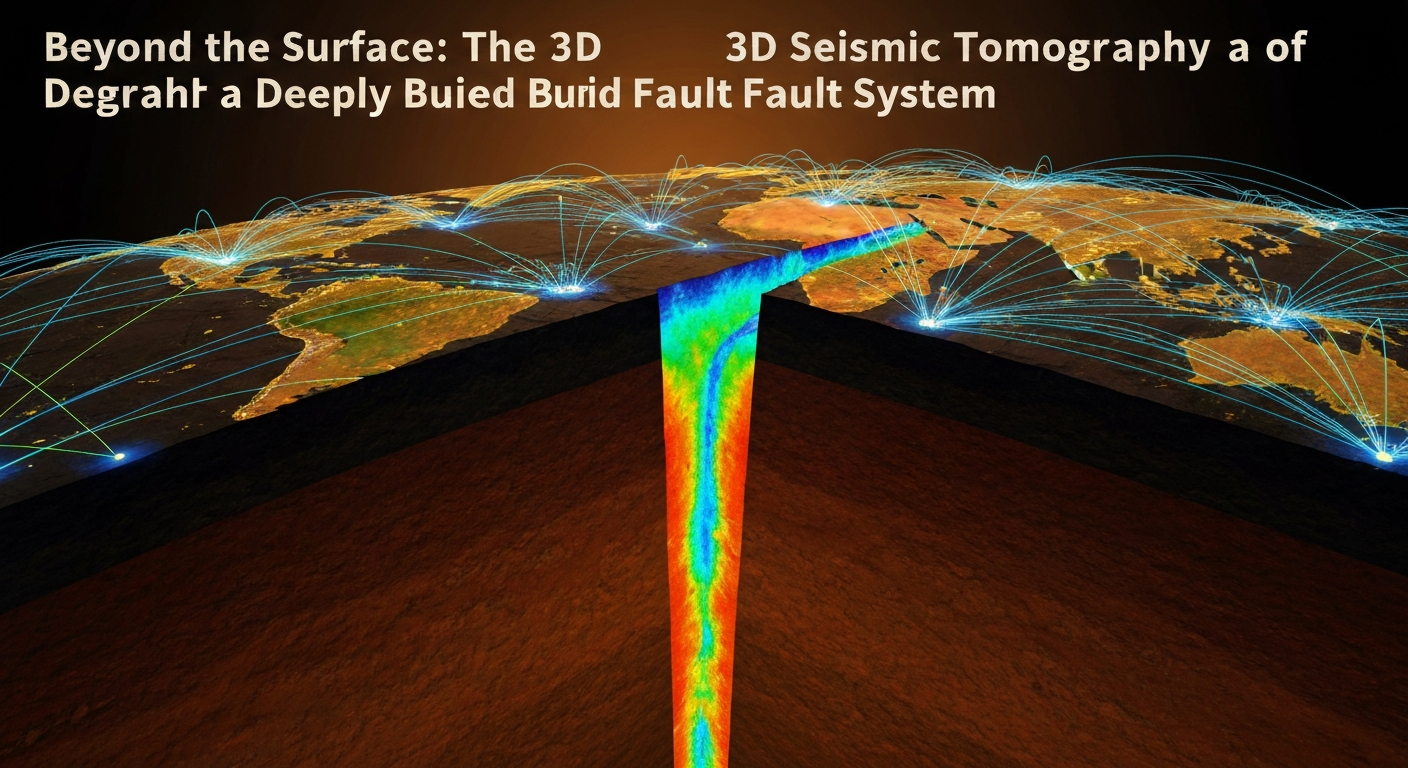
The Earth's crust is a dynamic, complex system, constantly accumulating and releasing stress. Predicting when and where this stress will culminate in an earthquake is one of science's grandest challenges. At Talivio, we tackle this complexity not with speculation, but with a rigorous, data-driven approach, powered by artificial intelligence.
Central to our methodology is the analysis of 102 distinct seismic features, each offering a unique window into the Earth's subsurface processes. This article will demystify these features, explaining how they are extracted, processed, and ultimately integrated into our machine learning models to generate our probabilistic earthquake forecasts.
Decoding Earth's Movement: Tectonic Strain and Deformation Features
Earthquakes are fundamentally a result of tectonic plate movement and the subsequent accumulation and sudden release of elastic strain in the Earth's crust. Understanding these deformation processes is paramount to assessing earthquake potential. Talivio's models leverage a suite of geodetic features that quantify crustal motion and stress.
GNSS Strain Rate
Global Navigation Satellite Systems (GNSS), including GPS, provide millimeter-precision measurements of ground displacement. By analyzing the relative motion of thousands of GNSS stations across earthquake-prone regions, Talivio calculates various measures of crustal deformation, most notably strain rate. High strain rates indicate areas where elastic energy is actively building up, increasing the likelihood of seismic rupture. Our models incorporate both long-term average strain rates, reflecting steady tectonic loading, and short-term anomalies that might signal changes in the regional stress field. This data is crucial for identifying regions of active deformation. [Bennett et al., 1999 — doi:10.1029/1998JB900010]
Fault Slip Rates and Interseismic Coupling
Derived from a combination of GNSS data and geological observations, these features describe how fast specific fault segments are moving and how much of that motion is accommodated by slow, aseismic creep versus being locked and accumulating stress. Fault segments with high interseismic coupling, meaning they are locked and building up significant stress, are considered prime candidates for future large earthquakes. Talivio's features include measures of both present-day and historical slip rates, providing a comprehensive view of fault behavior.
Crustal Thickness and Rheology
While static, features related to crustal thickness and rheology (how materials deform under stress) are critical contextual inputs. These properties influence how stress is distributed and released within the lithosphere. For instance, a thicker, colder crust might behave more rigidly, accumulating stress over longer periods before rupture, while a thinner, hotter crust might deform more plastically. These features help our models understand the mechanical environment in which earthquakes occur.
Unpacking Seismicity Patterns: Statistical Indicators of Stress
Beyond the slow accumulation of strain, the earthquakes themselves — their frequency, magnitudes, and spatial distribution — offer a rich source of information about the underlying stress state and fault characteristics. Talivio's models extract numerous statistical features from earthquake catalogs.
b-value Anomaly
The Gutenberg-Richter law describes the inverse relationship between earthquake magnitude and frequency (log N = a - bM). The 'b-value' is the slope of this relationship, indicating the relative proportion of large to small earthquakes. A lower b-value (meaning relatively more large earthquakes compared to small ones) is often observed in regions experiencing high differential stress, potentially preceding a major seismic event. Talivio's models analyze spatial and temporal variations in b-value across different regions and depth ranges, identifying anomalies that may signify changing stress conditions. [Schorlemmer et al., 2003 — doi:10.1029/2002JB001948]
ETAS Parameter Estimation
The Epidemic-Type Aftershock Sequence (ETAS) model is a statistical framework that describes how earthquakes trigger other earthquakes, forming clusters (aftershocks). Talivio continuously estimates key ETAS parameters for various seismic zones, including the background seismicity rate (events not triggered by others), aftershock productivity, and the decay rate of aftershock sequences. Changes in these parameters can indicate shifts in the regional stress field or the proneness of faults to rupture. For example, an increase in aftershock productivity or a slower decay rate might suggest a more critically stressed system. [Ogata, 1988 — J. Am. Stat. Assoc. 83, 9-27]
Seismic Quiescence and Clustering
Periods of unusual seismic quietness (quiescence) in an otherwise active region, or conversely, intense clustering of small events, can sometimes precede larger earthquakes. Talivio's features include various statistical measures to identify these patterns, such as the coefficient of variation of inter-event times, fractal dimensions of hypocenter distributions, and measures of earthquake migration. These features capture the complex spatio-temporal dynamics of earthquake sequences, providing insights into potential stress redistribution.
Dynamic Interactions: Stress Transfer and Environmental Modulations
Earthquakes are not isolated events; they interact with each other and can be influenced by external environmental factors. Talivio's 102 features include those that capture these dynamic interactions.
Coulomb Stress Transfer
A fundamental concept in seismology is Coulomb stress transfer, which posits that a large earthquake can change the stress field on nearby faults. An increase in Coulomb stress promotes failure, potentially triggering subsequent earthquakes, while a decrease inhibits them. Talivio's models dynamically calculate Coulomb stress changes from recent significant earthquakes (e.g., M4+ events) on surrounding fault segments. This feature is particularly crucial for forecasting aftershock sequences and understanding cascade failures. For example, the 2023 Turkey-Syria earthquake sequence clearly demonstrated the role of stress transfer in triggering subsequent large events. [Parsons et al., 2023 — usgs:us7000j57d]
Tidal and Lunar Forcing
While their influence is generally subtle, some research explores correlations between tidal stresses (caused by gravitational forces from the Moon and Sun) and earthquake occurrence, particularly for certain fault geometries or volcanic regions. Talivio incorporates tidal stress components as features, allowing our machine learning models to determine their relevance, if any, in specific geographical and tectonic contexts based on historical data patterns.
Hydrological Load Changes
Changes in surface water loads, such as those caused by reservoir filling or drawdown, heavy rainfall, or snowmelt, can alter pore pressure and normal stress on faults. These changes can, in some cases, induce or inhibit seismicity. Talivio's features include proxies for significant hydrological load changes in relevant areas, providing another layer of environmental context for our forecasts.
Talivio's AI Engine: Synthesizing the 102 Features for Forecasts
The true power of Talivio lies in its ability to integrate these 102 diverse seismic features into a cohesive, predictive framework using advanced machine learning.
Feature Engineering and Data Integration
The 102 features are not raw data but carefully engineered derivatives, representing anomalies, rates of change, spatial gradients, and other statistical transformations. This engineering process maximizes the informational content of the data. Ensuring data quality, consistency, and precise spatio-temporal alignment across all features is paramount, involving robust data pipelines and validation protocols.
Advanced Machine Learning Algorithms
Talivio employs a sophisticated algorithm competition approach. Rather than relying on a single model, we continuously evaluate and select from a suite of high-performance machine learning algorithms, including LightGBM, Random Forest, ExtraTrees, and Calibrated Logistic Regression. These algorithms are trained on vast historical earthquake catalogs and the corresponding states of our 102 features. This competitive framework ensures that our platform always utilizes the most robust and accurate models for the task, capable of identifying complex, non-linear relationships within the data.
Band-Specific Machine Learning Systems
A cornerstone of Talivio's methodology is its band-specific ML system. We develop and train separate, specialized models for different earthquake magnitude ranges: M4-5, M5-6, M6-7, and M7+. This tiered approach is crucial because the underlying physics, precursory signals, and relevant features can vary significantly for earthquakes of different magnitudes. For example, a M4.5 earthquake might be influenced by local stress heterogeneities, while a M7.5 event might be more strongly tied to large-scale tectonic loading and stress transfer across major fault systems. By tailoring our models to each band, Talivio optimizes forecasting accuracy across the full spectrum of potentially damaging earthquakes.
Probabilistic Output
The culmination of this intricate process is Talivio's probabilistic earthquake forecasts. Our models do not issue deterministic predictions but rather provide probabilities of an earthquake of a certain magnitude occurring within a specific spatio-temporal window. This probabilistic output reflects the inherent complexity and uncertainty of earthquake processes, offering actionable insights for preparedness and risk mitigation.
Conclusion
The 102 seismic features underpinning Talivio's platform represent a comprehensive effort to capture the intricate dynamics of Earth's seismic activity. From the slow creep of tectonic plates to the subtle statistical shifts in earthquake sequences, each feature contributes to a richer, more nuanced understanding of earthquake processes.
By rigorously extracting, engineering, and integrating these diverse data points into our advanced machine learning models, Talivio moves beyond simplistic analyses, striving for ever-improving accuracy in our probabilistic earthquake forecasts. Our commitment remains to scientific rigor, transparency, and the continuous advancement of AI-driven seismology, all with the goal of enhancing preparedness and resilience in earthquake-prone regions.