Imagine forces so immense they can reshape continents, uplift mountain ranges, and unleash catastrophic seismic energy. These forces are most dramatically at play within Earth's subduction zones – the geological settings where one tectonic plate dives beneath another. These zones are not merely geological curiosities; they are the planet's most prolific and powerful earthquake factories, responsible for the vast majority of the world's largest and most destructive seismic events. Understanding their intricate mechanics is paramount to mitigating seismic risk, and at Talivio, we leverage cutting-edge artificial intelligence to shed new light on these complex, dynamic systems.
What is a Subduction Zone?
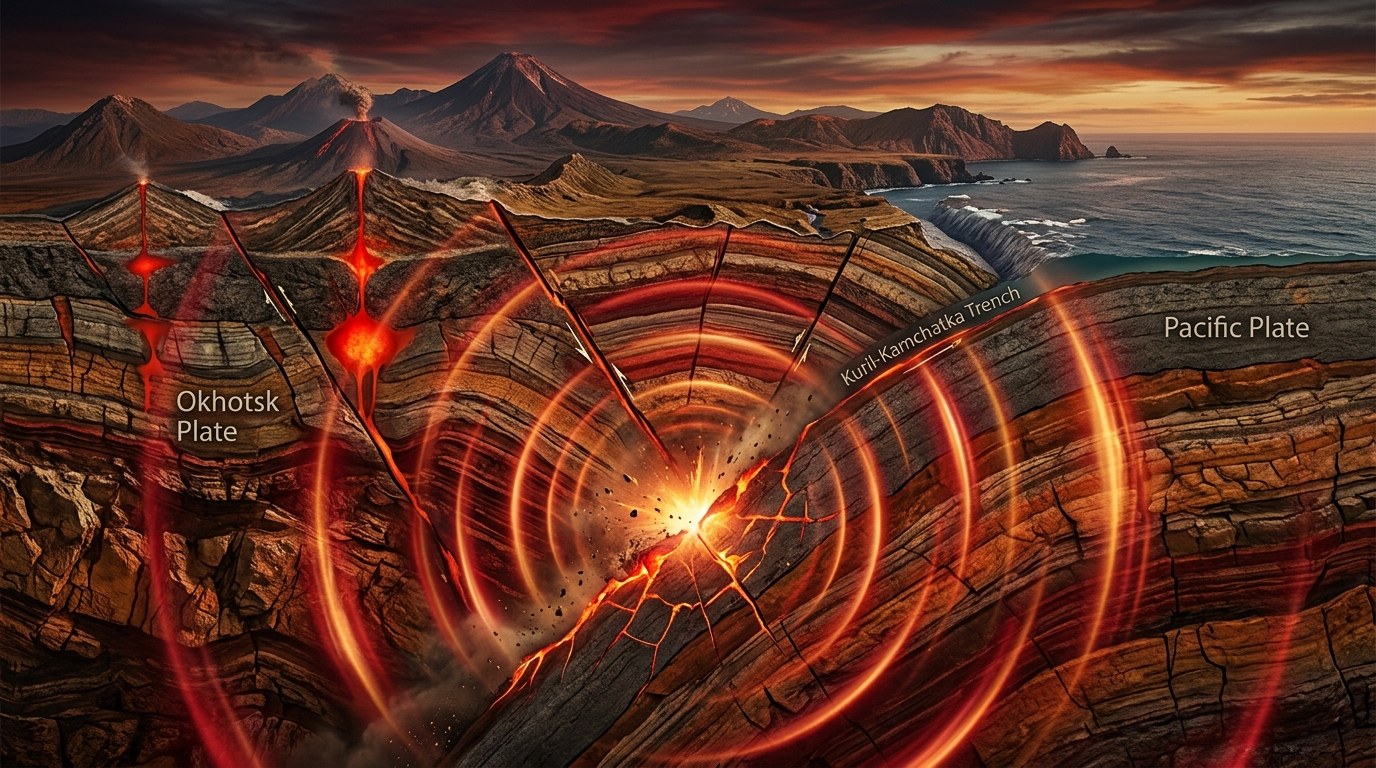
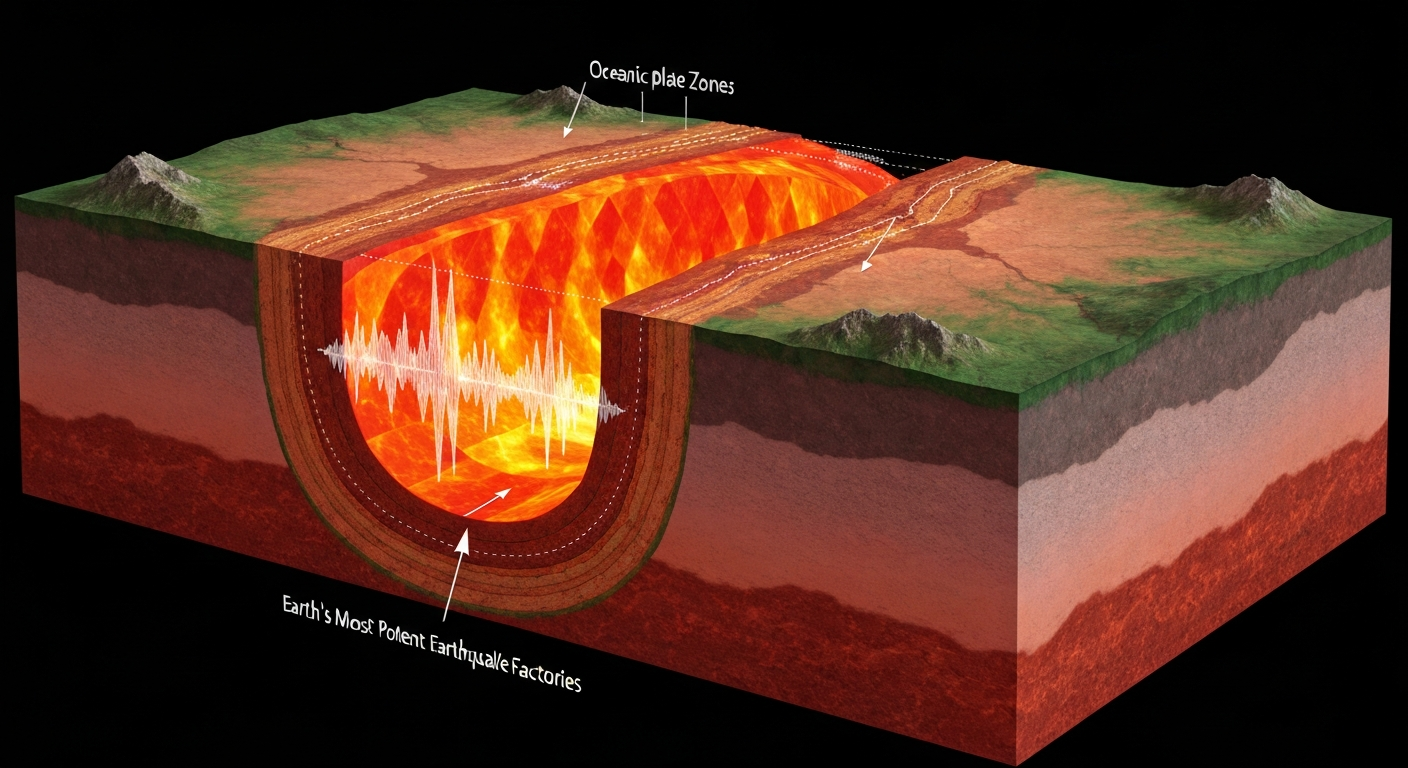
A subduction zone forms at a convergent plate boundary where two tectonic plates collide, and one plate, typically the denser oceanic plate, is forced to descend beneath the other into the Earth's mantle. This process is a fundamental component of plate tectonics, driving geological phenomena ranging from volcanism and mountain building to deep-ocean trenches. The descending plate, known as the subducting slab, can penetrate hundreds of kilometers into the mantle, creating a distinctive seismic signature known as the Wadati-Benioff zone, where earthquakes occur at progressively greater depths along the slab's path.
The type of collision determines the characteristics of the subduction zone. When an oceanic plate collides with a continental plate (e.g., the Andes Mountains along the Nazca Plate), the denser oceanic plate always subducts. When two oceanic plates collide (e.g., the Mariana Trench), the older, colder, and therefore denser oceanic plate will subduct. These regions are characterized by deep oceanic trenches, chains of volcanoes (volcanic arcs), and intense seismic activity. The continuous descent of the slab plays a crucial role in Earth's mantle convection and the global carbon cycle, making subduction zones critical to understanding Earth's deep interior and surface processes [Stern, R. J., 2002 — doi:10.1029/2001RG000108].
The Mechanics of Megathrust Earthquakes
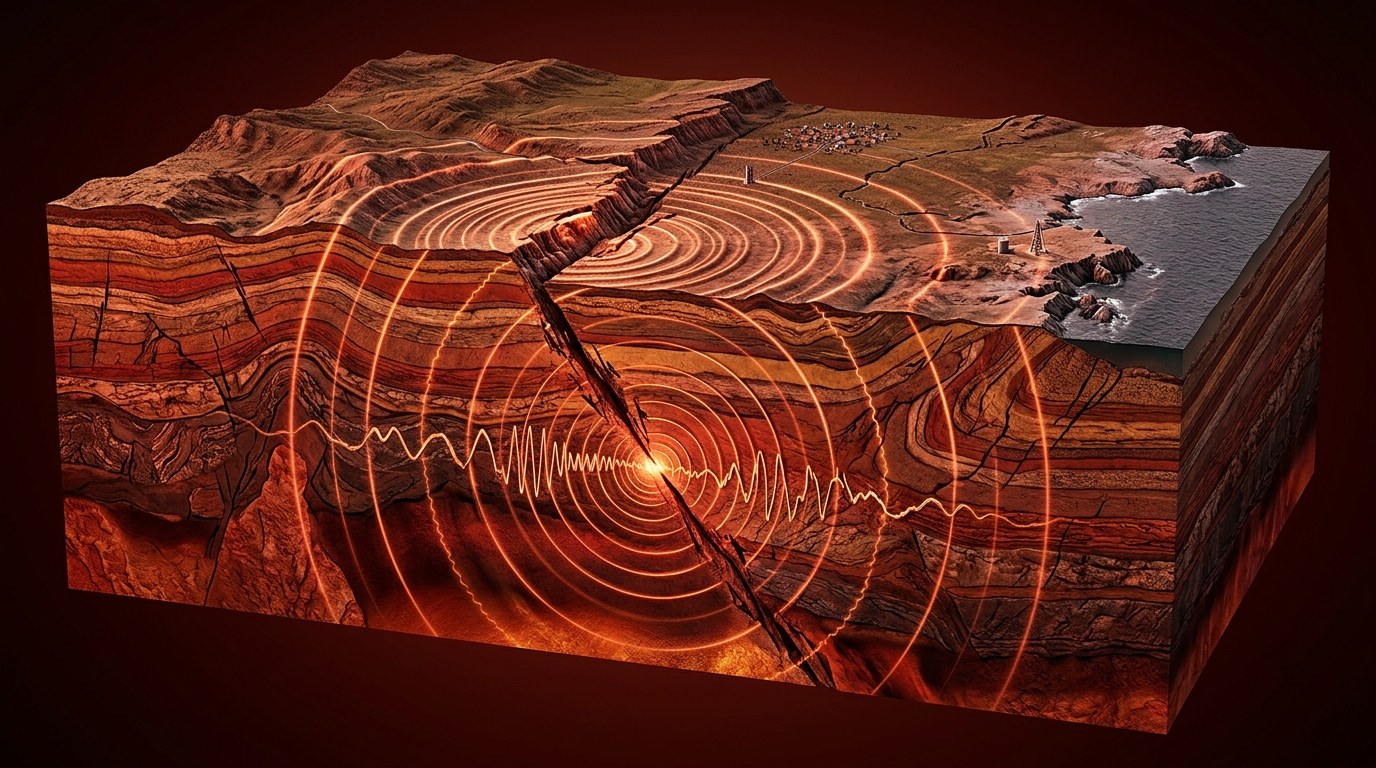
The most devastating earthquakes originating in subduction zones are known as megathrust earthquakes. These events occur at the interface between the subducting and overriding plates, where friction causes the two plates to lock together. As the subducting plate continues its relentless descent, stress accumulates along this locked interface. The overriding plate is slowly deformed, building up elastic strain energy over decades or even centuries. When the accumulated stress exceeds the frictional strength of the interface, the plates suddenly slip past each other, releasing an enormous amount of stored energy. This rapid release is the essence of a megathrust earthquake, often accompanied by significant ground shaking, tsunamis, and widespread destruction.
The scale of these events is unparalleled. Megathrust earthquakes can rupture fault segments hundreds to thousands of kilometers long, generating magnitudes often exceeding M8.0, and occasionally M9.0 or higher. The 1960 Valdivia earthquake in Chile (usgs:iscgem872583), for instance, registered an astounding M9.5, the largest ever instrumentally recorded. The mechanics of these events are complex, involving not just the main megathrust interface but also intraplate earthquakes within the subducting slab itself (deep-focus earthquakes) and within the overriding plate. The interplay of these forces, including the elastic rebound of the overriding plate and the transfer of stress, dictates the timing and magnitude of seismic events [Ruff, L. J., & Kanamori, H., 1983 — doi:10.1007/BF00876170].
Global Hotspots and Historic Events
Subduction zones encircle the Pacific Ocean, forming the infamous "Ring of Fire," a horseshoe-shaped belt that accounts for approximately 90% of the world's earthquakes and 75% of its active volcanoes. Key subduction zones within this ring include the Japan Trench, the Kuril-Kamchatka Trench, the Aleutian Trench, the Cascadia Subduction Zone (off the coast of North America), and the Nazca Plate subducting beneath South America. Other significant subduction zones exist in the Indian Ocean (e.g., Sumatra) and the Mediterranean region.
- 2004 Sumatra-Andaman Earthquake (M9.1): This catastrophic event (usgs:usp0000pv8) off the coast of Sumatra triggered a devastating tsunami that claimed over 230,000 lives across 14 countries. Research indicates that the rupture extended for more than 1,300 kilometers, making it one of the longest ever recorded [Satake, K. et al., 2007 — doi:10.1126/science.1147551].
- 2011 Tohoku Earthquake (M9.1): Striking off the coast of Japan (usgs:usp0000y0x), this megathrust event generated a powerful tsunami that inundated coastal areas, caused the Fukushima Daiichi nuclear disaster, and led to significant ground subsidence. The earthquake demonstrated the immense power of subduction zone events and the complex interactions between seismic activity and infrastructure.
- 1960 Valdivia Earthquake (M9.5): As mentioned, this remains the largest earthquake ever recorded. Its rupture zone stretched for nearly 1,000 kilometers along the Chile Trench, causing widespread destruction and a Pacific-wide tsunami.
These historical events underscore the critical need for advanced monitoring, comprehensive hazard assessment, and robust forecasting capabilities in subduction zone regions.
Talivio's AI-Driven Approach to Subduction Zone Dynamics
Traditional earthquake prediction, aiming for precise time, location, and magnitude, has proven elusive, as extensively discussed in the scientific literature [Geller, R. J., 1997 — doi:10.1029/RG023i004p00397]. However, modern seismology, empowered by artificial intelligence and machine learning, is making significant strides in earthquake forecasting – the probabilistic assessment of future seismic activity. At Talivio, we are at the forefront of this revolution, specifically targeting the complex dynamics of subduction zones to improve our understanding and forecasting capabilities.
Our platform leverages a sophisticated multi-band machine learning system designed to analyze seismic patterns across different magnitude ranges. This system operates with distinct models for M4-5, M5-6, M6-7, and M7+ earthquake bands, allowing for tailored analysis of the unique precursors and characteristics associated with varying seismic energy releases. By segmenting the problem, Talivio's models can achieve higher fidelity in identifying subtle signals that might precede larger events.
Talivio's core strength lies in its ability to process and synthesize an extensive array of seismic features. Our algorithms, which include a competitive ensemble of LightGBM, Random Forest, ExtraTrees, and Calibrated Logistic Regression models, are trained on over 102 distinct seismic features. These features are meticulously selected and engineered from diverse geophysical data streams, providing a holistic view of the tectonic environment. Key features integrated into our models for subduction zone analysis include:
- GNSS Strain Rate: Data from Global Navigation Satellite Systems (GNSS) provides precise measurements of crustal deformation, allowing us to quantify the rate at which stress is accumulating along locked fault segments in subduction zones.
- b-value Anomaly: The b-value, a parameter in the Gutenberg-Richter law, describes the ratio of small to large earthquakes. Anomalies in b-value can indicate changes in stress conditions within a fault zone, potentially signaling an increased likelihood of larger events.
- Coulomb Stress Transfer: This metric quantifies how stress changes on one fault segment can influence the likelihood of rupture on adjacent or nearby faults. In subduction zones, understanding stress transfer is crucial for assessing cascading earthquake scenarios.
- ETAS Parameter Estimation: Epidemic Type Aftershock Sequence (ETAS) models help characterize earthquake clustering and aftershock activity. By estimating ETAS parameters, Talivio can better differentiate between background seismicity and potential foreshock sequences, which are particularly relevant in dynamically active subduction zones.
By integrating these and many other features, Talivio's AI models can identify complex, non-linear patterns in seismic data that are imperceptible to human analysis. This allows us to generate probabilistic forecasts that contribute significantly to hazard assessment and preparedness efforts in subduction zone regions. While precise earthquake prediction remains a scientific frontier, our AI-driven approach provides unprecedented insights into the dynamic behavior of these powerful geological systems, moving us closer to a future where seismic risk can be more effectively managed [Li, J. et al., 2023 — arxiv:2307.03451].
Conclusion
Subduction zones are undoubtedly Earth's most significant earthquake factories, shaping our planet's landscape and posing formidable challenges to human societies. The immense power unleashed by megathrust earthquakes, as evidenced by historical events, underscores the critical importance of continuous scientific inquiry and technological innovation.
At Talivio, we are committed to advancing our understanding of these complex geological systems. By harnessing the power of artificial intelligence and machine learning, we are transforming vast streams of seismic data into actionable insights, providing probabilistic forecasts that enhance our ability to prepare for and respond to seismic events. Our work aims not to predict the exact moment of an earthquake, but to refine our understanding of seismic probabilities, empower communities, and ultimately reduce the devastating impact of these natural phenomena. As our models evolve and integrate even more sophisticated data, Talivio continues to push the boundaries of seismic science, contributing to a safer and more resilient world in the face of Earth's powerful, ever-moving plates.