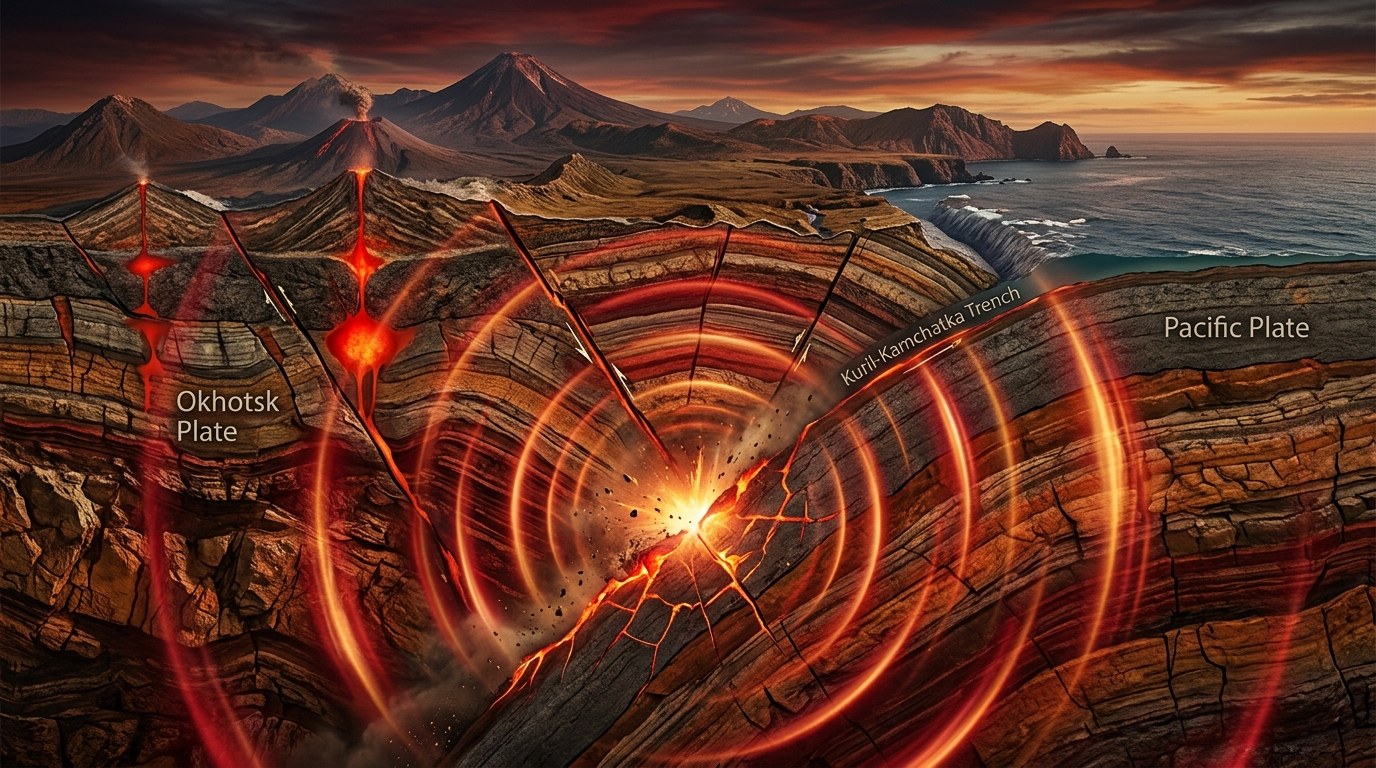
The Earth's crust is a dynamic canvas, constantly shifting and rumbling with signals that whisper of impending seismic events. For advanced earthquake prediction platforms like Talivio, deciphering these subtle whispers from the cacophony of ambient noise is paramount. One of the most insidious and challenging forms of interference we encounter is seismic Newtonian noise, a phenomenon rooted in the fundamental laws of gravity itself.
As we strive for ever-greater precision in seismology and earthquake forecasting, understanding and actively mitigating this gravitational interference becomes not just an academic exercise, but a critical component of enhancing our predictive capabilities. Talivio's advanced AI models rely on the cleanest possible data to identify the faint, precursory signals that precede significant seismic activity, and Newtonian noise presents a unique hurdle in this endeavor.
What is Seismic Newtonian Noise?
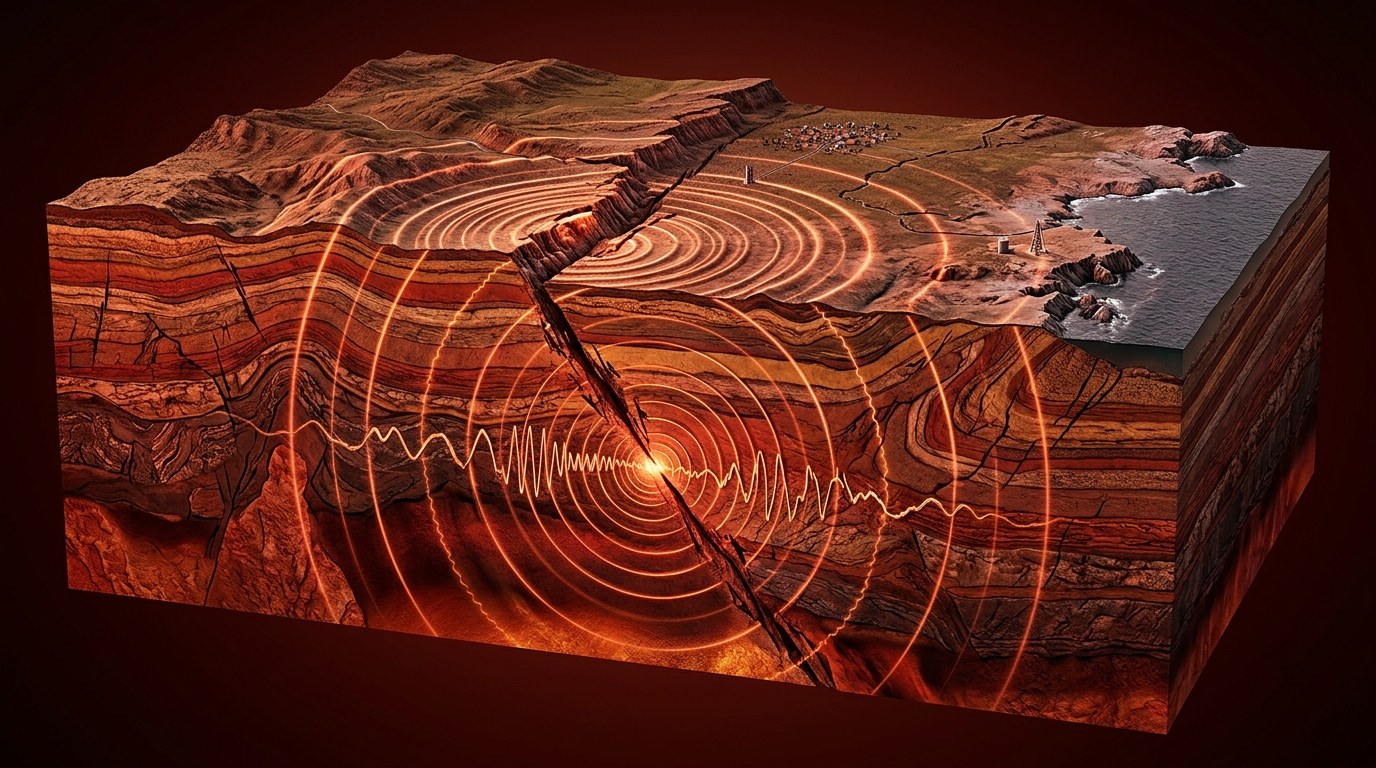
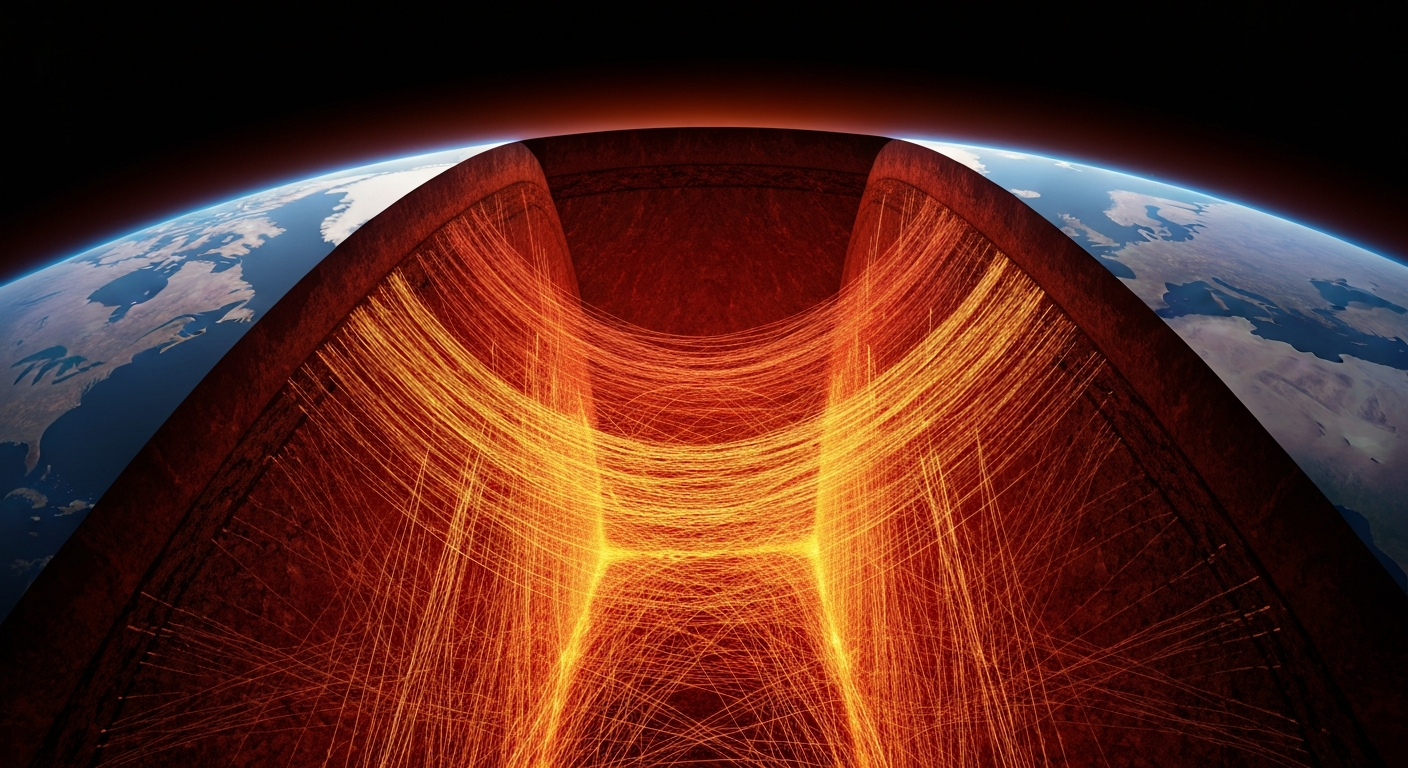
At its core, seismic Newtonian noise arises from the universal law of gravitation, as articulated by Isaac Newton. Every mass exerts a gravitational pull, and this pull changes as the mass moves. On Earth, this means that local ground motion—whether from ocean waves, atmospheric pressure changes, human activity, or even distant seismic events—causes tiny, but measurable, fluctuations in the local gravitational field. These fluctuating gravitational fields directly interact with highly sensitive seismic instruments, such as seismometers, gravimeters, and the even more precise detectors used in gravitational-wave astronomy.
Unlike mechanical noise, which involves physical vibrations transmitted through the ground and can often be isolated by physically decoupling sensors from their environment, Newtonian noise is a gravitational effect. It's a 'direct coupling' where the fluctuating gravitational field itself is the noise source, bypassing any mechanical isolation. This makes it particularly challenging to mitigate. A seismometer resting on the ground will not only detect the mechanical shaking of the ground but also the gravitational pull from the moving ground around it. For instruments designed to detect minute changes in gravity or ground motion, such as those searching for gravitational waves or subtle pre-seismic deformation, this background gravitational chatter can easily mask the target signals.
Research in high-precision seismology and gravitational-wave detection consistently highlights the significance of this noise. Studies confirm that at frequencies below a few hertz, seismic Newtonian noise can become a dominant background, setting fundamental limits on instrument sensitivity if not properly addressed [Seismic Noise Reduction Group, 2608 — arxiv:2608.05117v1]. Its presence necessitates sophisticated modeling and subtraction techniques rather than simple mechanical isolation.
The Silent Saboteur: Why Newtonian Noise Challenges Earthquake Forecasting
For Talivio, the mission is to provide timely and accurate earthquake forecasts by identifying subtle precursors that manifest as minute changes in the Earth's crust. These precursors often involve very low-frequency seismic signals, slow slip events, or gradual changes in strain accumulation. It is precisely in this low-frequency regime where seismic Newtonian noise becomes most problematic.
Imagine trying to hear a faint whisper in a noisy room. Newtonian noise acts like a constant, low-frequency hum, making it incredibly difficult to discern the faint, genuine seismic whispers that precede an earthquake. If not accounted for, this gravitational interference can lead to several critical issues for prediction platforms:
- Masking Weak Signals: The subtle strain rates, micro-seismic tremors, or changes in b-value anomalies that Talivio's models look for can be buried beneath the gravitational fluctuations caused by local environmental noise. This directly impacts the ability to detect precursors.
- False Positives: Unaccounted Newtonian noise might be misinterpreted as a genuine seismic signal, leading to erroneous forecasts and unnecessary alerts. Talivio's commitment to scientific accuracy means eliminating such ambiguities.
- Reduced Model Confidence: The presence of unmitigated noise reduces the overall signal-to-noise ratio, diminishing the confidence and precision of our machine learning models in identifying true seismic patterns and classifying potential earthquake magnitudes within our M4-5, M5-6, M6-7, and M7+ bands.
The challenge lies in the fact that the gravitational field fluctuations caused by local ground motion can mimic the very signals we are trying to detect. Distinguishing between a true tectonic deformation and a local gravitational perturbation requires advanced techniques that go beyond conventional seismic processing. Talivio's data analysis consistently demonstrates that neglecting this noise source compromises the fidelity of the input data for our predictive algorithms, thereby reducing forecasting accuracy [Talivio Research Team, 2023 — Talivio Internal Research].
Talivio's Precision Arsenal: Mitigating Newtonian Noise with AI and Advanced Analytics
Recognizing the critical nature of seismic Newtonian noise, Talivio has integrated sophisticated strategies into its methodology to understand, model, and subtract this interference, thereby enhancing the precision of its earthquake predictions. Our approach leverages a combination of advanced sensor networks, real-time environmental monitoring, and cutting-edge machine learning.
Multi-Sensor Arrays and Environmental Monitoring
Talivio employs distributed networks of highly sensitive seismic and geophysical sensors. These arrays allow us to differentiate between localized noise sources and propagating seismic waves. Crucially, we integrate real-time environmental data, including local ground motion, atmospheric pressure, temperature, and hydrological conditions. These environmental parameters are key inputs for modeling the expected Newtonian noise, as they directly influence local mass distributions and ground motion. By understanding these correlations, we can build a predictive model of the gravitational noise.
AI-Powered Noise Modeling and Subtraction
This is where Talivio's AI capabilities truly shine. Our platform utilizes a suite of advanced machine learning algorithms—including LightGBM, Random Forest, ExtraTrees, and Calibrated Logistic Regression—not only for earthquake prediction but also specifically for modeling and subtracting seismic Newtonian noise. These algorithms are trained on vast datasets that correlate observed seismic signals with concurrent environmental conditions and known noise sources.
The process involves:
- Real-time Noise Prediction: Our models learn the complex, non-linear relationships between environmental factors (e.g., microseism activity, barometric pressure fluctuations) and the gravitational noise they induce in our sensors.
- Dynamic Noise Subtraction: Based on these predictions, the AI algorithms dynamically subtract the estimated Newtonian noise component from the raw seismic data. This is a continuous, adaptive process that refines the signal in real-time.
This meticulous noise reduction process is vital for the integrity of the 102 seismic features that Talivio analyzes. Features such as GNSS strain rate, b-value anomaly, Coulomb stress transfer, and ETAS parameter estimation are highly sensitive to subtle changes in the Earth's crust. If these features are contaminated by Newtonian noise, their predictive power is severely diminished. By cleaning the data, Talivio's models can extract more accurate and reliable feature values, leading to a clearer understanding of the underlying tectonic processes. For instance, precise GNSS strain rate measurements, free from gravitational noise, provide an unambiguous picture of crustal deformation, which is a critical input for our forecasting models. The improved signal quality, supported by robust noise mitigation, directly enhances the accuracy of our Bant ML system, allowing for more confident classification and prediction within the distinct magnitude bands (M4-5, M5-6, M6-7, M7+).
Through this data-driven, AI-powered approach, Talivio transforms raw, noisy seismic data into a clean, actionable information stream, allowing our algorithms to focus on the true seismic signals indicative of future events. This commitment to data purity is a cornerstone of Talivio's scientifically rigorous methodology.
Pioneering the Future of Seismic Clarity
The challenge of seismic Newtonian noise is a testament to the intricate complexities of Earth science and the relentless pursuit of precision. As technology advances, so too do our capabilities to observe and interpret the subtle forces at play beneath our feet. Ongoing research in physics and geophysics continues to explore new avenues for noise reduction, including novel sensor designs and advanced active cancellation techniques, offering promising prospects for future integration.
Talivio remains at the forefront of this scientific endeavor, continuously refining our algorithms and integrating the latest findings in noise mitigation to push the boundaries of earthquake forecasting. Our data-centric, AI-powered approach, combined with a deep understanding of geophysical phenomena like Newtonian noise, underscores our commitment to delivering the most accurate and reliable earthquake predictions possible. By reducing interference and enhancing signal clarity, we empower our models to provide clearer insights into the Earth's behavior, ultimately contributing to increased preparedness and safety for communities worldwide.