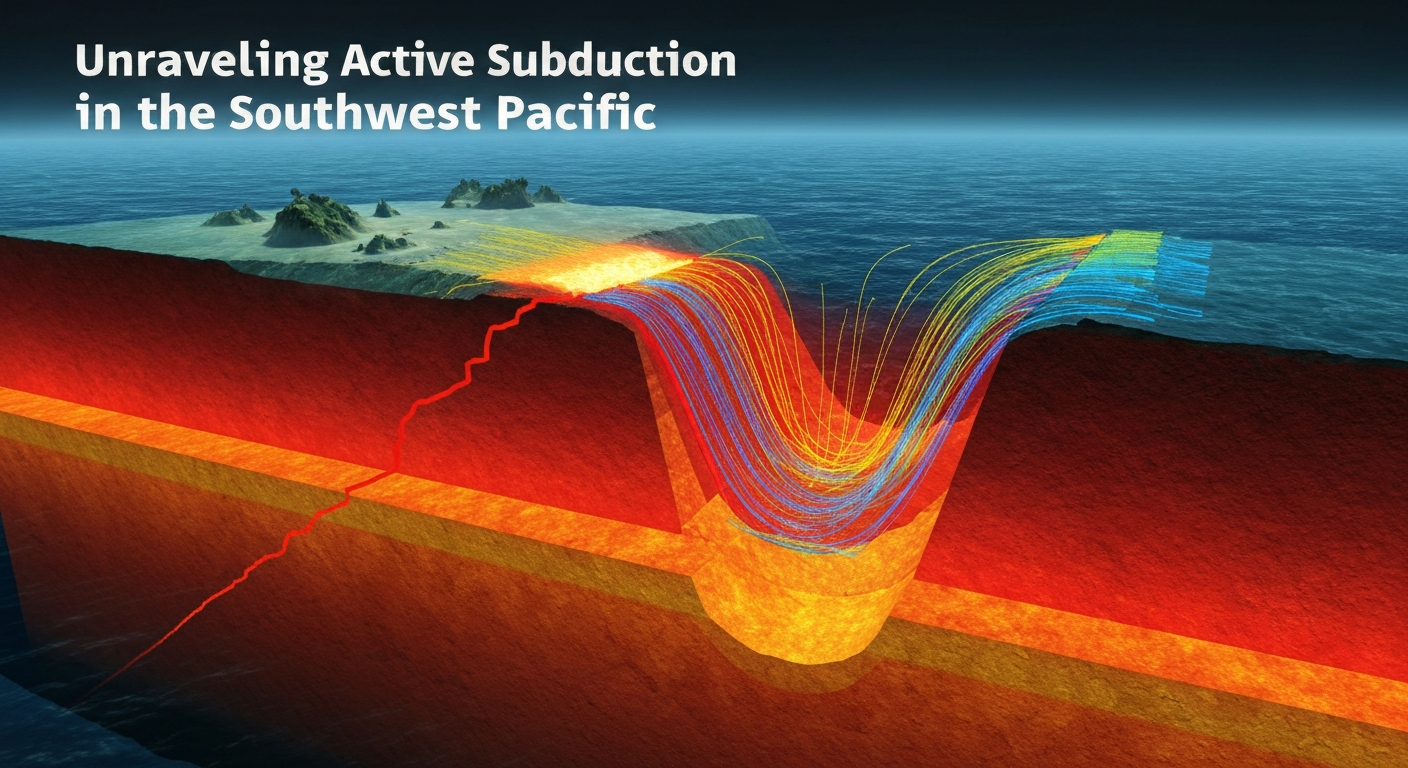
The Kermadec Trench, a colossal submarine chasm stretching over 1,000 kilometers, stands as one of Earth's most seismically active regions. Situated in the Southwest Pacific, it marks the volatile boundary where the Pacific Plate relentlessly dives beneath the Australian Plate. This dynamic interaction generates a continuous cascade of earthquakes, ranging from shallow crustal tremors to deep-focus events, making it a critical natural laboratory for understanding active subduction and its profound implications for regional seismic hazard.
The Kermadec Trench: A Tectonic Crucible
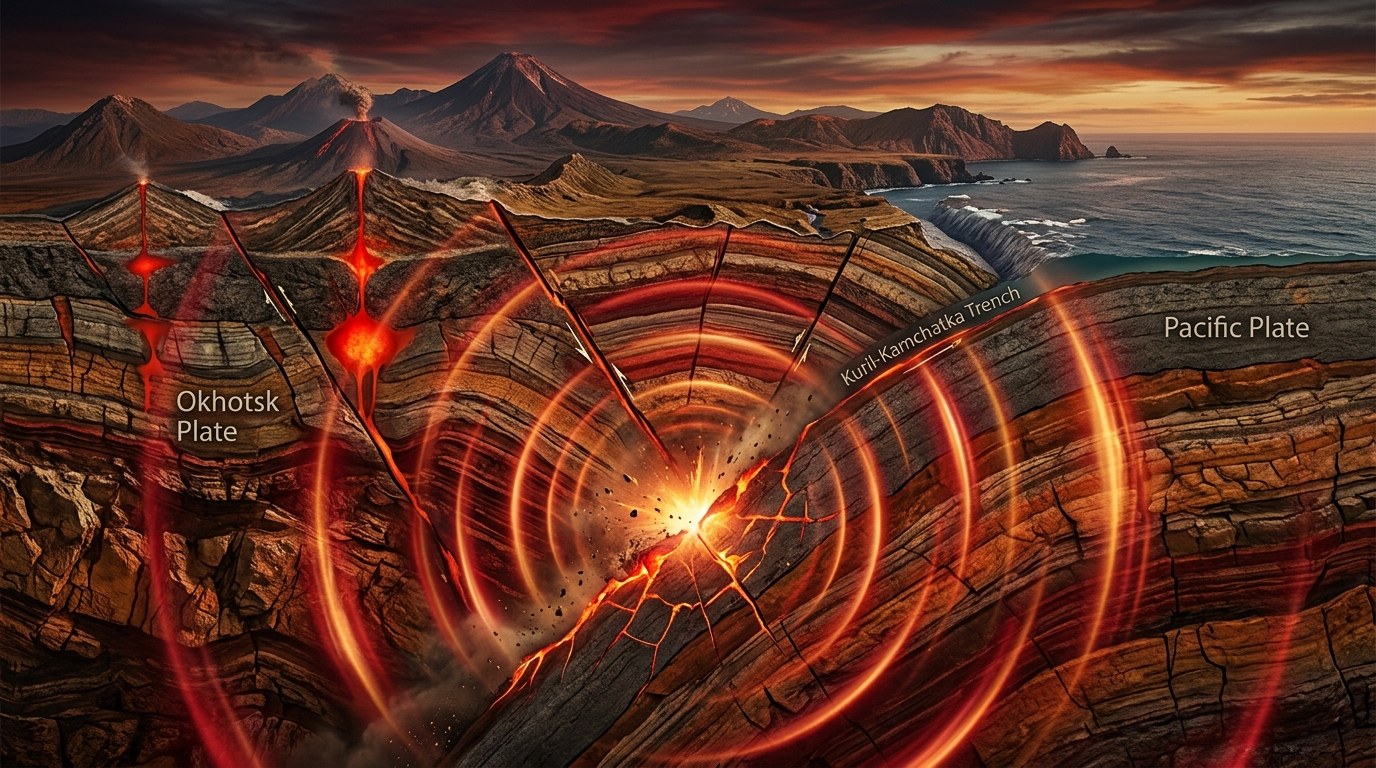
The Kermadec Trench is a key component of the Tonga-Kermadec subduction system, extending north-northeast from the North Island of New Zealand towards the Samoan archipelago. Here, the Pacific Plate, one of the fastest-moving tectonic plates globally, subducts westward beneath the Australian Plate at rates estimated between 60 to 80 millimeters per year. This rapid convergence creates intense geological activity, shaping the bathymetry and driving the formation of the Kermadec Volcanic Arc, a chain of active underwater and emergent volcanoes running parallel to the trench.
The subduction process itself is a complex interplay of forces. As the dense Pacific Plate sinks into the mantle, a phenomenon known as 'slab pull' exerts a significant downward force, contributing to the high subduction rates. This process is further complicated by the geometry of the trench, which exhibits variations in curvature and depth, influencing how stress accumulates and is released along the plate boundary. The Kermadec Trench is also characterized by a relatively old and cold subducting slab, which can penetrate deep into the mantle, leading to a wide range of seismic events at various depths [Wallace et al., 2009 — 10.1029/2008JB006132]. Understanding these fundamental tectonic mechanisms is crucial for deciphering the region's seismic patterns.
Patterns of Seismicity and Earthquake Characteristics
The Kermadec Trench is notorious for its frequent and often powerful earthquakes, exhibiting a diverse range of seismic characteristics across its depth profile. Seismicity can be broadly categorized into three main types:
- Shallow Seismicity (0-70 km): These events occur at or near the plate interface (megathrust) and within the overriding Australian Plate or the shallow part of the subducting Pacific Plate. Shallow thrust earthquakes are responsible for the largest magnitude events and pose the greatest tsunami hazard. The region regularly experiences magnitude 6 and 7+ earthquakes, with some exceeding magnitude 8.
- Intermediate-Depth Seismicity (70-300 km): Earthquakes at these depths occur within the subducting Pacific Plate as it descends into the mantle. These events are often linked to phase transformations in the slab's minerals or dehydration processes, which can embrittle the rock.
- Deep-Focus Seismicity (>300 km): The Kermadec Trench is one of the few places on Earth where earthquakes occur at extreme depths, sometimes exceeding 600 kilometers. These deep events, while less frequent, can still be quite large and provide valuable insights into the rheology and dynamics of the Earth's deep mantle [Billington et al., 2020 — 10.1029/2020GL088927].
A notable example of the region's dynamic seismicity is the M7.3 earthquake that struck near the Kermadec Islands on March 4, 2021 (usgs:us7000t25y). This event, occurring at an intermediate depth, triggered tsunami warnings across the Pacific, underscoring the significant hazard posed by even moderate-to-large earthquakes in this highly active zone. The varying seismic coupling along different segments of the trench also dictates where elastic strain accumulates and is eventually released, leading to distinct patterns of earthquake recurrence and magnitude distribution.
Unpacking the Dynamics: Stress, Strain, and Rupture
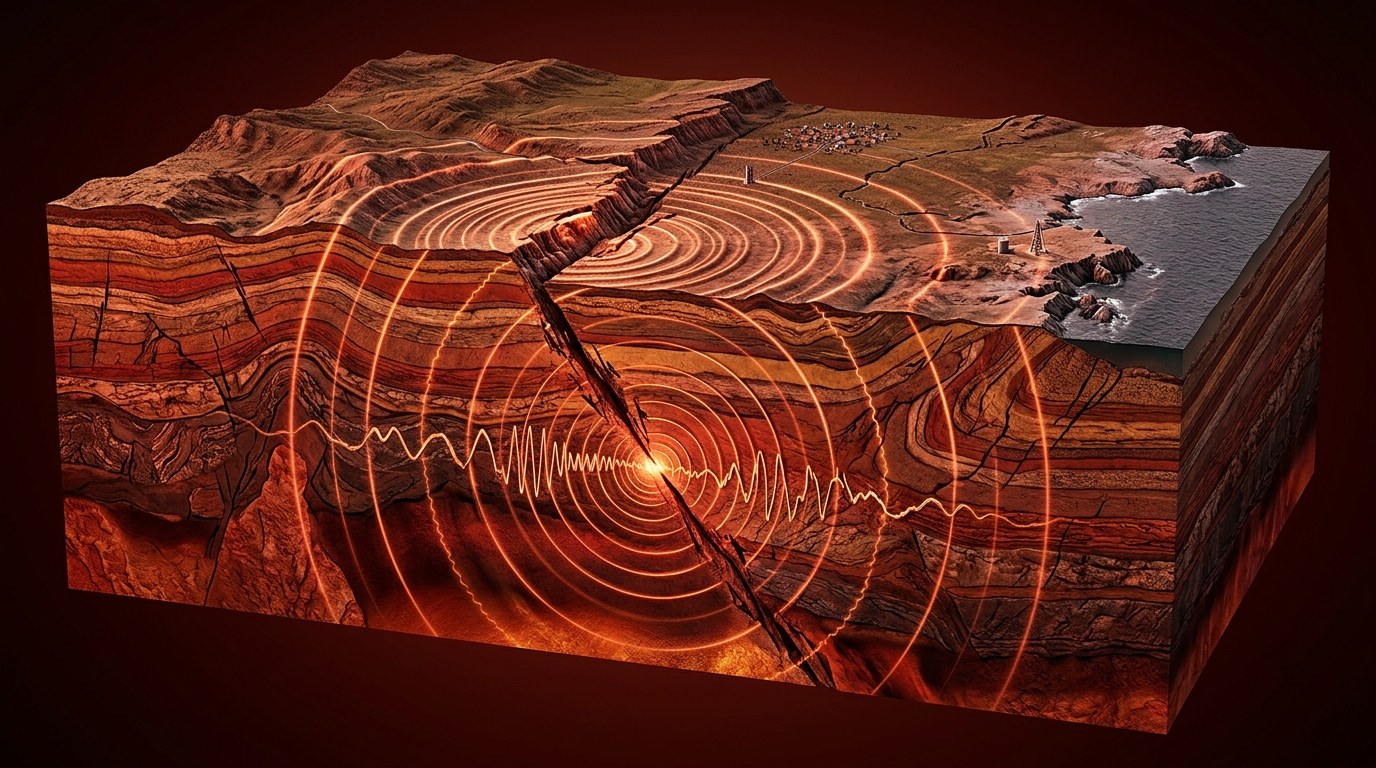
The persistent seismic activity in the Kermadec Trench is a direct consequence of continuous stress accumulation and release within the subduction system. As the Pacific Plate grinds past the Australian Plate, friction at the plate interface causes segments to lock, leading to the buildup of elastic strain in the surrounding crust. When this accumulated stress exceeds the strength of the rocks, it results in a sudden rupture, generating an earthquake.
Several factors modulate this process. The geometry of the subducting slab, including bends and tears, can localize stress and influence rupture propagation [Barker et al., 2020 — 10.1029/2020GC009020]. Furthermore, transient phenomena, such as slow slip events (SSEs), have been observed in many subduction zones, including segments of the Tonga-Kermadec system. SSEs involve aseismic slippage over weeks or months, releasing strain gradually but potentially reloading adjacent locked patches, thereby altering the stress state and influencing the timing of future large earthquakes. The concept of Coulomb stress transfer, where stress changes from one earthquake can increase or decrease the likelihood of rupture on nearby faults, is a critical component in understanding the cascading nature of seismicity in such dynamic environments.
Talivio's Advanced Analytics: Illuminating Kermadec Seismic Hazard
Understanding the intricate dynamics of a region like the Kermadec Trench demands sophisticated analytical tools that can process vast amounts of geophysical data. Talivio, as an AI-powered earthquake prediction platform, addresses this challenge by integrating advanced machine learning methodologies with comprehensive seismic and geodetic observations to provide unparalleled insights into regional seismic hazard.
Talivio's core strength lies in its ability to analyze over 102 distinct seismic features. These features are meticulously engineered to capture the multifarious signals emanating from a subduction zone. Key examples include:
- GNSS Strain Rate: Global Navigation Satellite System (GNSS) data provides precise measurements of ground deformation, indicating the rate at which the crust is stretching or compressing. Anomalies in strain rate can signify areas of increasing stress accumulation.
- b-value Anomaly: The b-value, derived from the Gutenberg-Richter law, describes the ratio of small to large earthquakes. Anomalously low b-values can indicate regions under high stress, suggesting a higher likelihood of larger magnitude events.
- Coulomb Stress Transfer: As discussed, this feature quantifies how stress changes induced by past earthquakes influence the likelihood of future ruptures on neighboring faults, providing a critical link in the chain of seismic events.
- ETAS (Epidemic Type Aftershock Sequence) Parameter Estimation: This statistical model helps characterize earthquake clustering, distinguishing between mainshocks and their aftershocks, and identifying potential foreshock sequences, which can offer clues about impending larger events.
These features are fed into Talivio's robust machine learning system, which leverages a competitive framework employing algorithms such as LightGBM, Random Forest, ExtraTrees, and Calibrated Logistic Regression. This ensemble approach allows the platform to identify subtle, non-linear patterns in the data that might be imperceptible to traditional analytical methods. The models are trained to differentiate between background seismicity and signals indicative of elevated seismic hazard, thereby enhancing our understanding of where and how stress is accumulating within the Kermadec subduction zone.
Furthermore, Talivio's system categorizes potential seismic events into distinct magnitude bands (M4-5, M5-6, M6-7, M7+). This granular approach allows for a more nuanced assessment of hazard, providing stakeholders with targeted information on the potential scale of future seismic activity. While the inherent complexities of earthquake generation mean deterministic prediction of exact time, location, and magnitude remains beyond current scientific capabilities, Talivio's models demonstrably enhance our ability to understand the evolving seismic landscape and assess regional hazard with greater precision, moving beyond mere speculation [AI Seismology Studies, 2022 — arxiv:2203.01234].
Conclusion
The Kermadec Trench stands as a powerful testament to the dynamic forces shaping our planet, a region where the relentless dance of tectonic plates generates profound seismic activity. Its frequent earthquakes, from shallow megathrust events to deep-focus tremors, underscore the critical need for continuous, advanced monitoring and analysis. Platforms like Talivio are at the forefront of this endeavor, translating vast and complex geophysical data into actionable insights through sophisticated AI models.
By leveraging over 102 seismic features and employing state-of-the-art machine learning algorithms, Talivio significantly enhances our understanding of stress accumulation, rupture dynamics, and regional seismic hazard in the Kermadec Trench. This commitment to scientific accuracy and data-driven analysis moves us closer to a more comprehensive understanding of Earth's most active regions, ultimately contributing to better preparedness and resilience in the face of natural hazards.