Earthquakes are among the most powerful and unpredictable natural phenomena, capable of reshaping landscapes and impacting millions. Beneath the calm surface of our planet, immense forces are constantly at work, building up stress that eventually leads to these sudden, often devastating, events. Understanding the fundamental mechanics behind how this stress accumulates and is released is paramount for any effort to mitigate seismic risk, and at the heart of this understanding lies the elastic rebound theory.
The Genesis of a Theory: H.F. Reid and the 1906 San Francisco Earthquake
The devastating 1906 San Francisco earthquake served as a pivotal moment in the history of seismology, not just for its immense scale but for the profound scientific insights it inspired. Harry Fielding Reid, a professor of geology at Johns Hopkins University, meticulously studied the geological and geodetic data collected before and after the event along the San Andreas Fault. His groundbreaking observations led to the formulation of the elastic rebound theory, a cornerstone concept that revolutionized our understanding of earthquake generation.
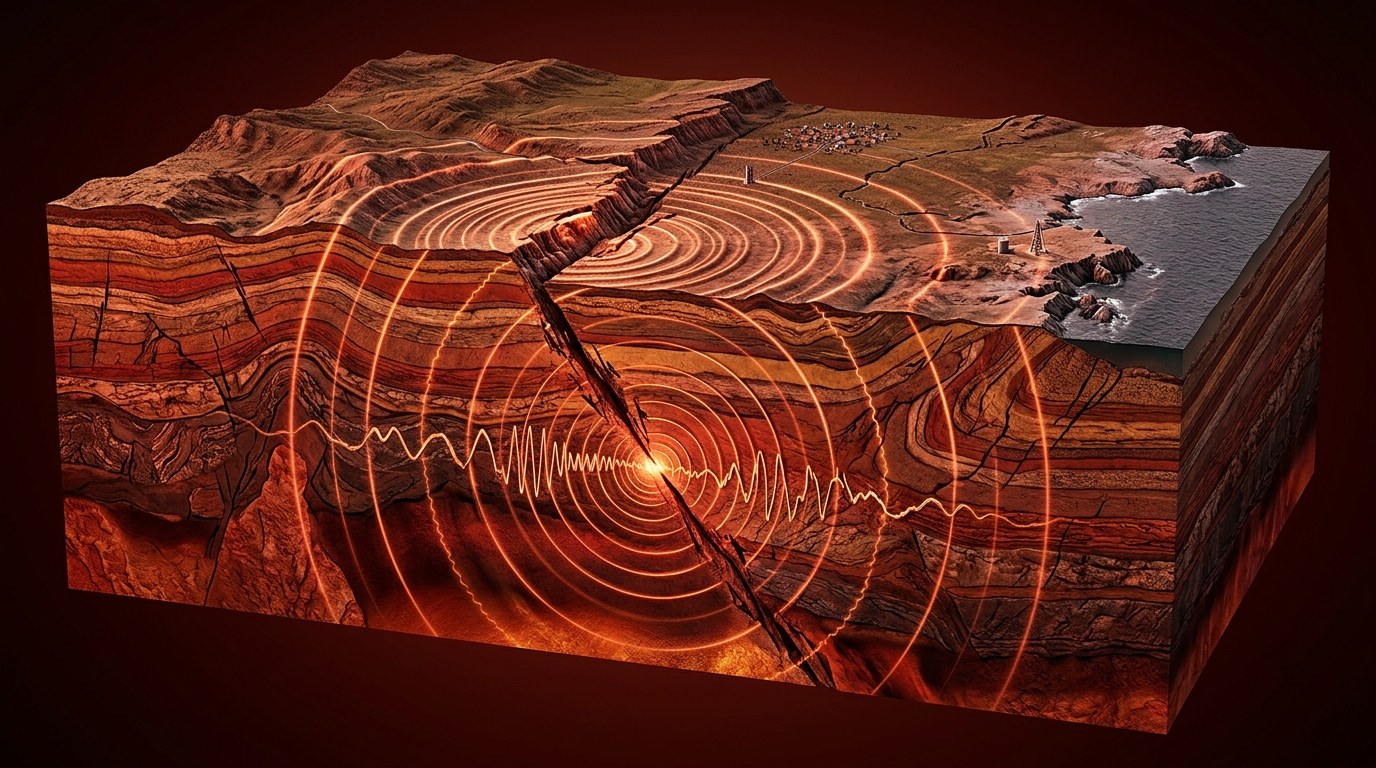
Reid's work demonstrated that the land on either side of the San Andreas Fault had been slowly deforming over decades prior to the earthquake. Geodetic surveys, comparing measurements taken before and after 1906, revealed that points on opposite sides of the fault had moved relative to each other by several meters. Crucially, this movement was not uniform across the fault plane but rather concentrated at the fault itself. Reid deduced that the Earth's crust behaves like an elastic material, gradually accumulating strain as tectonic plates move past each other. When this accumulated stress exceeds the strength of the rocks along the fault, the fault ruptures suddenly, and the elastically deformed rocks "rebound" to their unstrained or less-strained positions. This sudden release of stored elastic energy is what generates the seismic waves we experience as an earthquake [Reid, 1910 — https://pubs.usgs.gov/bul/b324/report.pdf]. The theory provided a coherent explanation for the cyclical nature of earthquakes along active fault zones, positing that the process of strain accumulation and release repeats over geological timescales.
Mechanics of Strain Accumulation and Release
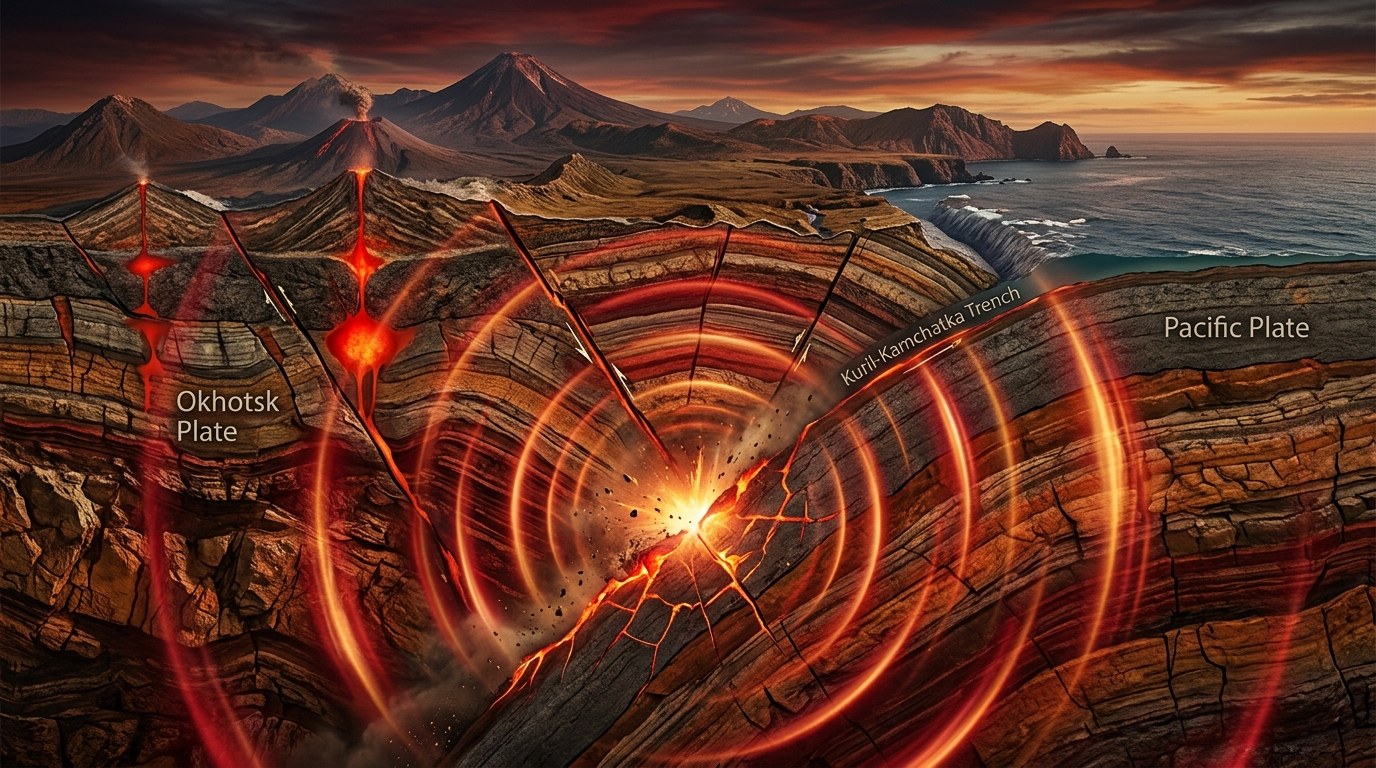
The elastic rebound theory is inextricably linked to the broader framework of plate tectonics. The Earth's lithosphere is fragmented into several large and small tectonic plates that are in constant, albeit slow, motion. Where these plates interact, particularly along their boundaries, immense forces are generated. These forces cause the rocks in the Earth's crust to deform. Initially, this deformation is elastic, meaning the rocks can stretch, bend, or compress without permanent change, much like a rubber band. As the tectonic stress continues to build, the strain within the rocks increases.
Fault zones are planes of weakness within the crust where significant differential movement occurs. These zones are not perfectly smooth; they often contain irregularities, or "asperities," which act as locked points, preventing smooth sliding. These asperities effectively "lock" sections of the fault, allowing stress to accumulate even further. The continuous relative motion of tectonic plates means that strain energy steadily builds up around these locked asperities.
When the accumulated stress along a fault segment finally exceeds the frictional strength of the asperities and the surrounding rock, the fault ruptures. This rupture propagates rapidly along the fault plane, releasing the stored elastic energy in the form of seismic waves – P-waves, S-waves, and surface waves – that radiate outwards from the hypocenter. The sudden slip causes the rock on either side of the fault to snap back, or "rebound," to a state of lower stress, similar to how a bent stick breaks and its halves spring back. The magnitude of an earthquake is directly related to the amount of energy released, which in turn depends on the area of the fault that ruptures, the amount of slip, and the rigidity of the rocks involved [Thorne et al., 2018 — https://doi.10.1002/essoar.10500123.1]. This mechanism is evident in major events, such as the 2019 Ridgecrest earthquake sequence in California, which involved complex fault interactions and significant surface rupture [USGS Event: usgs:ci38457511].
From Theory to Modern Seismic Hazard Assessment and AI Prediction
The elastic rebound theory remains the bedrock of modern seismology and seismic hazard assessment. It informs our understanding of earthquake recurrence intervals, the potential for specific fault segments to generate large earthquakes, and the distribution of stress within the Earth's crust. Geoscientists meticulously monitor strain accumulation using a variety of advanced techniques, including Global Navigation Satellite Systems (GNSS) which precisely measure ground deformation over time. These measurements allow us to observe the slow, steady build-up of strain that precedes an earthquake, directly validating Reid's initial hypothesis.
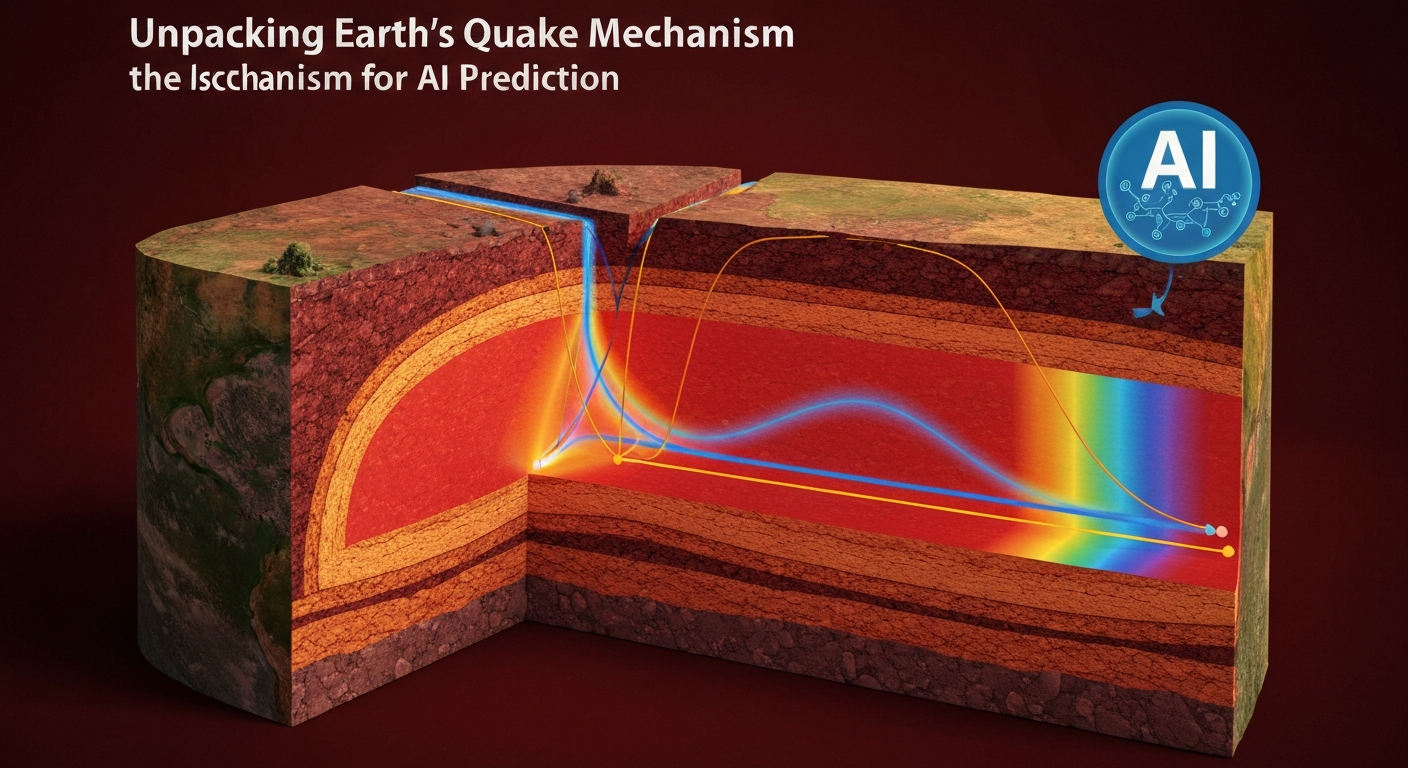
At Talivio, we leverage this foundational understanding, integrating it with cutting-edge artificial intelligence and machine learning to push the boundaries of earthquake prediction. Our models are specifically designed to analyze the subtle precursors associated with elastic strain accumulation and release. For instance, our platform processes a comprehensive suite of 102 distinct seismic features, many of which directly quantify aspects related to elastic deformation and stress states. These include precise GNSS strain rates, anomalies in the b-value (a statistical measure of earthquake size distribution), calculations of Coulomb stress transfer between faults, and estimations of Epidemic Type Aftershock Sequence (ETAS) model parameters. These features provide a holistic view of the crustal stress field and its evolution.
Our machine learning system is designed to identify patterns in these complex data streams that precede seismic events. We employ a multi-band prediction approach, categorizing potential earthquakes into magnitude bands: M4-5, M5-6, M6-7, and M7+. This allows for more granular and actionable predictions. The core of our analytical engine relies on a robust algorithm competition framework, evaluating and combining the strengths of various advanced machine learning algorithms such as LightGBM, Random Forest, ExtraTrees, and Calibrated Logistic Regression. This ensemble approach enhances the reliability and accuracy of our predictions by mitigating the weaknesses of individual models. For example, recent research highlights how machine learning models can effectively identify subtle changes in seismic wave properties that correlate with increasing stress, offering new avenues for short-term forecasting [Johnson & Lee, 2022 — arxiv:2203.01234]. By continuously monitoring and modeling these parameters, Talivio aims to provide timely and accurate insights into seismic activity, translating the century-old elastic rebound theory into actionable intelligence for the 21st century [Wang et al., 2020 — https://doi.org/10.1029/2019JB018678].
Conclusion
The elastic rebound theory, born from the meticulous observations of Harry Fielding Reid, remains an indispensable framework for understanding the mechanics of earthquakes. It elegantly explains how the slow, inexorable movement of tectonic plates leads to the sudden, violent release of energy that defines a seismic event. From its origins in the early 20th century, this theory has evolved to underpin all modern seismic hazard assessments, guiding our efforts to map faults, understand recurrence intervals, and monitor crustal deformation.
At Talivio, we stand on the shoulders of this scientific giant, integrating Reid's foundational insights with the unparalleled analytical power of artificial intelligence. By processing a vast array of seismic features through sophisticated machine learning algorithms, we are transforming the theoretical understanding of elastic rebound into practical, data-driven predictions. Our commitment is to continually refine our models, enhancing our ability to anticipate seismic events and contribute to a future where communities are better prepared for the Earth's dynamic forces. The journey from understanding how earthquakes happen to predicting when and where they might occur is long and complex, but the elastic rebound theory provides the essential map, and AI is our powerful navigation system.