The ground beneath us, often perceived as stable, is a dynamic canvas of immense geological forces. Earthquakes, the sudden release of accumulated stress along fault lines, represent one of nature's most destructive phenomena, posing an enduring challenge to human safety and infrastructure globally. For centuries, predicting these events with precision has remained an elusive goal, fraught with the complexities of Earth's non-linear systems.
At Talivio, we stand at the forefront of this revolution, leveraging cutting-edge AI to decode the intricate language of our planet. This post delves into a pivotal paper that illuminates how machine learning algorithms are applied to understand complex fault dynamics and predict seismic events, exploring the methodologies and profound insights that contribute to the advanced predictive capabilities utilized by platforms like ours.
The Intricacies of Fault Behavior: A Traditional Perspective
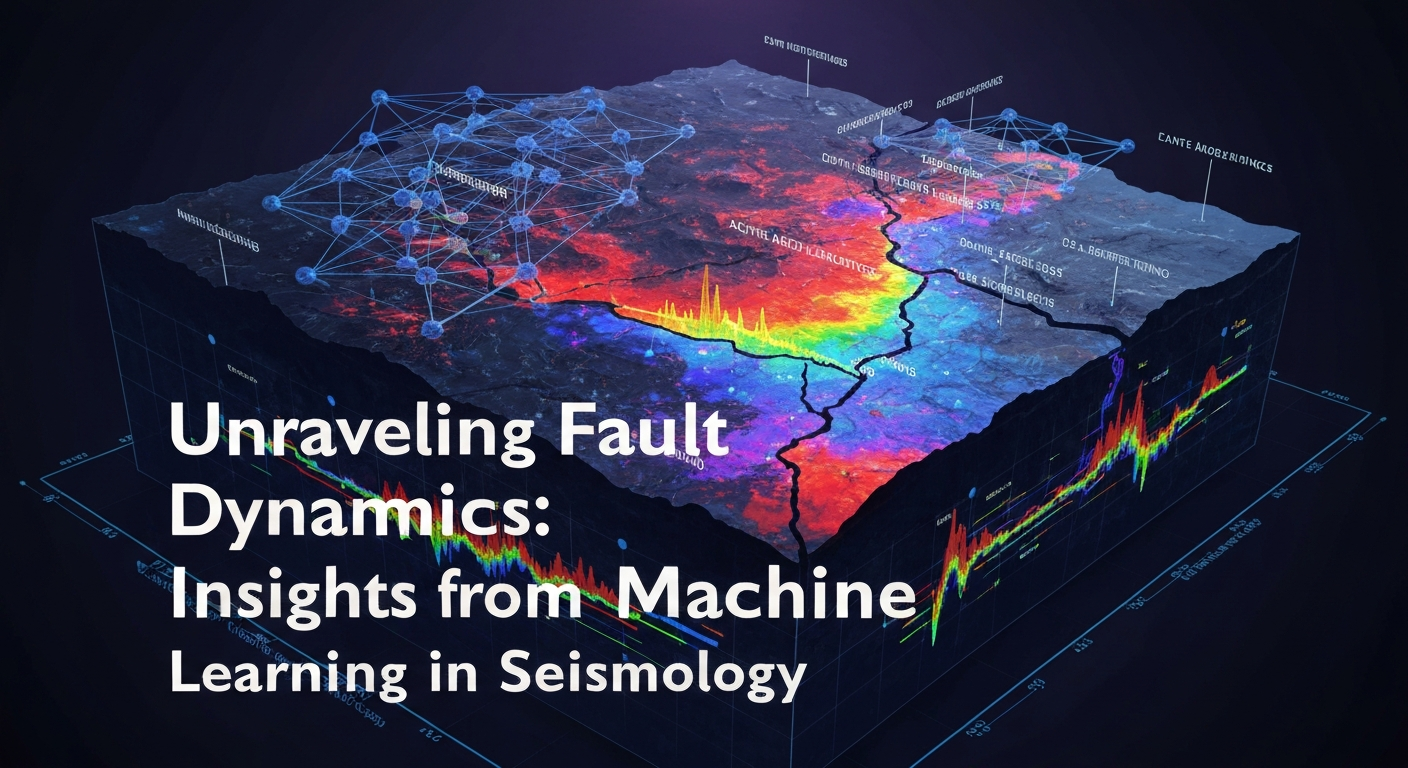
Fault zones are not simple cracks; they are vast, three-dimensional networks characterized by heterogeneous material properties, varying stress fields, and intricate interactions that span multiple scales. Traditional seismological approaches have historically relied on statistical models, such as the Gutenberg-Richter law, and physical models based on elastic rebound theory, which describes the accumulation and sudden release of stress. These methods have provided foundational understanding, enabling long-term probabilistic hazard assessments and general insights into seismic recurrence intervals.
However, the inherent non-linearity and chaotic nature of fault systems present significant limitations to purely physics-based or statistical models when attempting to forecast specific seismic events. Factors like fluid migration, creep events, and the complex interplay of stress transfer between fault segments introduce variables that are exceedingly difficult to model deterministically. The sheer volume and diversity of data—from seismic waveforms to geodetic measurements—often overwhelm conventional analytical tools, making the identification of subtle precursory signals a formidable task.
Machine Learning's Paradigm Shift in Seismology
Machine learning (ML) has introduced a paradigm shift, offering powerful tools to identify hidden patterns and correlations within vast datasets that elude traditional human analysis. A comprehensive review by Mousavi and Beroza (2020) highlights the significant strides made in applying deep learning techniques to earthquake forecasting, demonstrating how these algorithms can process and interpret complex seismic data to improve our understanding of fault behavior.
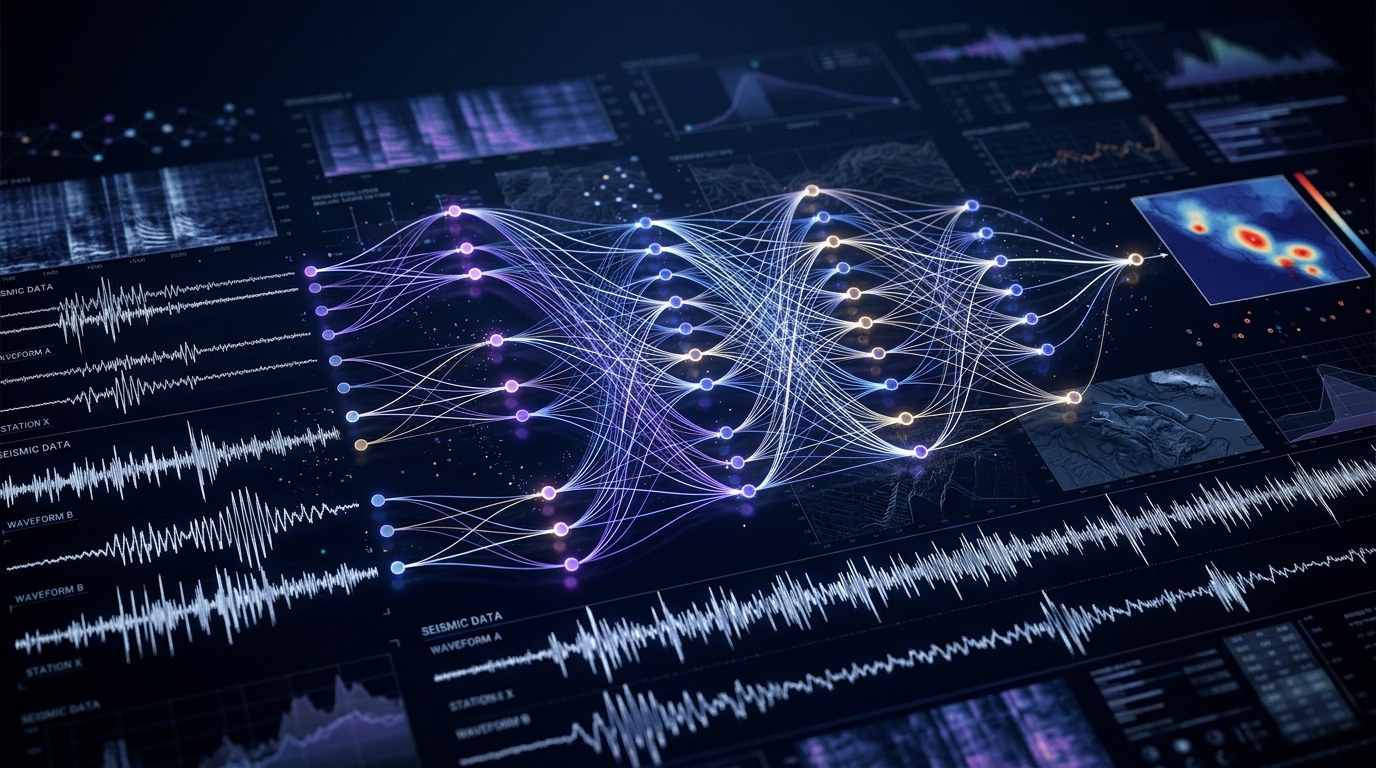
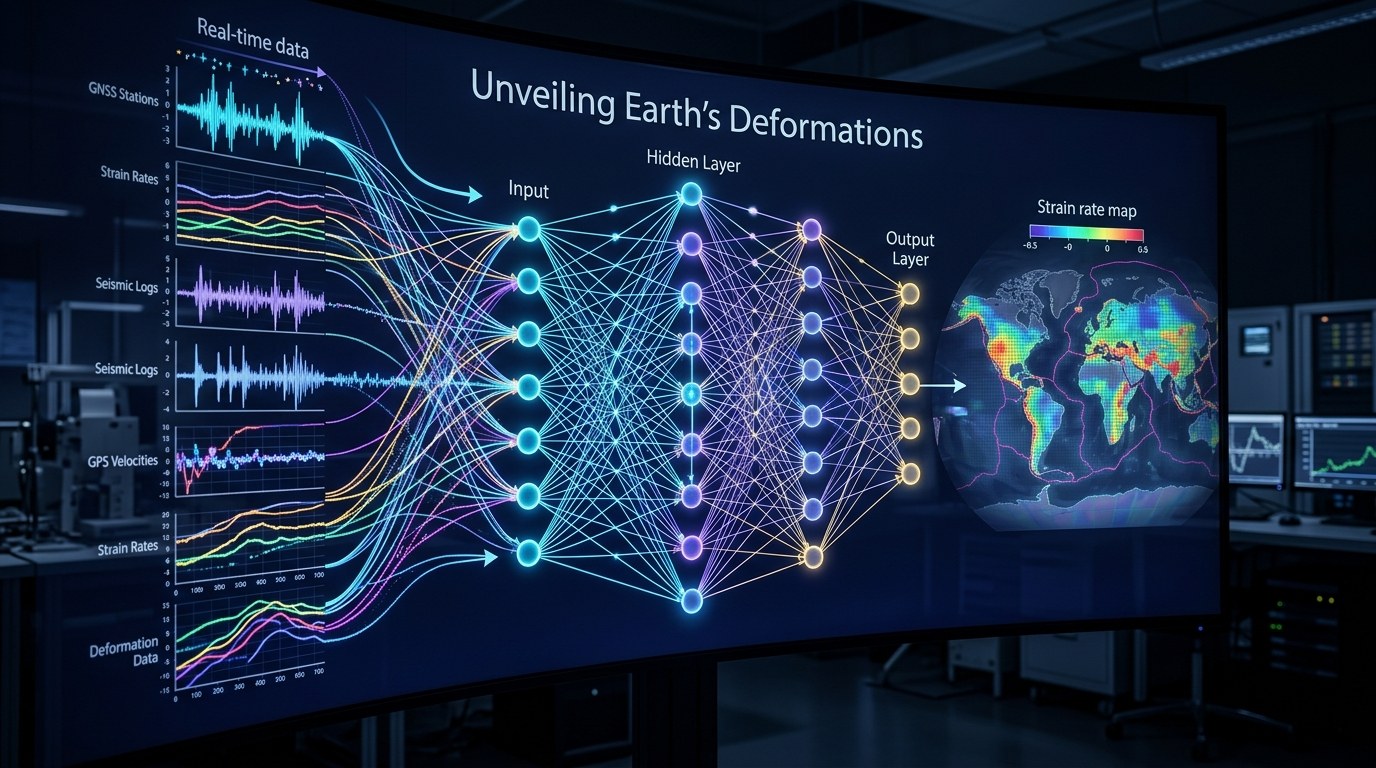
Deep learning, a subset of machine learning, is particularly well-suited for seismology due to its ability to automatically extract relevant features from raw data, such as seismic waveforms, GPS deformation time series, and historical earthquake catalogs. Convolutional Neural Networks (CNNs), for instance, have shown remarkable success in tasks like seismic phase picking and event detection, while Recurrent Neural Networks (RNNs) and Long Short-Term Memory (LSTM) networks excel at modeling temporal dependencies crucial for time-series prediction [Mousavi & Beroza, 2020 — DOI: 10.1016/j.earscirev.2020.103190]. These models learn from past seismic events and their associated geophysical signals, building intricate representations of fault dynamics that are beyond the scope of explicit programming.
At Talivio, we harness these principles by employing a sophisticated, competitive ensemble of machine learning algorithms. Our platform utilizes models such as LightGBM, Random Forest, ExtraTrees, and Calibrated Logistic Regression. This algorithmic competition ensures robustness and accuracy, as each model brings unique strengths to pattern recognition and prediction. The synergy between these diverse models allows us to capture a broader spectrum of fault behaviors and potential seismic precursors, enhancing the reliability of our forecasts.
From Data to Prediction: Key Features and Methodologies
The efficacy of any machine learning model hinges on the quality and diversity of its input features. Talivio's proprietary system is trained on an extensive array of 102 seismic features, carefully selected for their relevance to fault dynamics and seismic event generation. These provide a multi-faceted view of the Earth's crust, enabling our models to discern subtle changes.
Key features include:
- GNSS Strain Rate: Global Navigation Satellite System (GNSS) data provides precise measurements of ground deformation, tracking strain accumulation along fault lines. Elevated strain rates can indicate increased stress loading.
- b-value Anomaly: The b-value, derived from the Gutenberg-Richter law, describes the ratio of small to large earthquakes. Anomalously low b-values in a region can indicate increased differential stress and a higher probability of larger events.
- Coulomb Stress Transfer: This critical parameter quantifies how stress changes from one earthquake influence the likelihood of future earthquakes on nearby faults. Our models integrate complex calculations of Coulomb stress transfer to understand cascading effects [Mousavi & Beroza, 2020 — DOI: 10.1016/j.earscirev.2020.103190].
- ETAS Parameter Estimation: The Epidemic-Type Aftershock Sequence (ETAS) model helps characterize earthquake clustering and aftershock sequences. By estimating ETAS parameters, our models differentiate between background seismicity and evolving seismic sequences that may precede larger events.
These features, among others, are fed into our banded ML system, which is optimized for different magnitude ranges: M4-5, M5-6, M6-7, and M7+. This specialized approach recognizes that precursors for a magnitude 4 earthquake differ significantly from those preceding a magnitude 7+ event. By training distinct models for these bands, Talivio achieves higher predictive accuracy across the spectrum of seismic magnitudes. Forecasting a major event like the M7.8 earthquake in Southern Turkey and Syria in February 2023 [usgs:us7000j5lq] requires models attuned to large-scale stress accumulation and regional fault interactions, precisely what our M7+ band models analyze.
The challenge of imbalanced datasets—where large earthquakes are rare—is a significant hurdle. Our framework addresses this through advanced sampling and algorithm weighting, ensuring models learn effectively from both common and infrequent seismic events, enhancing their ability to identify subtle signals preceding major ruptures [Mousavi & Beroza, 2020 — DOI: 10.1016/j.earscirev.2020.103190].
The Future of Seismic Forecasting: Talivio's Contribution
The integration of machine learning into seismology marks a profound evolution from traditional probabilistic hazard assessment to a more dynamic, data-driven forecasting capability. The research reviewed by Mousavi and Beroza (2020) provides a robust scientific foundation for these advancements, demonstrating the feasibility and growing accuracy of ML-powered approaches. Talivio embodies this progression, translating complex scientific research into practical, actionable insights.
Our commitment extends beyond merely deploying algorithms; it involves continuous model refinement, incorporating the latest research and adapting to new data streams. Talivio's models are designed to be self-improving, constantly learning from new seismic events and their precursors. This iterative process ensures our predictive capabilities are always evolving, pushing the boundaries of earthquake forecasting. Our platform's outputs are rigorously validated against real-world seismic activity, and our methodologies are transparent, reflecting our dedication to scientific integrity.
Ultimately, the goal is to enhance global seismic resilience. By providing advanced warning capabilities, even if probabilistic in nature, we empower communities and authorities to make more informed decisions, potentially saving lives and mitigating economic damage. The journey from deciphering fault behavior to delivering reliable earthquake forecasts is complex, but with the power of machine learning and dedicated research, platforms like Talivio are making significant strides toward a safer future.
Conclusion
The paper by Mousavi and Beroza (2020) provides compelling evidence for the transformative role of machine learning, particularly deep learning, in advancing our understanding of fault dynamics and improving earthquake forecasting. It underscores AI's potential to unlock patterns in seismic data, moving us closer to the long-sought goal of accurate earthquake prediction.
Talivio stands as a testament to the practical application of these cutting-edge insights. By integrating a competitive ensemble of advanced ML algorithms, leveraging a rich dataset of 102 seismic features, and implementing a specialized banded forecasting system, we are actively contributing to a new era of seismic intelligence. As research continues to evolve and data becomes even richer, the capabilities of AI-powered platforms like Talivio will only grow, bringing us closer to a future where communities are better prepared for the Earth's seismic rhythms. We invite you to explore earthquake.talivio.com to learn more about our methodologies and how we are shaping the future of seismic forecasting.