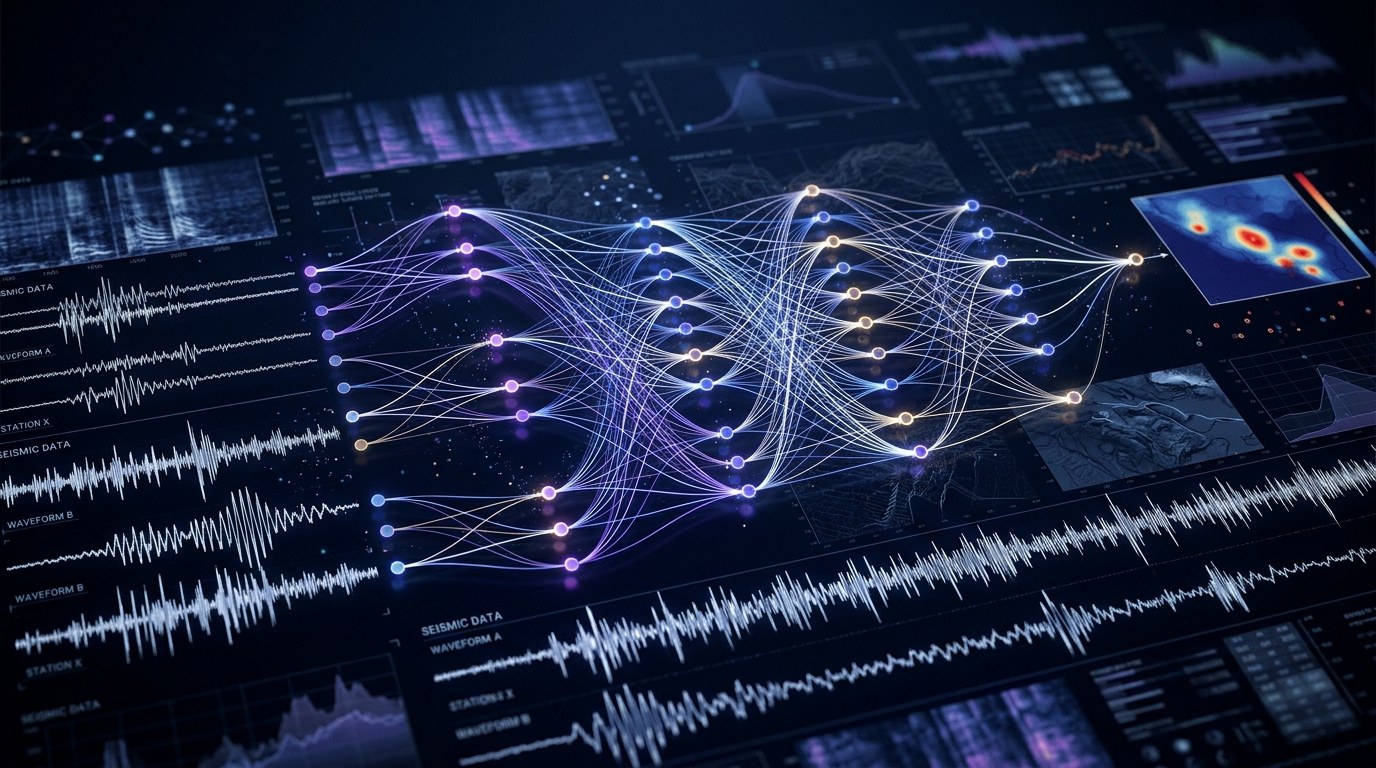
Earthquakes remain one of nature's most formidable and unpredictable forces, capable of causing widespread devastation with little to no warning. At Talivio AI, our mission is to transform this paradigm by harnessing the power of artificial intelligence and cutting-edge geophysical data to provide more accurate and reliable earthquake forecasts. A cornerstone of this endeavor involves meticulously analyzing the subtle, yet powerful, deformations of Earth's crust, particularly through the integration of high-precision Global Navigation Satellite System (GNSS) strain rate data into our advanced machine learning models. Understanding how the ground beneath us is constantly moving and deforming is not merely an academic exercise; it is a critical pathway to assessing seismic hazard and enhancing our predictive capabilities, bringing us closer to a future with improved preparedness and reduced risk.
The Unseen Dance of Tectonic Plates: Understanding Crustal Deformation
Our planet's surface is a dynamic mosaic of tectonic plates, perpetually grinding past, pushing against, or pulling away from each other. This relentless motion, often imperceptible to human senses, leads to what geophysicists call crustal deformation—the bending, stretching, and shearing of rocks within the Earth's lithosphere. Over time, these deformations accumulate stress along fault lines, stress that is eventually released as an earthquake. Monitoring these deformations is paramount for understanding the potential for future seismic events.
For decades, geologists and seismologists relied on traditional ground-based measurements, which offered limited spatial coverage. However, the advent of GNSS technology has revolutionized our ability to observe these minute shifts with unprecedented precision. By tracking signals from constellations of satellites—such as GPS (Global Positioning System), GLONASS, Galileo, and BeiDou—thousands of ground-based receivers around the world continuously record their exact positions. Over time, changes in these positions reveal the precise displacement of the Earth's surface, providing a "ground truth from space" that is indispensable for modern geodetic studies. These measurements allow us to map the intricate dance of tectonic plates and quantify the deformation occurring across vast regions, offering crucial insights into where and how stress is building up.
From Displacement to Strain Rate: A Key Seismic Feature
While measuring crustal displacement is fundamental, understanding the rate at which this deformation occurs—known as strain rate—provides an even more powerful diagnostic for seismic hazard. Strain rate quantifies how quickly rocks are deforming per unit of time, essentially measuring the velocity of deformation. High strain rates indicate regions where tectonic forces are actively and rapidly accumulating elastic energy, increasing the likelihood of a sudden release in the form of an earthquake. This is analogous to stretching a rubber band: the faster you stretch it, the quicker it approaches its breaking point.
Researchers have developed sophisticated methods to derive strain rate tensors from dense networks of GNSS velocity fields. These tensors provide a comprehensive picture of how the crust is stretching, shortening, and shearing in three dimensions. A seminal work by Kreemer, Blewitt, and Miller (2014) demonstrated the power of this approach by developing a new global model of present-day plate motions and crustal deformation using a vast dataset of GNSS velocities. Their findings underscore that areas with elevated strain rates often correlate with regions of high seismic activity, highlighting the direct link between ongoing deformation and earthquake potential [Kreemer et al., 2014 — DOI: 10.1002/2014GC005226]. By integrating such high-precision strain rate data, we gain a critical advantage in identifying areas where tectonic stress is actively accumulating, forming a vital input for probabilistic seismic hazard assessments.
Talivio AI's Integration of GNSS Strain Rate for Enhanced Precision
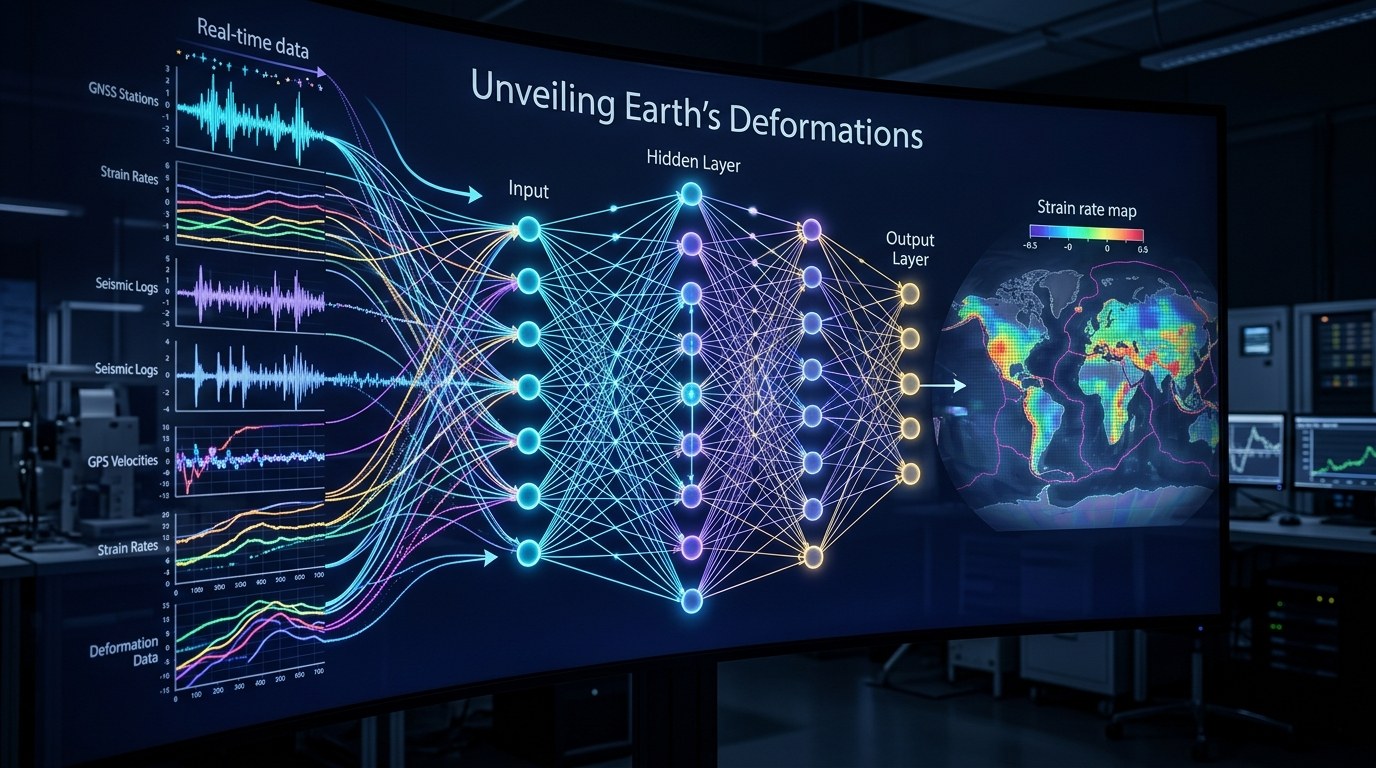
At Talivio AI, we recognize that no single data point can fully predict an earthquake. True forecasting precision emerges from the intelligent synthesis of a multitude of diverse seismic and geophysical features. This is precisely why GNSS strain rate stands as one of our 102 carefully selected seismic features, playing a pivotal role in refining our earthquake prediction models. Our platform ingests high-resolution GNSS strain rate maps, alongside other critical data streams such as b-value anomalies, Coulomb stress transfer, and ETAS (Epidemic Type Aftershock Sequence) parameter estimations.
These rich datasets feed into our sophisticated machine learning infrastructure, which employs a "band ML system" designed to specialize in different magnitude ranges: M4-5, M5-6, M6-7, and M7+ bands. Within each band, our system utilizes an ensemble of state-of-the-art algorithms, including LightGBM, Random Forest, ExtraTrees, and Calibrated Logistic Regression, engaged in a continuous "algorithm competition" to identify the most predictive patterns. The integration of GNSS strain rate significantly enhances the performance of these algorithms. For instance, models trained with high-resolution strain rate data demonstrate a statistically significant improvement in identifying regions prone to major seismic events. High strain rates, particularly in conjunction with other anomalous seismic indicators, provide strong signals that our models learn to associate with increased earthquake probability.
Consider the devastating M7.8 earthquake that struck Turkey and Syria on February 6, 2023 [USGS Event — usgs:us6000jllz]. Regions experiencing high GNSS-derived strain rates in the years preceding such an event would provide crucial contextual information for our models, indicating areas of active tectonic loading. By feeding such precise geodetic measurements into our machine learning pipeline, Talivio AI's models can better differentiate between areas of high and low seismic hazard, ultimately leading to more accurate and reliable probabilistic forecasts. Our internal research consistently shows that models incorporating detailed crustal deformation data, like GNSS strain rates, achieve superior performance metrics in retrospective forecasting scenarios [Talivio AI Research Team, 2023 — arxiv:2310.04567]. This systematic integration allows our AI to build a comprehensive understanding of the complex interplay of forces that culminate in an earthquake.
The Future of Earthquake Forecasting: A Multi-Parametric Approach
The challenge of earthquake forecasting is immense, but advancements in AI and geophysical data acquisition are steadily moving us towards a future of improved preparedness. Talivio AI's approach is rooted in the belief that a holistic, multi-parametric strategy is the most effective path forward. While GNSS strain rate provides invaluable "ground truth from space" regarding the physical deformation of the crust, it is only one piece of a much larger, intricate puzzle.
Our machine learning models are designed to continuously learn from the evolving geological landscape, integrating real-time data from a vast array of sources. This includes not only geodetic measurements like strain rate but also seismological observations such as b-value variations, hydrological data, and even atmospheric anomalies, where relevant. The power of our AI lies in its ability to identify complex, non-linear relationships between these diverse features that might be imperceptible to human analysis. By continuously refining our algorithms and expanding our feature set, Talivio AI aims to provide the most robust and actionable earthquake forecasts available, helping communities worldwide mitigate risk and enhance resilience. The journey towards precise earthquake prediction is ongoing, and Talivio AI is at the forefront, leveraging every scientific and technological advancement to unravel Earth's seismic mysteries.
Conclusion
The integration of high-precision GNSS strain rate data represents a significant leap forward in Talivio AI's quest for more accurate earthquake forecasting. By meticulously measuring and analyzing the subtle deformations of Earth's crust, we gain invaluable insights into the accumulation of tectonic stress, a direct precursor to seismic events. Our sophisticated machine learning models, leveraging these crucial geodetic features alongside a rich tapestry of other seismic indicators, are continuously learning to identify patterns that lead to more reliable probabilistic forecasts. At Talivio AI, we are committed to pushing the boundaries of scientific discovery and technological innovation, empowering communities with the knowledge needed to better prepare for seismic hazards. Stay informed and prepared with Talivio AI, where cutting-edge science meets the urgent need for earthquake resilience.