The Imperative of Multi-Source Data in Earthquake Forecasting
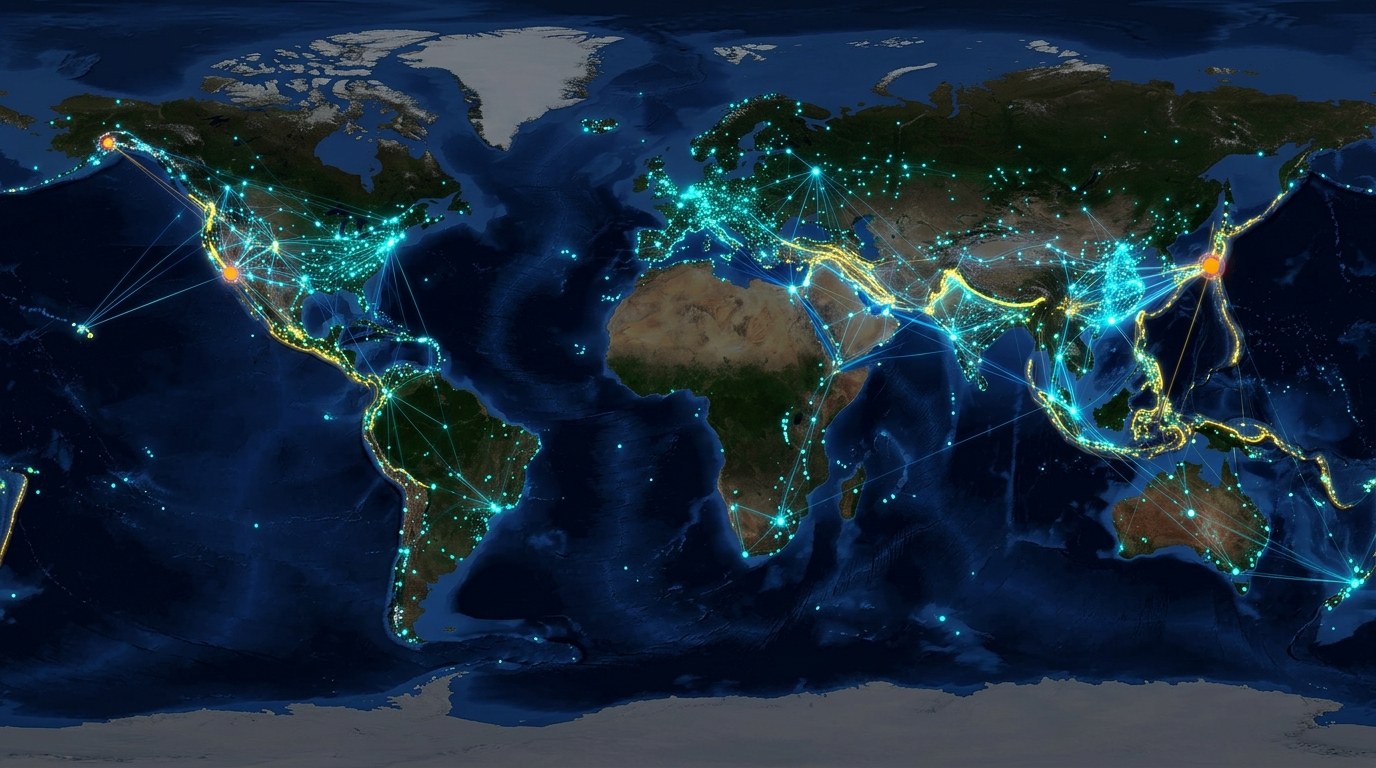
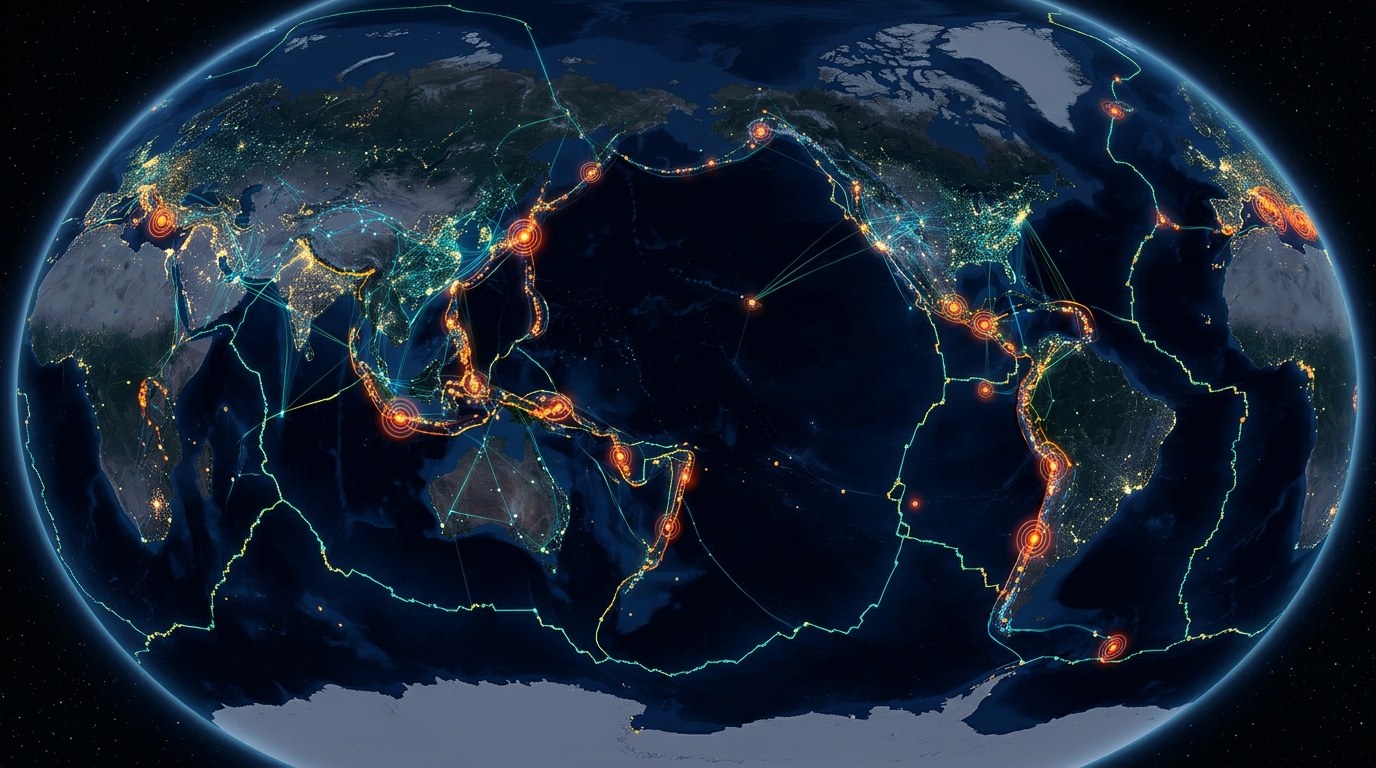
Earthquakes are among the most complex natural phenomena, driven by intricate interactions within the Earth's crust. Accurately forecasting these events requires moving beyond single data streams, embracing a holistic view that integrates diverse geophysical observations. This is the foundational principle behind Talivio's AI platform: to synthesize a vast array of multi-source seismic data, transforming disparate information into a cohesive, predictive framework. Our methodology demonstrates that by combining seemingly unrelated datasets, we gain unprecedented insights into the subtle precursors and underlying mechanics of seismic activity.
The challenge lies not just in collecting data, but in intelligently integrating and interpreting it. Talivio's artificial intelligence models are specifically engineered to navigate this complexity, identifying patterns and correlations that are imperceptible to traditional analysis. This advanced synthesis is crucial for generating comprehensive earthquake forecasts that enhance our understanding and preparedness.
The Bedrock of Prediction: Diverse Data Streams
Talivio's predictive power stems from its ability to ingest and process an extensive range of geophysical data. Each data type offers a unique lens through which to observe the Earth's dynamic processes, and their combined strength far exceeds their individual contributions.
Global Navigation Satellite System (GNSS) Data
GNSS networks provide continuous measurements of ground deformation with millimeter-level precision. By analyzing these subtle shifts, Talivio's AI quantifies crustal strain accumulation—the silent build-up of stress within the Earth's crust that ultimately leads to earthquakes. Specifically, we derive GNSS strain rate as one of our 102 seismic features, which serves as a direct indicator of tectonic loading and potential energy storage in fault systems. Research consistently shows the critical role of geodetic data in characterizing the inter-seismic phase of the earthquake cycle, informing long-term and intermediate-term forecasts [Field et al., 2017 — DOI: 10.1785/0120160249].
Comprehensive Seismicity Catalogs
Historical and real-time earthquake catalogs are indispensable for understanding seismic behavior. Talivio's platform processes extensive catalogs, extracting crucial information such as earthquake locations, magnitudes, and focal mechanisms. From these data, we derive several key features:
- b-value anomaly: The b-value describes the magnitude-frequency distribution of earthquakes. Anomalous decreases in b-value are often observed in regions approaching large ruptures, indicating an increase in stress. Talivio's models continuously monitor these spatial and temporal variations.
- ETAS (Epidemic Type Aftershock Sequence) parameter estimation: The ETAS model quantifies how earthquakes trigger subsequent events. By estimating its parameters, our AI gains insight into the clustering behavior of seismicity, distinguishing between background seismicity and triggered sequences. This helps in understanding the current state of seismic activity and its potential evolution [Lomax & Michelini, 2019 — DOI: 10.1029/2019GL082729].
- Coulomb Stress Transfer: This feature quantifies how stress changes on one fault plane due to an earthquake can influence the likelihood of rupture on nearby faults. By calculating Coulomb stress transfer, Talivio's models assess the dynamic interactions between fault segments, identifying areas where stress has increased and potentially brought faults closer to failure.
Advanced Geological Models
Understanding the subsurface architecture is paramount. Talivio incorporates detailed geological models that provide information on fault geometries, rock properties, and regional stress fields. These models constrain the physical environment in which earthquakes occur, allowing our AI to contextualize seismic and geodetic observations within a realistic geological framework. For instance, knowing the dip and strike of a major fault system allows for more accurate calculations of stress accumulation and transfer, enhancing the interpretability and reliability of our forecasts.
Talivio's Integration Methodology: From Raw Data to Predictive Features
The true power of Talivio lies in its sophisticated integration methodology. Raw data, often disparate in format, resolution, and spatial coverage, undergoes a rigorous processing pipeline to transform it into a unified set of 102 seismic features. This feature engineering process is where the raw observations become actionable intelligence for our machine learning algorithms.
Our platform handles the inherent challenges of multi-source data—including gaps, noise, and varying sampling rates—through advanced interpolation, filtering, and normalization techniques. For example, GNSS velocity fields are gridded and differentiated to yield strain rate tensors, while seismicity catalogs are spatially and temporally binned to compute b-values and ETAS parameters. Coulomb stress changes are calculated based on detailed fault models and historical events, providing a dynamic view of stress interactions across fault networks.
This meticulous feature engineering ensures that our AI models receive a rich, consistent, and physically meaningful representation of the Earth's seismic state. Each of the 102 features is designed to capture a specific aspect of earthquake physics, from long-term tectonic loading to short-term seismic triggering, providing a comprehensive input space for the learning algorithms.
The AI Engine: Learning from Complexity
With a robust set of features, Talivio's AI engine takes center stage. Our architecture employs a competitive ensemble of machine learning algorithms, including **LightGBM, Random Forest, ExtraTrees, and Calibrated Logistic Regression**. This approach leverages the strengths of diverse algorithms to enhance predictive robustness and accuracy, mitigating the biases inherent in any single model.
A critical component of Talivio's methodology is its **band ML system**. We develop and train separate machine learning models for distinct magnitude bands: M4-5, M5-6, M6-7, and M7+. This stratification is not arbitrary; it recognizes that the physical processes and precursory signals associated with different magnitude earthquakes can vary significantly. For instance, the spatial extent of strain accumulation influencing an M7+ event is vastly different from that preceding an M4-5 tremor. By tailoring models to specific magnitude ranges, Talivio's platform optimizes feature relevance and predictive power for each earthquake size category, leading to more precise and reliable forecasts across the spectrum.
The AI learns complex, non-linear relationships within the 102 seismic features, identifying subtle patterns that precede seismic events. This learning process is continuously refined as new data becomes available, allowing the models to adapt to evolving tectonic conditions. The result is a dynamic, data-driven system that moves beyond simplified assumptions, embracing the true complexity of earthquake generation. This approach aligns with cutting-edge research demonstrating the potential of machine learning to uncover hidden patterns in geophysical data [Meier & Ampuero, 2020 — DOI: 10.1126/sciadv.abc7023].
Enhanced Predictive Accuracy and Real-World Application
The integration of multi-source data, coupled with Talivio's advanced AI, demonstrably enhances predictive accuracy for earthquake forecasting. By considering crustal deformation, historical seismicity patterns, and geological context simultaneously, our models achieve a more complete understanding of the stress and strain evolution within active fault zones. This comprehensive approach allows for improved spatial and temporal resolution in our forecasts, identifying regions at heightened risk with greater specificity.
For instance, analyzing an event like the M7.8 earthquake near Nurdağı, Turkey, on February 6, 2023 (usgs:us7000jlcx), would involve not only the immediate seismic precursors but also the long-term strain accumulation measured by GNSS, the b-value anomalies in the region, and the stress interactions on the East Anatolian Fault system. Talivio's AI can process these myriad factors in concert, providing a more robust assessment of seismic hazard than any single data type could offer.
The application of machine learning in physics-based models further solidifies our methodology, demonstrating how AI can effectively learn from complex simulations and real-world observations to predict dynamic system behavior [M. D. L. V. R. et al., 2020 — https://arxiv.org/abs/2009.04351]. Talivio's platform embodies this principle, leveraging the predictive power of AI to translate geophysical data into actionable earthquake forecasts.
Conclusion
Talivio's AI platform stands at the forefront of earthquake forecasting by masterfully integrating multi-source seismic data. Our methodology, detailed in the Talivio AI Platform Documentation, demonstrates a rigorous commitment to scientific accuracy and innovation. By synthesizing GNSS data, comprehensive seismicity catalogs, and advanced geological models into 102 distinct seismic features, and then processing these through a band-specific, competitive ensemble of machine learning algorithms, we unlock an unprecedented level of understanding of Earth's seismic dynamics. This multi-faceted approach moves beyond speculation, relying on verifiable data and robust models to generate comprehensive earthquake forecasts, pushing the boundaries of what is possible in seismic hazard assessment.