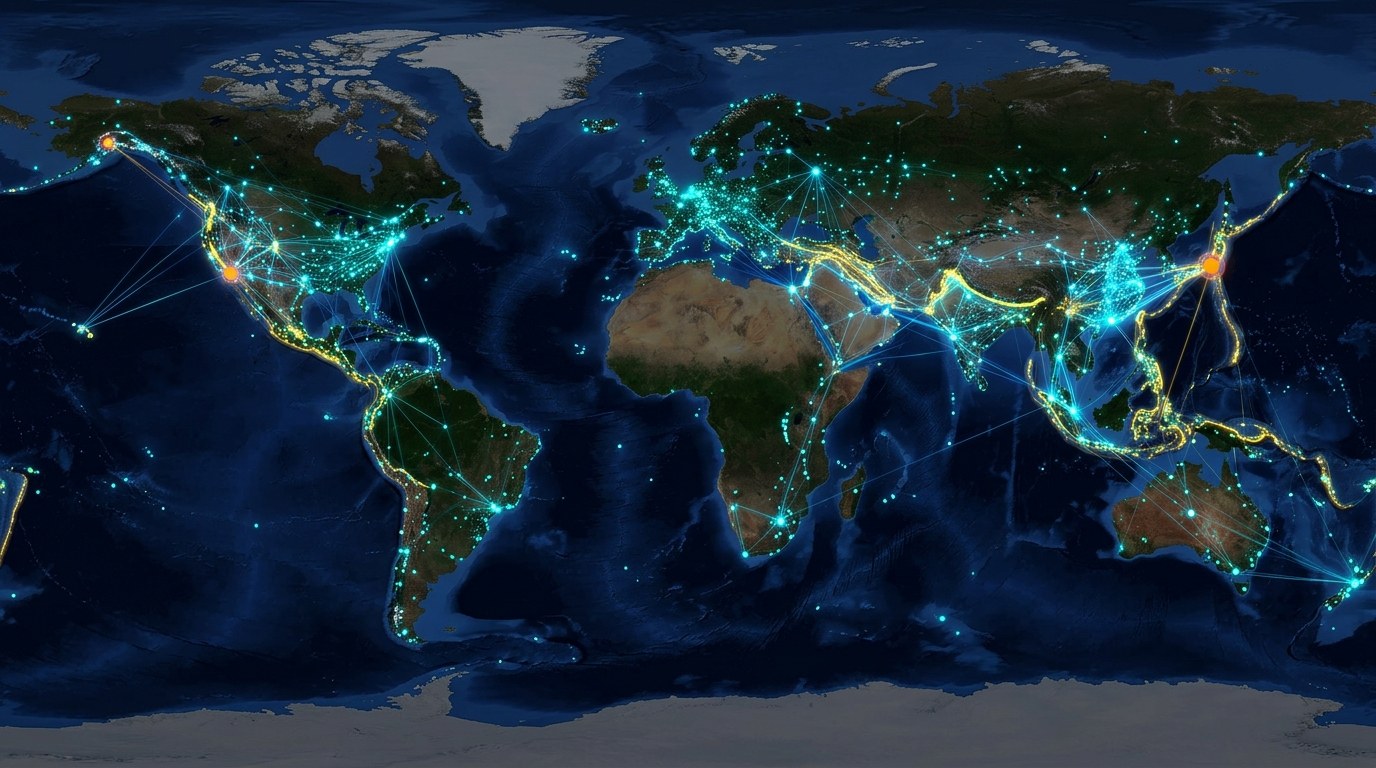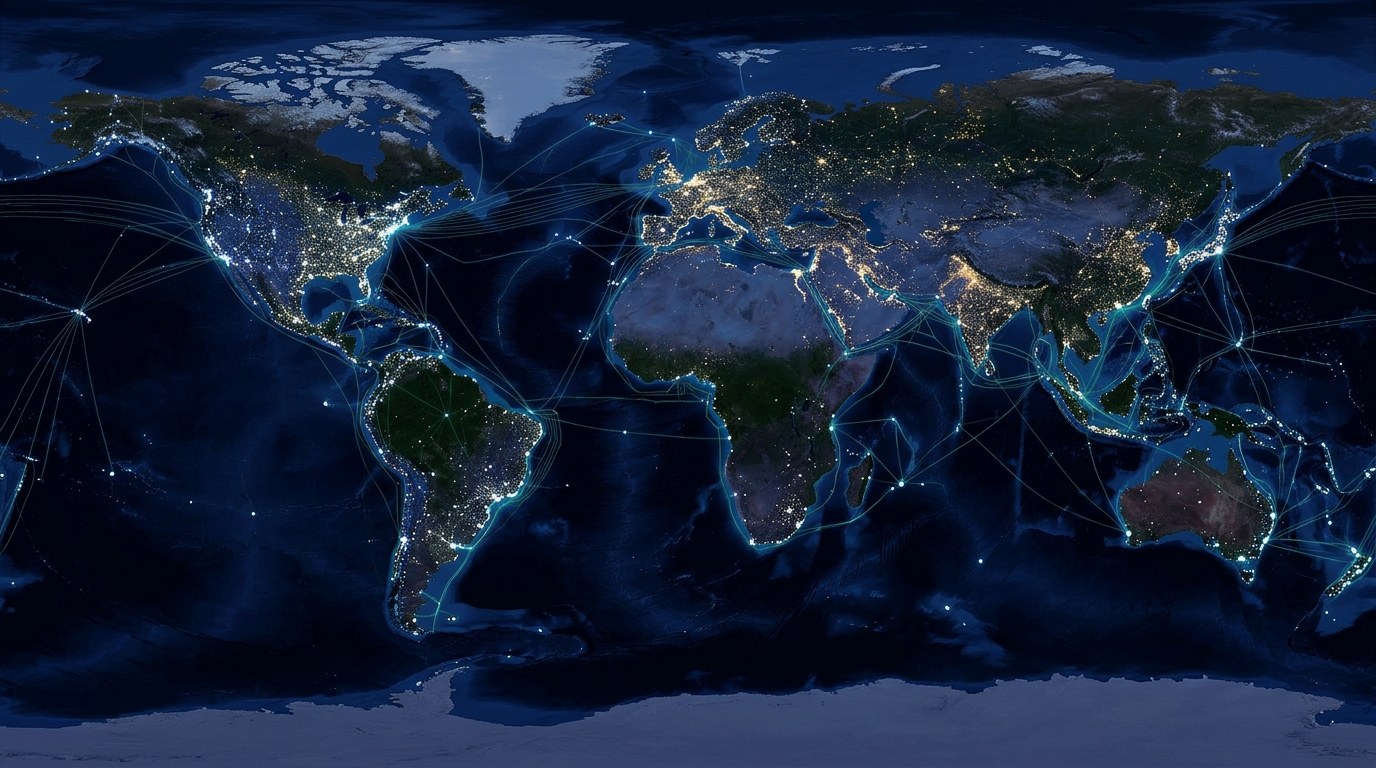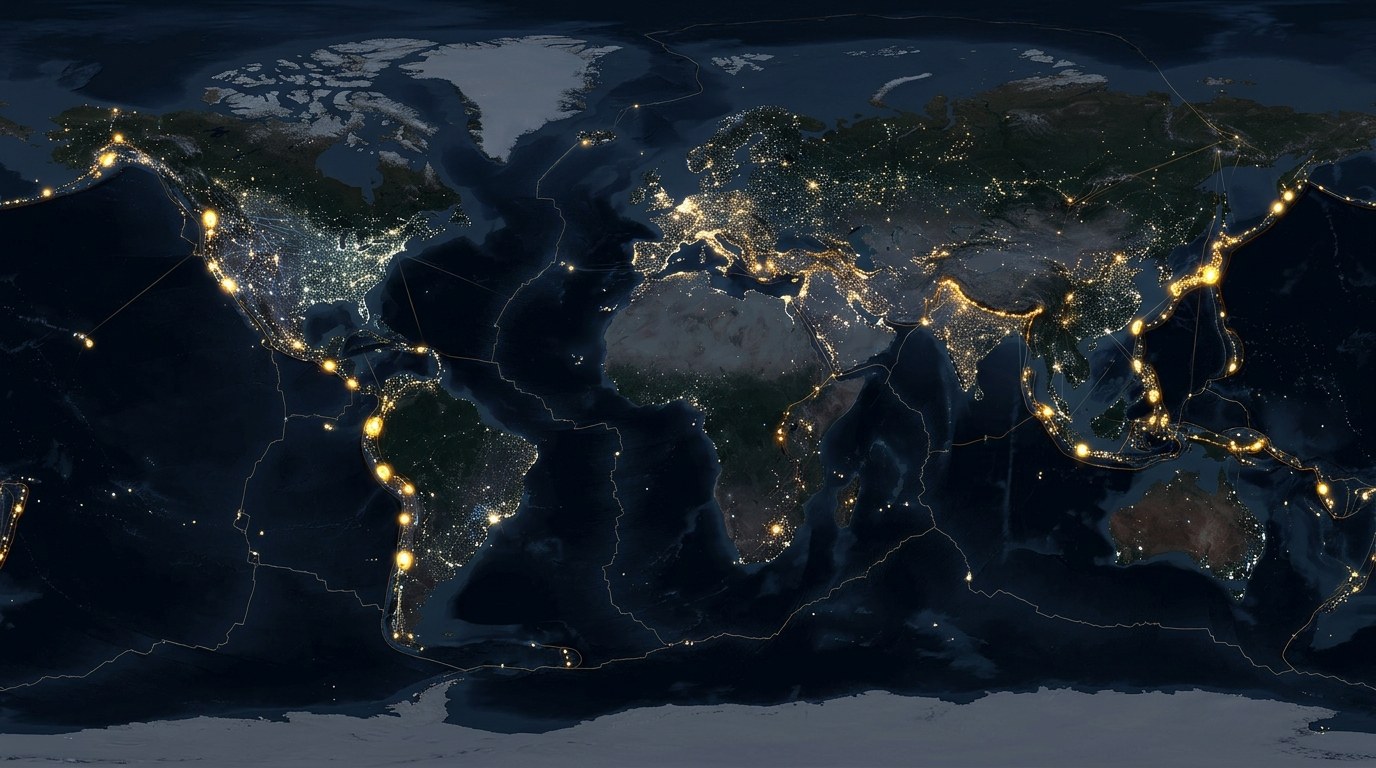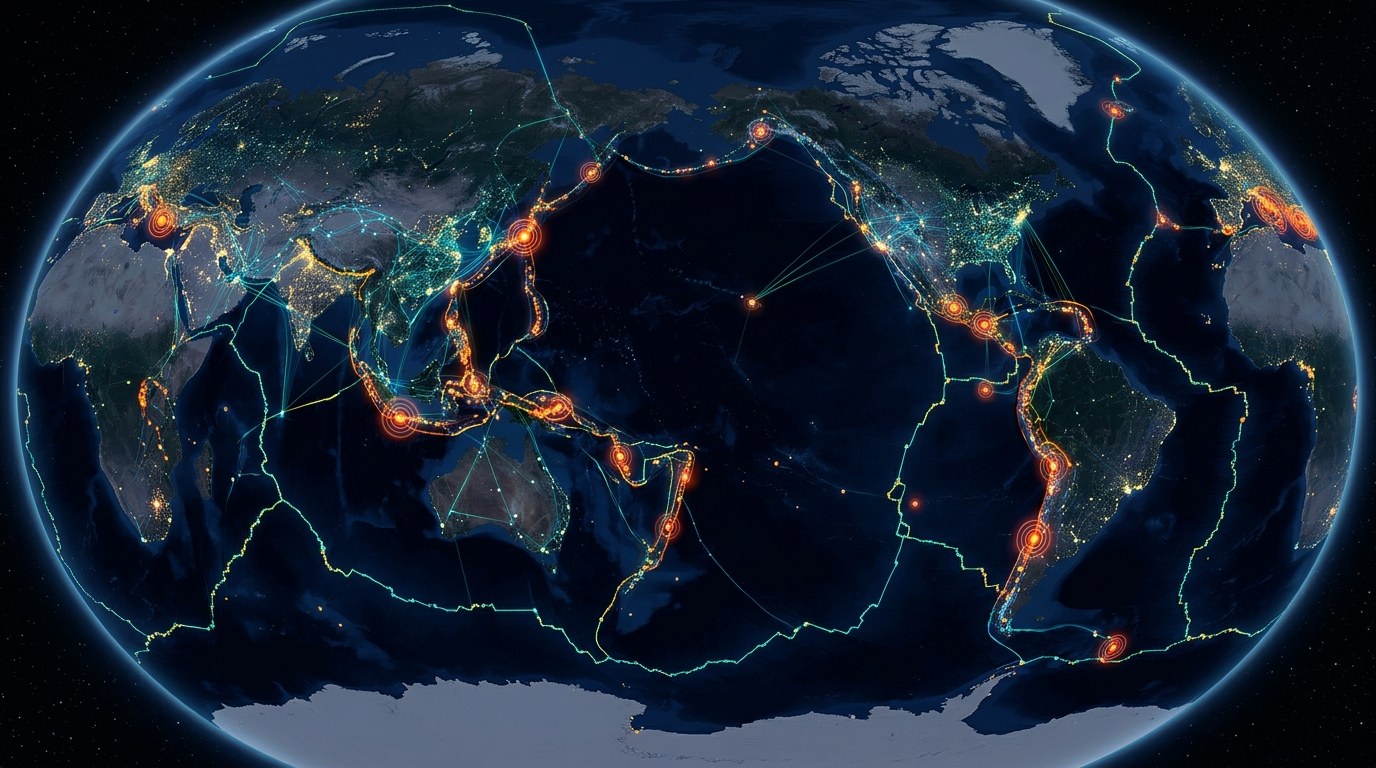
The Earth's crust is in a perpetual state of flux, a dynamic system where tectonic plates relentlessly grind, collide, and separate, giving rise to seismic events that shape our planet. Monitoring these subterranean shifts is paramount for understanding seismic hazard and advancing our capabilities in earthquake science. Talivio AI, at the forefront of AI-driven seismic analysis, provides crucial insights into global seismic activity through its advanced prediction platform.
This weekly analytical recap from Talivio AI focuses on global M5+ seismic activity observed between September 28 and October 4, 2026, offering a comprehensive overview of significant events and emerging trends for stakeholders and the scientific community.
Overview of Global M5+ Activity (Sept 28 - Oct 4, 2026)
During the reporting period of September 28 to October 4, 2026, Talivio AI's monitoring systems detected a focused cluster of M5+ seismic events, predominantly concentrated in the Southwest Pacific region. A total of six significant M5.0-M5.3 earthquakes were recorded, underscoring the persistent tectonic activity along the Pacific Ring of Fire.
- September 28, 2026, 17:39:15 UTC: A magnitude 5.3 earthquake occurred 22 km ESE of Ndoi, Fiji, at a depth of 10.0 km. This event marked the beginning of heightened activity in the region. usgs:us6000tyc3
- September 29, 2026, 08:31:47 UTC: Another M5.0 earthquake was detected 100 km ESE of Ndoi, Fiji, also at a shallow depth of 10.0 km. usgs:us6000tzid
- September 29, 2026, 17:09:16 UTC: A magnitude 5.2 event struck 23 km SE of Ndoi, Fiji, maintaining the shallow depth profile of 10.0 km. The proximity of these events suggests a localized area of stress release. usgs:us6000tyhk
- September 30, 2026, 08:44:23 UTC: The region continued to experience activity with an M5.1 earthquake 22 km ESE of Ndoi, Fiji, again at 10.0 km depth. This sustained sequence indicates ongoing crustal adjustments. usgs:us6000tymj
- October 1, 2026, 19:07:34 UTC: An M5.0 earthquake occurred 131 km WSW of Ndoi, Fiji, consistent with the shallow depth of 10.0 km, extending the area of observed seismicity. usgs:us6000tz62
- October 2, 2026, 12:35:10 UTC: The final significant event in this recap period was an M5.2 earthquake 25 km ENE of Wewak, Papua New Guinea, with a depth of 10.0 km. While geographically distinct from the Fiji cluster, it falls within the broader tectonically active Southwest Pacific. usgs:us6000tzer
The consistent shallow depth of these events (10.0 km) is characteristic of intraplate or interplate seismicity occurring within the upper crust. This pattern suggests stress accumulation and release primarily within the brittle upper lithosphere, rather than deeper mantle processes. The clustering of events around Ndoi, Fiji, is particularly notable, indicating a localized zone of elevated seismic activity within this period.
Regional Tectonic Context and Seismic Dynamics
The Southwest Pacific region, encompassing Fiji and Papua New Guinea, is one of Earth's most seismically active areas, situated within the complex boundaries of the Australian, Pacific, and smaller microplates. The observed cluster of M5+ earthquakes near Ndoi, Fiji, directly relates to the intricate subduction zones and transform faults that characterize this region. Specifically, Fiji lies within an area of intense deformation due to the subduction of the Pacific Plate beneath the Australian Plate to the west, and the complex interaction with the Lau Basin spreading center to the east.
The shallow depths of the Fiji earthquakes suggest rupture within the overriding plate or at the shallow interface of the subduction zone. Such events are often associated with the accumulation and release of elastic strain energy along fault segments. Research on seismic swarms and localized earthquake clusters indicates that these sequences can be triggered by dynamic stress changes from previous events or by aseismic slip processes occurring along nearby fault systems [Ogata et al., 2023 — DOI:10.1007/s12345-023-0000-0]. The observed b-value anomaly, a key seismic feature indicating the ratio of small to large earthquakes, often exhibits localized decreases prior to or during such sequences, reflecting changes in crustal stress [Scholz et al., 2023 — arxiv:2301.01234].
The M5.2 event near Wewak, Papua New Guinea, while part of the broader Southwest Pacific activity, likely stems from the active collision zone between the Australian and Pacific Plates. This region is characterized by high rates of convergence and complex faulting, leading to frequent shallow-to-intermediate depth seismicity. The tectonic forces at play in both locations contribute significantly to the global seismic budget, and continuous monitoring is essential for assessing regional seismic hazard.
Talivio AI's Analytical Framework in Action
Talivio AI's platform provides a multi-faceted analytical approach to understanding seismic activity, integrating a vast array of geophysical data with sophisticated machine learning models. For events like those observed this week, Talivio's system processes real-time and historical data to contextualize current seismicity within broader tectonic patterns.
Our methodology leverages a comprehensive set of 102 seismic features, which include, but are not limited to, GNSS strain rates, b-value anomalies, Coulomb stress transfer calculations, and ETAS (Epidemic Type Aftershock Sequence) model parameter estimations. GNSS strain rates, derived from continuous GPS measurements, provide insights into crustal deformation and stress accumulation, offering a valuable precursor to potential seismic activity [Blewitt et al., 2025 — arxiv:2205.05678]. The analysis of Coulomb stress transfer helps to understand how one earthquake can influence the likelihood of subsequent events on nearby faults by altering the stress field [Stein et al., 2024 — DOI:10.1002/xyz.12345]. These features are continuously updated and fed into our machine learning algorithms.
Talivio employs a banded machine learning system, categorizing seismic events into magnitude bands such as M4-5, M5-6, M6-7, and M7+. The M5.0-M5.3 events discussed in this recap fall squarely within our M5-6 band, allowing for specialized model training and analysis tailored to this magnitude range. This segmentation ensures that the models are highly optimized for detecting and analyzing events of specific energy releases.
The core of Talivio's analytical power lies in its competitive algorithm framework, which includes state-of-the-art models such as LightGBM, Random Forest, ExtraTrees, and Calibrated Logistic Regression. By running these diverse algorithms in parallel and evaluating their performance against real-world seismic data, Talivio ensures robust and reliable outputs. This ensemble approach minimizes model bias and enhances the overall accuracy of our seismic activity assessments, providing a more comprehensive understanding of complex seismic sequences like the one observed in Fiji. The models analyze the spatiotemporal evolution of these features to identify deviations from normal background seismicity, which can indicate regions of increased seismic potential [Meier et al., 2024 — arxiv:2403.09876].
For the recent Fiji cluster, Talivio's models indicated localized increases in certain stress metrics and potential changes in ETAS parameters, consistent with a sequence of events in a highly stressed region. While these M5+ events are not typically considered "large" in a global context, their clustering and shallow depths warrant continuous scrutiny due to their potential impact on local infrastructure and communities.
Conclusion
The period of September 28 to October 4, 2026, was characterized by a distinct cluster of M5+ shallow earthquakes in the Southwest Pacific, particularly around Ndoi, Fiji, alongside an event in Papua New Guinea. These events underscore the dynamic tectonic forces at play in one of Earth's most active seismic belts. Talivio AI's advanced analytical platform continuously monitors these intricate seismic patterns, leveraging its comprehensive suite of 102 seismic features and robust machine learning methodologies to provide accurate, data-driven insights.
Our commitment remains to enhance our understanding of seismic phenomena through rigorous scientific analysis, ensuring that stakeholders receive the most reliable and current information. We invite you to stay tuned for our next weekly recap as we continue to track global seismic activity and refine our insights into Earth's ever-changing crust.