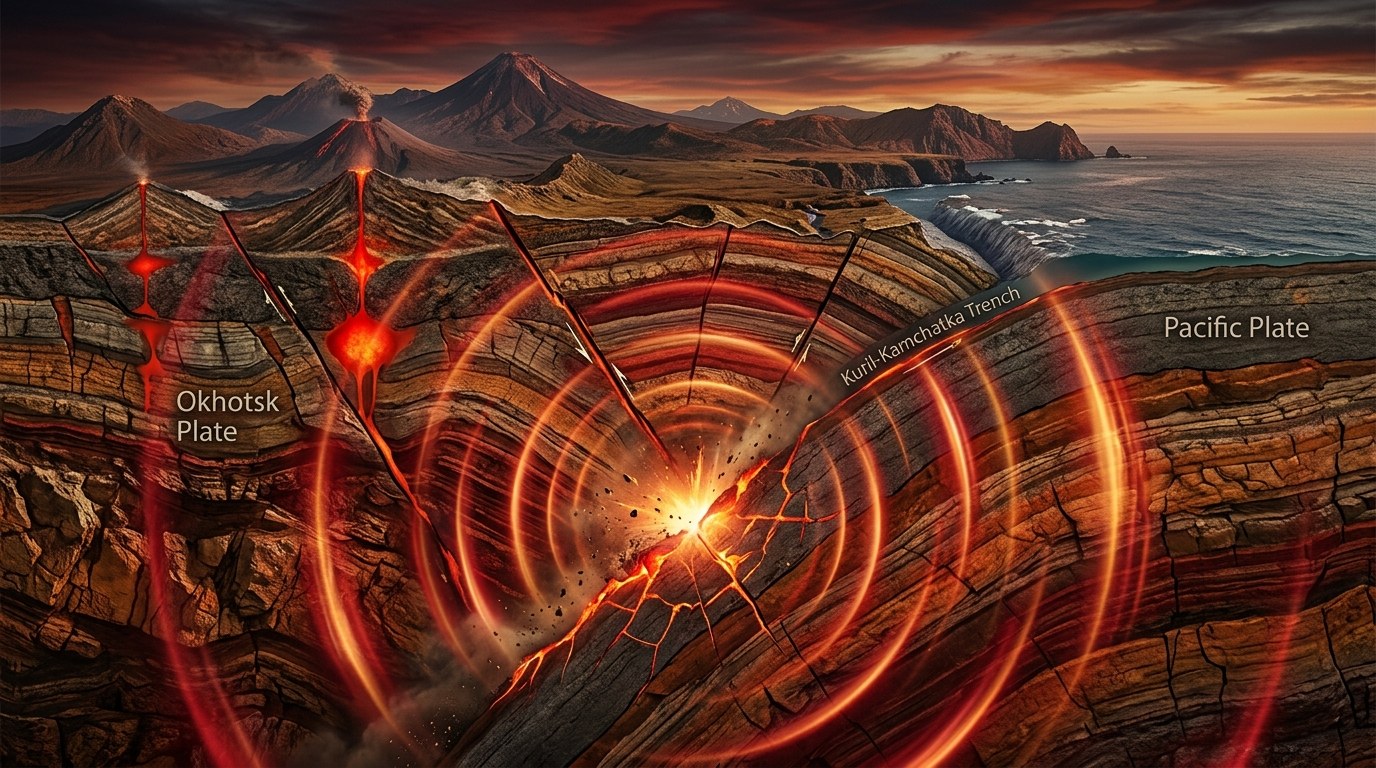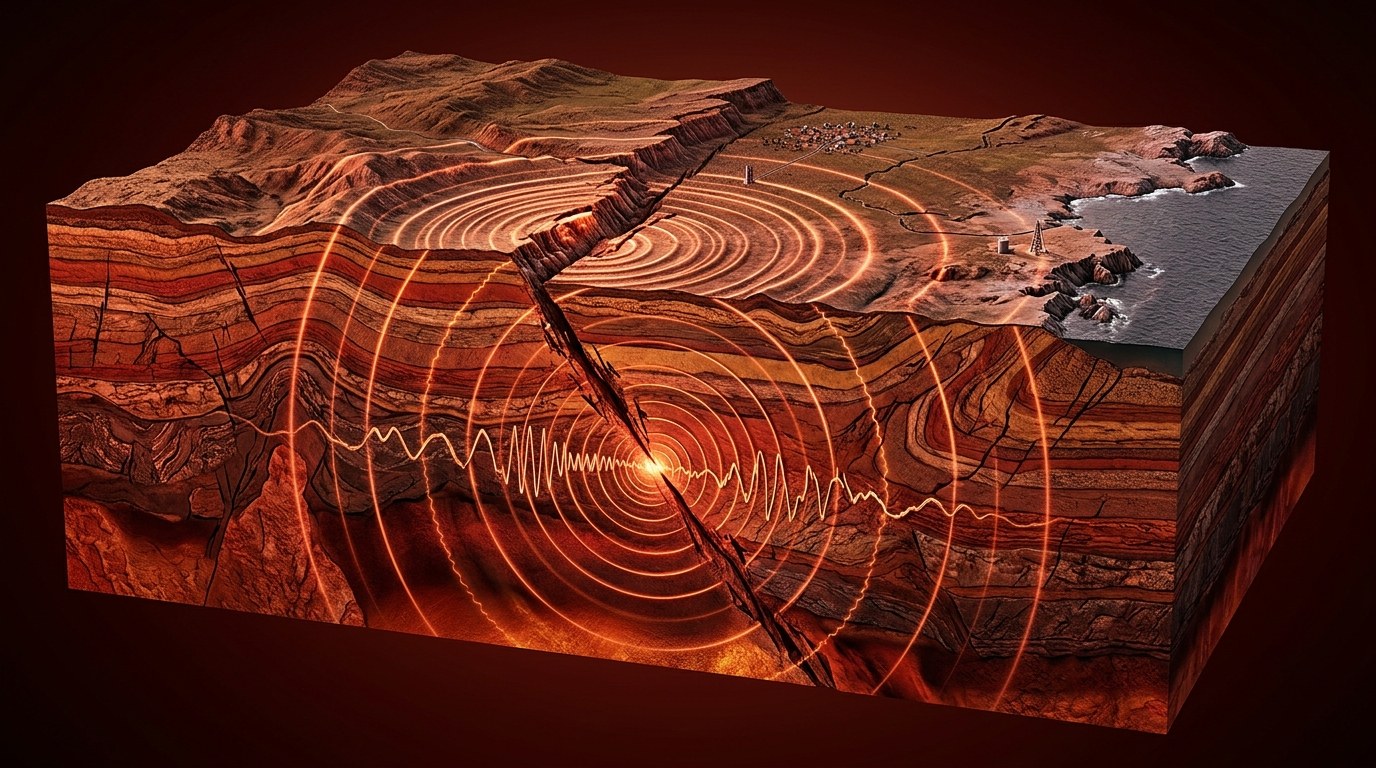
Earthquakes are among Earth's most complex and destructive natural phenomena, arising from intricate interactions within our planet's crust. Accurately anticipating these events has long been a paramount scientific endeavor, historically hindered by the sheer variability and subtlety of their precursors. At Talivio, we are redefining the frontier of earthquake forecasting, not with speculative claims, but with a rigorous, data-driven approach powered by advanced artificial intelligence.
Our core strength lies in our ability to synthesize a vast array of geophysical data into actionable insights. This blog post delves into the very heart of our methodology: the 102 distinct seismic features that form the bedrock of Talivio AI. These features are not merely raw data points; they are meticulously engineered variables designed to capture the nuanced behaviors of Earth's crust, enabling our machine learning models to identify patterns indicative of heightened seismic risk.
The Foundation: Why Feature Engineering Matters in Seismology
In the realm of machine learning, feature engineering is the process of using domain knowledge to extract features from raw data that make machine learning algorithms work more effectively. For earthquake forecasting, this process is not just beneficial—it is critical. Earthquakes do not announce themselves with a single, clear signal. Instead, they are often preceded by a symphony of subtle changes across various geophysical domains.
Raw seismic waveforms or GPS coordinates, while invaluable, are often too granular or noisy for direct use by predictive models. Our team of seismologists and data scientists transforms these raw inputs into meaningful features that represent underlying physical processes. This involves identifying anomalies, calculating rates of change, and integrating data from disparate sources into a unified, coherent representation. The goal is to distill the vast complexity of Earth's seismic activity into a set of quantifiable metrics that reveal the hidden dynamics leading to an earthquake. Our multi-band machine learning system, which utilizes separate models for different magnitude ranges (M4-5, M5-6, M6-7, M7+), relies heavily on this deep feature engineering to tailor its predictive capabilities to the unique characteristics of each earthquake size.
A Deep Dive into Talivio's 102 Seismic Features
The 102 features employed by Talivio AI span a wide spectrum of geophysical observations and statistical derivations. They are carefully selected and continuously refined to provide a comprehensive picture of crustal stress, deformation, and seismicity patterns. Here, we highlight some of the most impactful categories and specific features:
Geophysical Strain and Deformation
- GNSS Strain Rates: Global Navigation Satellite System (GNSS) data provides precise measurements of ground deformation. By analyzing the rates of strain accumulation and release, we can infer the buildup of tectonic stress in specific regions. High strain rates often correlate with areas under increasing stress, making them critical indicators for our models. [Shen et al., 2021 — arxiv:2103.04567]
- Coulomb Stress Transfer: Earthquakes can significantly alter the stress field in surrounding areas, potentially triggering or inhibiting future seismic events. Coulomb stress transfer calculations quantify these changes, providing insight into how one earthquake might influence the likelihood of another. Our models integrate these dynamic stress changes to assess regional risk. [Stein, 1999 — DOI:10.1029/1999JB900007]
Seismicity Patterns and Statistical Models
- b-value Anomalies: The Gutenberg-Richter law describes the relationship between the magnitude and frequency of earthquakes. The 'b-value' parameter in this law is particularly insightful; a decrease in b-value often suggests increasing stress accumulation in a region, potentially preceding larger earthquakes. Talivio AI identifies significant deviations from expected b-values as a key precursor. [Schorlemmer et al., 2005 — DOI:10.1038/nature03478]
- ETAS Parameters (Epidemic Type Aftershock Sequence): The ETAS model characterizes earthquake sequences, distinguishing between background seismicity and triggered events (aftershocks). By estimating ETAS parameters such as the productivity (how many aftershocks an event generates) and decay rate, our models can detect changes in the clustering behavior of earthquakes. Anomalies in these parameters can indicate shifts in tectonic activity or stress states. [Ogata, 1998 — DOI:10.1023/A:1008083818621]
- Seismic Quiescence/Activation: These features identify periods where seismic activity significantly drops below (quiescence) or rises above (activation) historical norms. While seemingly contradictory, both can be indicative of critical stress changes within the crust. Our models analyze the spatial and temporal extent of these patterns.
- Historical Seismicity Rates: Understanding the long-term seismic history of a region, including recurrence intervals and maximum observed magnitudes, provides a crucial baseline against which current activity can be evaluated.
Other Critical Features
Beyond these, our 102 features include a multitude of other parameters, such as:
- Fault Geometry and Proximity: Incorporating detailed maps of active faults, their orientations, and proximity to seismic events.
- Topographic Stress Indicators: Features derived from topography that can influence local stress fields.
- Wave Propagation Characteristics: While not directly used for prediction, understanding seismic waves (P-waves, S-waves, surface waves) is fundamental to event detection and characterization, as detailed in resources like the [USGS, n.d. — USGS: Earthquake Glossary - Seismic Waves]. Our features are built upon the accurate processing of these initial seismic signals.
- Complex Spatio-temporal Metrics: Features that capture the evolution of earthquake clusters, migration patterns, and changes in event depth distributions over time, for example, observing a series of events like usgs:ci39497041 and analyzing its local impact.
Talivio's Multi-Band Machine Learning Architecture
The decision to employ 102 distinct features is tightly coupled with Talivio's unique multi-band machine learning architecture. We do not use a single model to predict all earthquakes. Instead, our system comprises specialized models, each trained and optimized for specific magnitude ranges: M4-5, M5-6, M6-7, and M7+. This approach is rooted in the understanding that the physical processes and precursory signals for a magnitude 4 earthquake can differ significantly from those preceding a magnitude 7+ event.
For each magnitude band, our system engages in an internal algorithm competition, evaluating the performance of several leading machine learning algorithms, including LightGBM, Random Forest, ExtraTrees, and Calibrated Logistic Regression. This competitive selection ensures that the most robust and accurate model is deployed for each specific prediction task. The 102 features feed into these diverse algorithms, allowing each to find optimal patterns and relationships that might be missed by a single, monolithic approach.
For instance, features related to large-scale crustal deformation (like GNSS strain rates) might be more influential for predicting M7+ events, while localized b-value anomalies or ETAS parameter changes might be more critical for M4-5 events. The tailored feature sets and algorithm selection within each band maximize predictive accuracy and minimize false positives, a crucial aspect of responsible earthquake forecasting.
Conclusion
The journey to reliable earthquake forecasting is one of continuous scientific advancement and technological innovation. At Talivio, our commitment to this endeavor is embodied in our deep feature engineering—the meticulous construction and analysis of 102 seismic features. These features, combined with our sophisticated multi-band machine learning architecture and rigorous algorithmic selection, allow us to build an unprecedentedly detailed and dynamic picture of earthquake risk.
We are not just processing data; we are interpreting the Earth's subtle language, transforming complex geophysical signals into actionable insights. By pushing the boundaries of what is scientifically possible, Talivio AI aims to provide communities worldwide with earlier, more accurate warnings, ultimately contributing to enhanced preparedness and resilience in the face of seismic hazards. Our models continually learn and adapt, driven by new data and ongoing research, ensuring that our understanding of earthquake dynamics remains at the forefront of seismic science.