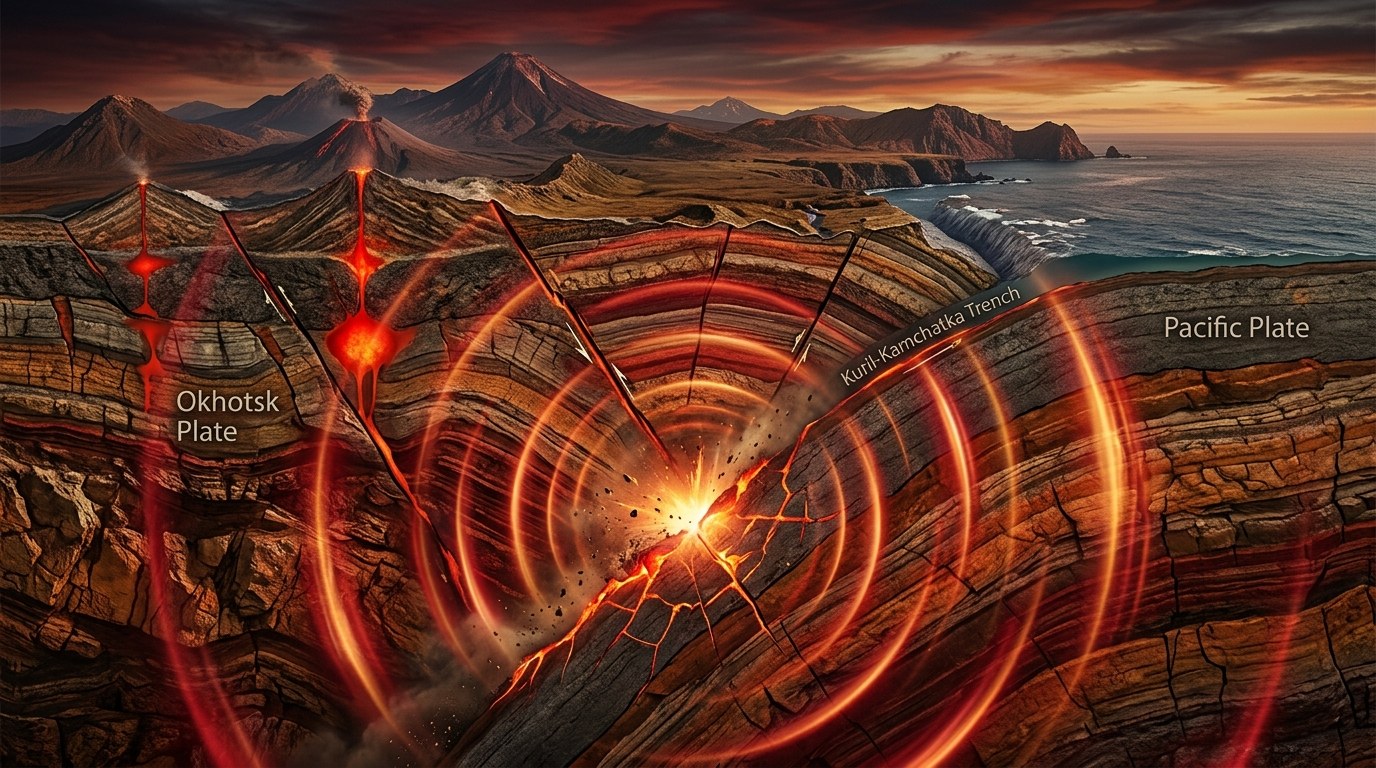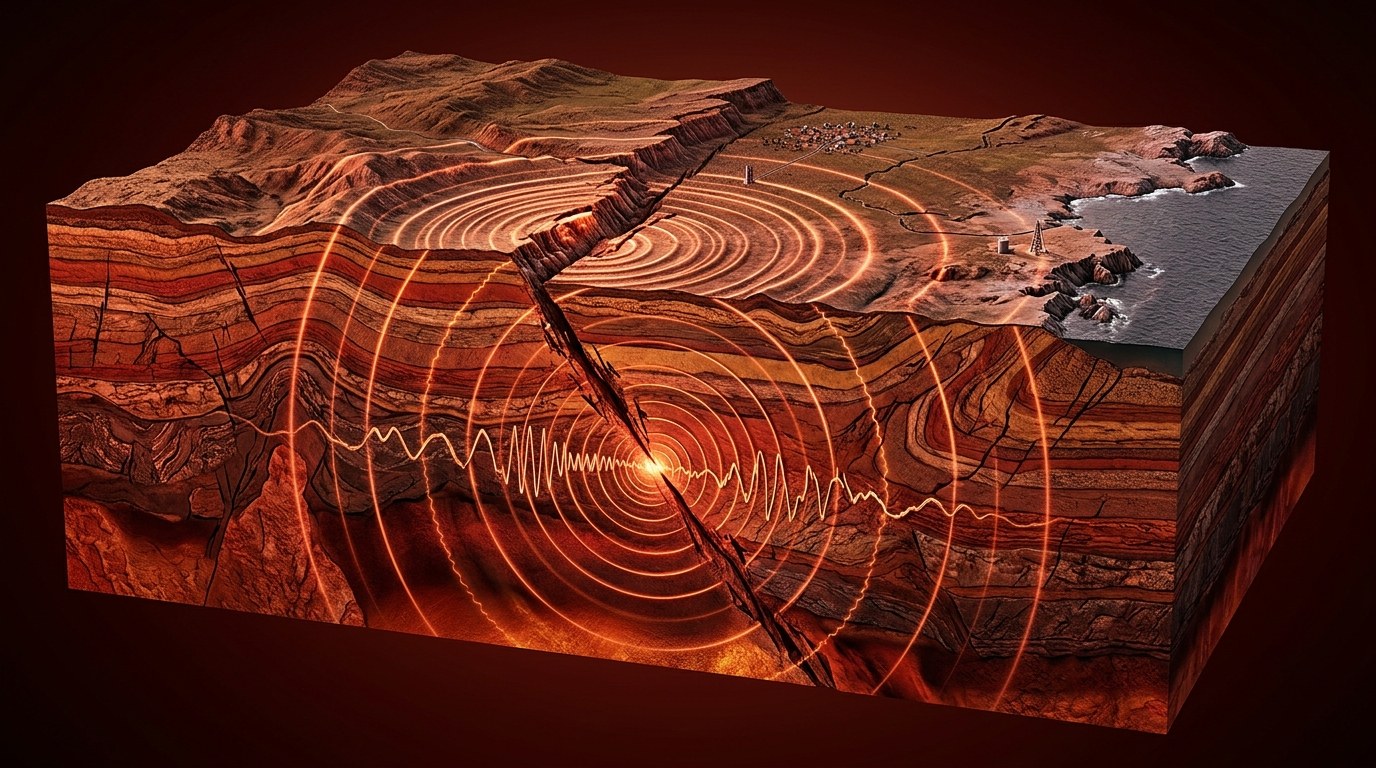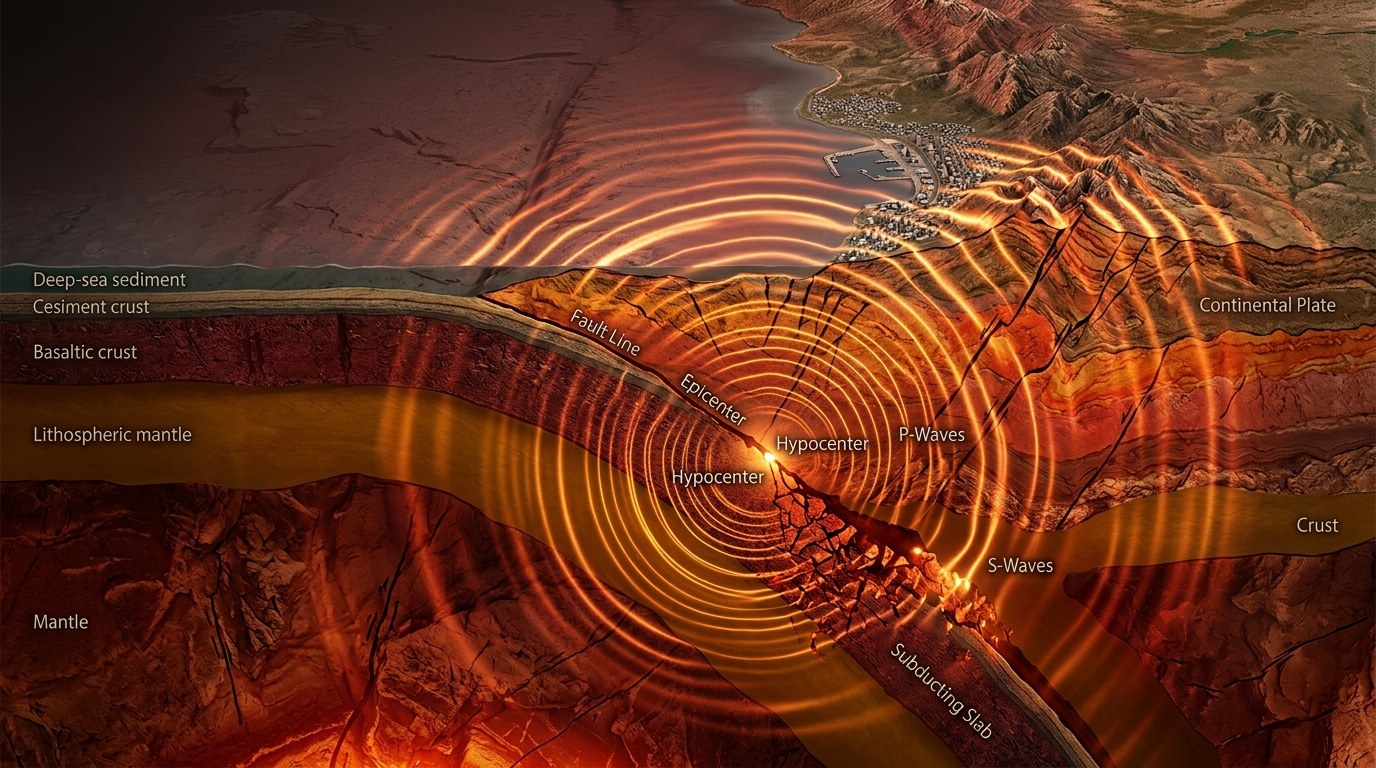
When an earthquake strikes, the first question many ask is, "How big was it?" For decades, the answer almost universally referred to the Richter scale. However, beneath this familiar term lies a more sophisticated and physically robust measurement that modern seismology, and platforms like Talivio AI, depend upon: the seismic moment and its derived moment magnitude.
While the Richter scale served as a foundational step in understanding earthquake size, its inherent limitations for larger events necessitated a more comprehensive approach. This shift from an empirical measurement to one grounded in the fundamental physics of fault rupture has revolutionized our ability to characterize seismic events, assess hazards, and train predictive models.
The Familiar Richter Scale: A Legacy with Limitations
Developed by Charles Richter in 1935, the local magnitude scale (ML), commonly known as the Richter scale, was a groundbreaking achievement. It provided seismologists with a standardized way to compare the size of earthquakes recorded in Southern California. The scale is logarithmic, meaning that each whole number increase represents a tenfold increase in the amplitude of seismic waves and approximately a 32-fold increase in the energy released. Its simplicity and immediate applicability made it the dominant measure for decades.
The Richter scale measures the maximum amplitude of specific seismic waves recorded by a Wood-Anderson seismograph at a certain distance from the epicenter. While effective for small to moderate earthquakes, it suffers from several critical limitations:
- Saturation for Large Earthquakes: The most significant drawback is its tendency to "saturate" for very large earthquakes (typically ML > 7). This means that for powerful events, the scale underestimates the true size, as the short-period seismic waves it primarily measures do not accurately reflect the total energy released by a vast rupture. Long-period waves, which carry more energy for large events, are not adequately captured by the original Richter formulation.
- Regional Dependence: The original Richter scale was calibrated for specific geological conditions in Southern California. Applying it directly to other regions with different crustal structures can lead to inaccuracies and inconsistencies in magnitude estimations.
- Instrument Dependence: It is tied to specific types of seismographs and their frequency responses, making comparisons across different instrument networks challenging.
- Empirical, Not Physical: The Richter scale is an empirical measure based on wave amplitudes, not directly on the physical process of the earthquake rupture itself. It doesn't directly tell us about the fault's dimensions or the amount of slip that occurred.
These limitations became increasingly apparent as seismologists studied larger, more complex earthquakes globally, prompting the search for a more physically meaningful and universally applicable measure.
Unveiling Seismic Moment: A Deeper Physical Understanding
The solution emerged with the concept of seismic moment (M₀), first introduced by Kei Aki in 1966 and further developed by Hiroo Kanamori in 1977. Unlike the Richter scale, seismic moment is a direct measure of the total energy released by an earthquake and the permanent deformation it causes. It is derived from the fundamental physical properties of the fault rupture [Kanamori & Anderson, 1975 — DOI: 10.1007/BF00876483].
Seismic moment is calculated using the following formula:
M₀ = μ × A × D
- μ (mu): Represents the shear modulus or rigidity of the rocks along the fault. This is a measure of the rock's resistance to shearing deformation.
- A: Denotes the area of the fault rupture, which is the length of the fault that slipped multiplied by its width.
- D: Stands for the average displacement or slip along the fault, indicating how far the two sides of the fault moved relative to each other.
By directly quantifying these physical parameters, seismic moment provides a comprehensive picture of the earthquake's mechanical work. From seismic moment, the moment magnitude (Mw) scale is derived. This scale was introduced by Kanamori in 1977 and is defined as:
Mw = (2/3)log₁₀(M₀) - 6.0 (where M₀ is in Newton-meters, N·m)
The moment magnitude scale retains the logarithmic nature and approximate numerical values of the Richter scale for moderate earthquakes, making it intuitively familiar. However, its advantages are profound:
- No Saturation: Mw accurately measures the size of even the largest earthquakes, as it accounts for the full spectrum of seismic waves, especially the long-period waves that carry the most energy in powerful events [Kanamori, 1977 — DOI: 10.1029/JB082i020p02981].
- Physically Meaningful: It directly relates to the physical dimensions of the fault rupture and the amount of slip, offering deep insights into the mechanics of the earthquake source.
- Globally Applicable: Moment magnitude is independent of local geological conditions or specific instrument types, providing a consistent and globally comparable measure of earthquake size.
- Consistent Energy Release: Mw is directly proportional to the total energy released by the earthquake, making it ideal for energy balance studies and hazard assessments.
Why Seismic Moment Matters in Modern Seismology
The adoption of moment magnitude as the standard measure for earthquake size has had a transformative impact on seismology and related fields:
- Accurate Hazard Assessment: By precisely quantifying the energy release and rupture characteristics, Mw allows for more accurate assessments of seismic hazards, including potential ground motion intensity, liquefaction, and tsunami generation. This information is critical for urban planning, infrastructure design, and emergency preparedness.
- Understanding Fault Mechanics: Moment magnitude provides invaluable data for studying how faults behave, how stress accumulates and releases, and the interactions between different fault segments. This helps seismologists build more sophisticated models of earthquake processes.
- Engineering Applications: Engineers rely on accurate earthquake sizing to design resilient structures. Mw-based data informs building codes and helps ensure that critical infrastructure can withstand expected seismic forces.
- Scientific Research and Education: It forms the bedrock of modern earthquake catalogs and research, enabling scientists to study global seismicity patterns, tectonic plate movements, and the fundamental physics of earthquakes with unprecedented accuracy.
Talivio AI and the Power of Moment Magnitude
At Talivio, our AI-powered earthquake prediction platform leverages the unparalleled accuracy and physical robustness of moment magnitude data as a cornerstone of our analytical framework. We understand that precise event characterization is paramount for developing reliable predictive models.
The robustness of Mw data is critical for training our ensemble of advanced machine learning algorithms. Talivio's proprietary ML system employs a competition of algorithms, including LightGBM, Random Forest, ExtraTrees, and Calibrated Logistic Regression. These algorithms are trained and validated using extensive datasets where seismic events are accurately characterized by their moment magnitude. This allows our models to learn the true scale of seismic events, free from the saturation limitations inherent in other magnitude scales.
Furthermore, our platform categorizes seismic events into distinct magnitude bands (M4-5, M5-6, M6-7, M7+). This multi-band approach is significantly enhanced by the precision of moment magnitude, ensuring that each event is correctly assigned to its respective energy release category. Accurate categorization is vital for tailoring our prediction models to specific earthquake magnitudes, as the precursors and characteristics can vary significantly across different scales.
Our algorithms are trained on a rich dataset comprising 102 seismic features. These features, such as GNSS strain rates, b-value anomalies, Coulomb stress transfer, and ETAS parameter estimations, are most effectively interpreted and utilized when correlated with the physically grounded measure of seismic moment. For instance, understanding the relationship between accumulated strain (from GNSS data) and the actual energy released (Mw) during a rupture is fundamental to our predictive capabilities. Modern machine learning techniques, when applied to seismological data, thrive on such accurate and physically consistent input [Bergen et al., 2019 — arxiv:1905.00639].
Talivio's models consistently demonstrate superior predictive performance when trained on data characterized by moment magnitude, enabling more accurate and actionable insights into future seismic activity. This commitment to scientific rigor and the use of the most advanced seismological metrics ensures that our platform provides the highest fidelity predictions possible.
Conclusion
While the Richter scale holds an important place in the history of seismology and popular understanding, the scientific community, including Talivio AI, has moved beyond its limitations. Seismic moment and moment magnitude represent a profound leap forward, offering a physically accurate, globally consistent, and non-saturating measure of earthquake size. By embracing this gold standard, we gain a deeper understanding of our planet's seismic processes, enhance our ability to assess risks, and empower advanced AI platforms like Talivio to make more precise and reliable predictions, ultimately contributing to greater safety and preparedness in earthquake-prone regions.