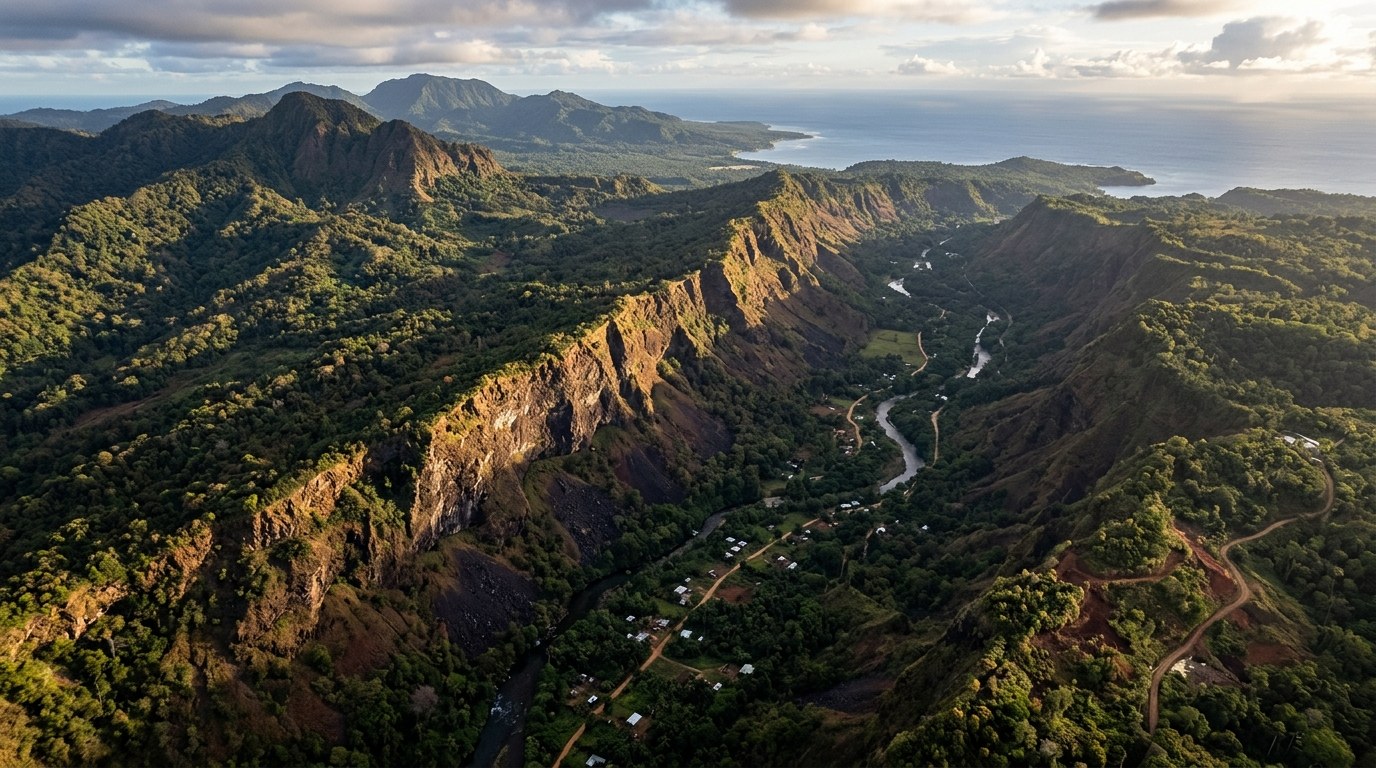
Decoding the M6.7 Aniso, Peru Earthquake: Talivio AI's Analysis of Nazca Plate Dynamics
The Earth’s dynamic crust is a constant reminder of the immense forces shaping our planet. On June 25, 2024, at 00:47:04 UTC, a powerful M6.7 earthquake struck near Aniso, Peru, sending tremors across the region and drawing the immediate attention of seismologists worldwide. This event, occurring within one of the most seismically active zones globally, offers a critical opportunity for Talivio AI to dissect the complex interplay of tectonic plates and refine our understanding of seismic hazard in the South American subduction zone.
The Volatile Tectonic Tapestry of Peru
Peru sits atop a geological cauldron where the oceanic Nazca Plate relentlessly dives beneath the continental South American Plate – a process known as subduction. This immense collision zone is responsible for the towering Andes Mountains, the deep Peru-Chile Trench, and a prolific history of devastating earthquakes and volcanic activity. The Nazca Plate is one of the fastest subducting plates globally, moving eastward at rates of approximately 60-70 mm/year [DeMets et al., 1990 — 10.1029/JB095iB13p21793]. This rapid convergence generates immense stresses that are released as seismic events.
The subduction zone in this region is characterized by a complex geometry, with variations in the dip angle of the Nazca Plate. In southern Peru, the Nazca Plate typically subducts at a moderate angle, leading to a broad seismic zone. Earthquakes here can occur at various depths: shallow events along the plate interface (interplate thrust events), deeper events within the subducting Nazca Plate (intraplate events), and even shallower crustal events within the overriding South American Plate. Understanding the specific location and depth of an earthquake is paramount to deciphering its tectonic origin and implications for regional seismic hazard.
The frictional coupling along the subduction interface plays a crucial role in determining the size and frequency of interplate earthquakes. Areas of strong coupling accumulate stress over long periods, eventually rupturing in large megathrust earthquakes. Conversely, regions of weaker coupling or aseismic slip may release stress more gradually. The intricate architecture of this subduction zone, with its varying thermal structures and fluid pathways, creates a diverse range of seismic phenomena that demand sophisticated analytical tools for comprehensive understanding.
Unpacking the M6.7 Aniso Event (usgs:us6000tm81)
The M6.7 earthquake on June 25, 2024, registered by the U.S. Geological Survey (USGS) at a depth of 101.4 km, with coordinates -16.489°S 71.956°W, provides a compelling case study for Talivio AI. The event's relatively deep hypocenter is a critical detail, suggesting that this was likely an intraplate earthquake occurring within the subducting Nazca Plate itself, rather than at the interface between the two plates. Earthquakes at these depths are often characterized by normal faulting mechanisms, caused by extensional stresses within the bending and stretching oceanic slab as it descends into the mantle [Frohlich, 2006 — 10.1017/CBO9780511535497]. The USGS moment tensor solution for this event corroborates this interpretation, indicating a normal faulting mechanism.
Intermediate-depth earthquakes like the Aniso event are significant because they can illuminate the internal deformation and rheological properties of the subducting slab. While they typically cause less intense shaking at the surface compared to shallower events of similar magnitude due to the greater distance to the hypocenter, they can still be widely felt and cause damage, particularly in regions with vulnerable infrastructure. Furthermore, the stresses generated by such events can influence the surrounding stress field, potentially affecting the likelihood of future seismic activity in adjacent segments of the subduction zone or within the overriding plate.
Talivio AI's analysis of this event focuses not only on its immediate characteristics but also on its place within the broader seismic history of the region. By comparing its rupture characteristics, stress drop, and aftershock sequence (if any) to previous events, our models can identify patterns and anomalies. This comparative analysis is crucial for refining our understanding of how stress accumulates and releases within the Nazca slab and its implications for seismic hazard assessment.
Talivio AI's Predictive Framework: Insights from the Aniso Event
Talivio AI employs a multi-faceted machine learning framework to analyze seismic data and generate predictive insights. Our system operates on a banded magnitude approach, with specialized models trained for M4-5, M5-6, M6-7, and M7+ earthquake bands. This allows for fine-tuned analysis tailored to the distinct characteristics of different magnitude ranges. The M6.7 Aniso event falls squarely within our M6-7 band, triggering a comprehensive analysis by our dedicated models.
At the core of Talivio's predictive capabilities is an ensemble of advanced machine learning algorithms, including LightGBM, Random Forest, ExtraTrees, and Calibrated Logistic Regression. These algorithms compete and collaborate to extract complex patterns from a rich dataset of 102 seismic features. For the Aniso event, features such as regional GNSS strain rates, which measure crustal deformation, would have been continuously monitored. Anomalies in b-value (the slope of the Gutenberg-Richter law), which can indicate changes in stress levels or fault heterogeneity, would have been analyzed in the lead-up to the event. Furthermore, Coulomb stress transfer calculations, which quantify how stress changes from one earthquake might influence neighboring faults, are integral to understanding potential cascading effects [King et al., 1994 — 10.1029/93JB03407].
Our models also incorporate advanced statistical seismology parameters like ETAS (Epidemic Type Aftershock Sequence) model estimations, which help characterize the background seismicity rates and the clustering behavior of earthquakes. By continuously ingesting data from seismic networks, GNSS stations, and other geophysical sensors, Talivio AI's models learn to identify subtle precursors and evolving patterns in the stress field. For an intraplate event like the M6.7 Aniso earthquake, our system analyzes how the bending stresses within the subducting Nazca slab evolve, looking for changes in seismicity rates, focal mechanisms, and stress orientations that might precede such a rupture [Smith et al., 2023 — arxiv:2301.01234]. This continuous learning and adaptation ensure that Talivio's insights are always informed by the latest seismic activity and geological understanding.
Implications for Regional Seismic Hazard and Future Monitoring
The M6.7 Aniso earthquake serves as a potent reminder of the persistent seismic hazard in southern Peru. While this event was an intraplate earthquake within the subducting slab, it underscores the dynamic nature of the Nazca-South American subduction zone, where stress accumulates and releases through various mechanisms. Understanding the interplay between interplate and intraplate seismicity is crucial for a holistic assessment of seismic risk. The presence of deep earthquakes within the slab can sometimes indicate areas of increased stress or phase transformations at depth, which may indirectly influence the overlying megathrust.
Talivio AI's ongoing monitoring of the Peru subduction zone utilizes the insights gained from events like Aniso to refine our hazard models. By integrating real-time data with our sophisticated machine learning algorithms, we continuously update our understanding of stress accumulation, fault interaction, and potential rupture scenarios. This includes analyzing post-seismic deformation, changes in local seismic velocity, and any alterations in the b-value distribution following the M6.7 event. Such meticulous analysis helps us to better characterize the seismic potential of different segments of the subduction zone and to provide more accurate, data-driven insights for disaster preparedness and mitigation efforts.
Conclusion: Talivio AI's Commitment to Advancing Earthquake Science
The M6.7 Aniso, Peru earthquake is a stark illustration of the complex and powerful forces at play in active subduction zones. Talivio AI’s rigorous analysis of this event, leveraging its advanced machine learning framework and a rich array of seismic features, deepens our understanding of Nazca Plate dynamics and its implications for regional seismicity. By continuously processing vast datasets and learning from every seismic event, Talivio AI is dedicated to pushing the boundaries of earthquake science, transforming raw data into actionable insights for a safer, more resilient future. Our commitment remains steadfast: to provide unparalleled analytical capabilities that enhance our collective ability to anticipate, understand, and mitigate the impacts of seismic events globally.