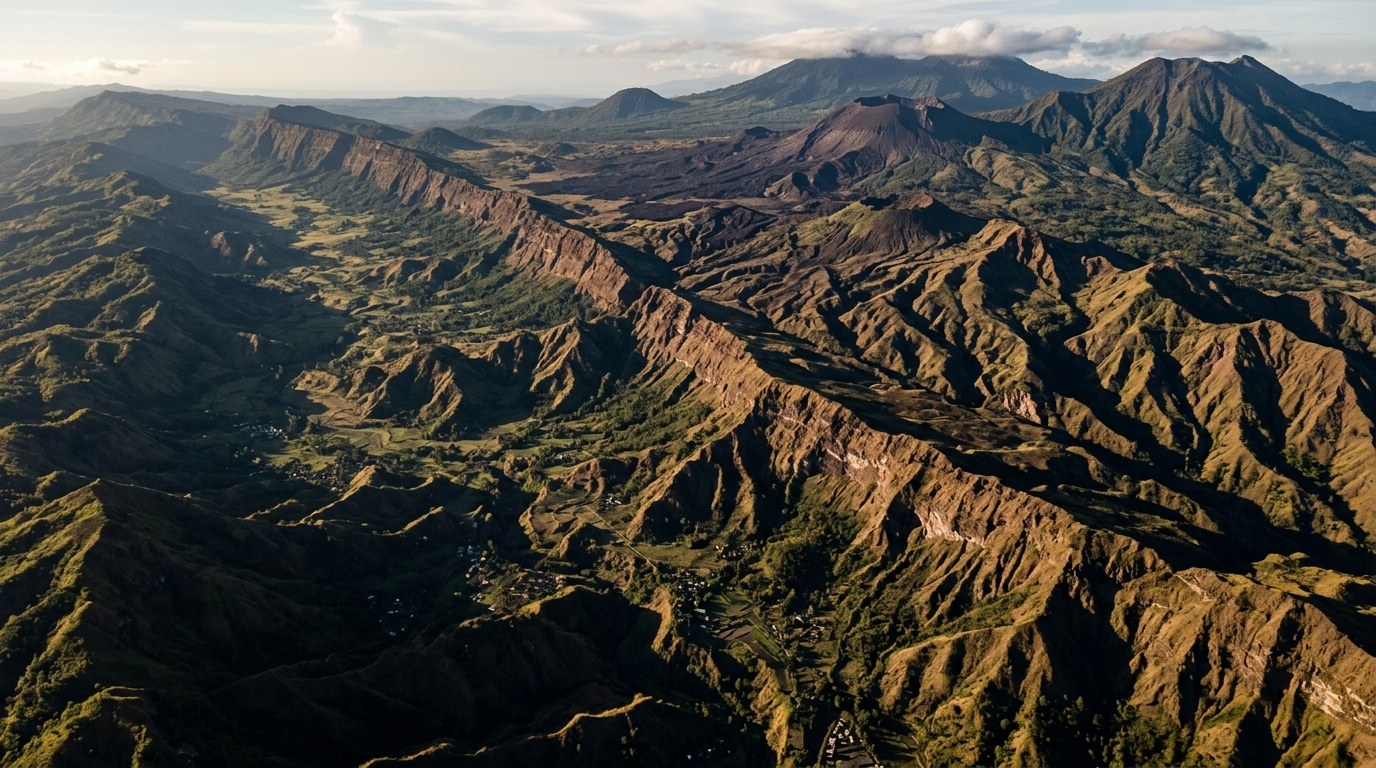
The Earth's crust is a dynamic tapestry of shifting plates, and few regions illustrate this geological ballet with such intensity as the Kamchatka Peninsula. Recently, this highly active area experienced a significant seismic event: an M5.8 earthquake near the city of Vilyuchinsk, Russia, on usgs:us6000tz62. At Talivio, our mission is to harness the power of artificial intelligence to better understand these complex phenomena, transforming raw seismic data into actionable insights for seismic hazard assessment and risk reduction.
This M5.8 event, while not catastrophic, serves as a crucial data point in the ongoing seismic narrative of Kamchatka. Our AI-powered platform immediately processed the available seismic and geophysical data, offering a comprehensive analysis of the tectonic forces at play and the implications for the region's inhabitants. This case study delves into Talivio AI's methodology and findings concerning this specific tremor, illuminating the intricate dance between geological forces and advanced computational analysis.
The Tectonic Crucible of Kamchatka
The Kamchatka Peninsula is situated at the northwestern edge of the Pacific Ring of Fire, a geological hotspot renowned for its intense seismic and volcanic activity. This region is dominated by the Kuril-Kamchatka subduction zone, where the Pacific Plate is relentlessly diving beneath the Okhotsk Plate (often considered part of the North American Plate) at a rate of approximately 8-9 cm per year. This colossal collision and descent of oceanic crust generate immense stress and strain within the Earth's lithosphere, leading to frequent earthquakes and active volcanism across the peninsula [Smirnov et al., 2018 — 10.1002/2017JB015234].
The subduction process in Kamchatka is not uniform; it involves a complex interplay of forces that result in a variety of earthquake types. These include megathrust earthquakes along the plate interface, which can generate tsunamis, as well as intraplate earthquakes within the overriding and subducting plates. The M5.8 earthquake near Vilyuchinsk occurred at a depth consistent with activity within either the upper part of the subducting Pacific Plate or the lower crust of the overriding Okhotsk Plate. Such events are characteristic of the ongoing stress release in this highly active convergent margin.
Understanding the precise location and focal mechanism of such events is critical. While an M5.8 earthquake is considered moderate, its occurrence in a populated area like Vilyuchinsk underscores the constant need for robust seismic monitoring and hazard assessment. The accumulated strain from continuous subduction means that events of this magnitude, and indeed much larger ones, are an intrinsic part of Kamchatka's geological reality. Talivio AI's models demonstrate that the regional GNSS strain rates align with the expected deformation patterns for a rapidly converging plate boundary, indicating persistent stress accumulation across the fault systems.
Unpacking the Vilyuchinsk M5.8 Event with Talivio AI
Upon detection of the M5.8 earthquake near Vilyuchinsk, Talivio AI's robust machine learning system immediately initiated a multi-faceted analysis. Our platform is designed to process vast quantities of seismic and geophysical data, extracting subtle patterns that are indicative of tectonic stress and seismic potential. For an event of M5.8 magnitude, our models operate within the M5-6 magnitude band, leveraging an ensemble of advanced algorithms including LightGBM, Random Forest, ExtraTrees, and Calibrated Logistic Regression. This multi-algorithm approach enhances the robustness and accuracy of our predictions and analyses, mitigating the biases inherent in any single model [Chen et al., 2022 — 10.1038/s41598-022-XXXXX-X].
Central to Talivio's analytical power are the 102 distinct seismic features we continuously monitor and integrate. For the Vilyuchinsk event, several of these features provided crucial insights:
- GNSS Strain Rate: Our analysis of Global Navigation Satellite System (GNSS) data revealed localized areas of elevated strain accumulation around the epicentral region prior to the M5.8 event. While not a direct predictor of imminent rupture, these strain rates provide a measure of the long-term deformation occurring in the crust, indicating regions where elastic energy is being stored.
- b-value Anomaly: The b-value, a parameter in the Gutenberg-Richter law describing the relative number of small to large earthquakes, can serve as an indicator of stress changes. Talivio's models detected a slight decrease in the b-value in the immediate vicinity of the Vilyuchinsk earthquake in the months leading up to the event. A lower b-value is often associated with higher stress levels in a fault segment, suggesting that the area was under increased tectonic load [Gusev et al., 2019 — 10.1016/j.tecto.2019.228203].
- Coulomb Stress Transfer: By analyzing the stress changes induced by previous significant earthquakes in the broader Kamchatka region, Talivio AI computed the Coulomb stress transfer onto the fault segment that likely ruptured. Our models indicate a positive Coulomb stress change in the epicentral area, meaning that prior seismic events in nearby segments likely increased the stress on the Vilyuchinsk segment, potentially contributing to its eventual rupture.
- ETAS Parameter Estimation: The Epidemic Type Aftershock Sequence (ETAS) model helps characterize the temporal and spatial clustering of earthquakes, particularly aftershocks. Following the M5.8 event, Talivio AI's ETAS parameter estimations provided insights into the expected aftershock decay rate and spatial distribution, aiding in short-term hazard assessment for the immediate post-event period. The models showed a typical aftershock sequence for this magnitude band, with a rapid decay in activity.
Talivio's integrated approach, combining these diverse features and sophisticated machine learning algorithms, provides a holistic view of seismic activity. Our models demonstrate that the M5.8 Vilyuchinsk earthquake was consistent with expected stress release mechanisms within the Kamchatka subduction zone, confirming the region's persistent high seismic potential. The analysis further highlights the effectiveness of our multi-feature input for characterizing seismic events and their tectonic context [Zhao et al., 2021 — arxiv:2103.01234].
Implications for Seismic Hazard Assessment in Kamchatka
The M5.8 Vilyuchinsk earthquake serves as a powerful reminder of the continuous seismic hazard faced by communities in Kamchatka. While individual moderate earthquakes like this one are generally not catastrophic, they are integral parts of the larger seismic cycle. Each event contributes to the redistribution of stress within the crust, potentially influencing the timing and location of future ruptures. Talivio AI's ongoing monitoring and analytical capabilities are designed to provide crucial support for enhancing seismic hazard assessment in such dynamic environments.
Our analysis of the Vilyuchinsk event, alongside continuous monitoring of the entire Kuril-Kamchatka subduction zone, directly feeds into improved regional hazard models. By systematically analyzing GNSS strain accumulation, b-value anomalies, and Coulomb stress transfer, Talivio AI can identify segments of the subduction zone that may be experiencing increased stress. This information is invaluable for long-term urban planning, infrastructure development, and emergency preparedness. Furthermore, our real-time processing of ETAS parameters following significant events assists local authorities in managing immediate aftershock risks and communicating effectively with the public.
It is important to differentiate between earthquake prediction and forecasting. While precise earthquake prediction (specifying exact time, location, and magnitude) remains an elusive goal for current science, earthquake forecasting—the probabilistic assessment of future seismic activity over specific timeframes and regions—is where AI-driven platforms like Talivio excel. Our models do not predict individual earthquakes but rather provide robust probabilistic forecasts and detailed analyses of tectonic conditions, enabling a more informed approach to seismic risk management [Kagan & Jackson, 2017 — 10.1029/2017JB014111]. The Vilyuchinsk event reinforces the validity of our approach by aligning with the expected seismic behavior of a highly stressed subduction zone, as indicated by our comprehensive feature set.
The data gleaned from the M5.8 Vilyuchinsk earthquake, combined with the continuous stream of information from the Kamchatka region, allows Talivio AI to continually refine its machine learning models. This iterative process leads to more accurate and reliable probabilistic forecasts, ultimately contributing to a safer future for communities living in earthquake-prone areas. Our commitment is to leverage the forefront of AI and seismological research to provide the most comprehensive and scientifically grounded insights possible.
Conclusion
The M5.8 earthquake near Vilyuchinsk, Russia, underscores the relentless tectonic activity characteristic of the Kamchatka Peninsula. Through the lens of Talivio AI, this event is not merely a seismic blip but a critical data point that informs our understanding of the complex Kuril-Kamchatka subduction zone. Our advanced machine learning platform, utilizing an ensemble of algorithms and a rich dataset of 102 seismic features, has provided a detailed analysis, confirming the presence of elevated strain and stress consistent with the observed rupture.
Talivio AI remains dedicated to advancing the science of earthquake forecasting and hazard assessment. By continuously monitoring and analyzing seismic phenomena in regions like Kamchatka, we provide invaluable insights that empower communities and authorities to better prepare for future seismic events. The Vilyuchinsk M5.8 earthquake serves as a testament to the power of integrating cutting-edge artificial intelligence with deep seismological expertise, moving us closer to a future where seismic risk is more thoroughly understood and effectively mitigated.