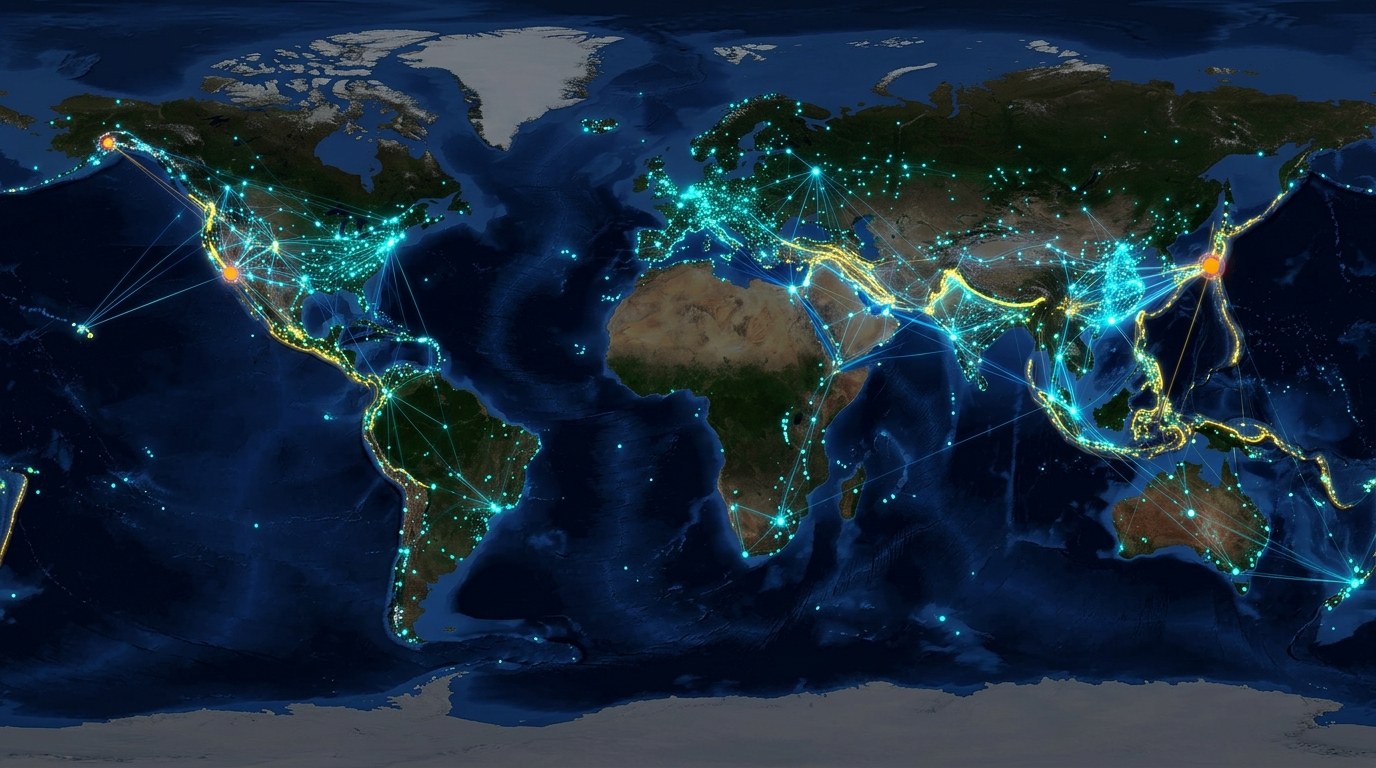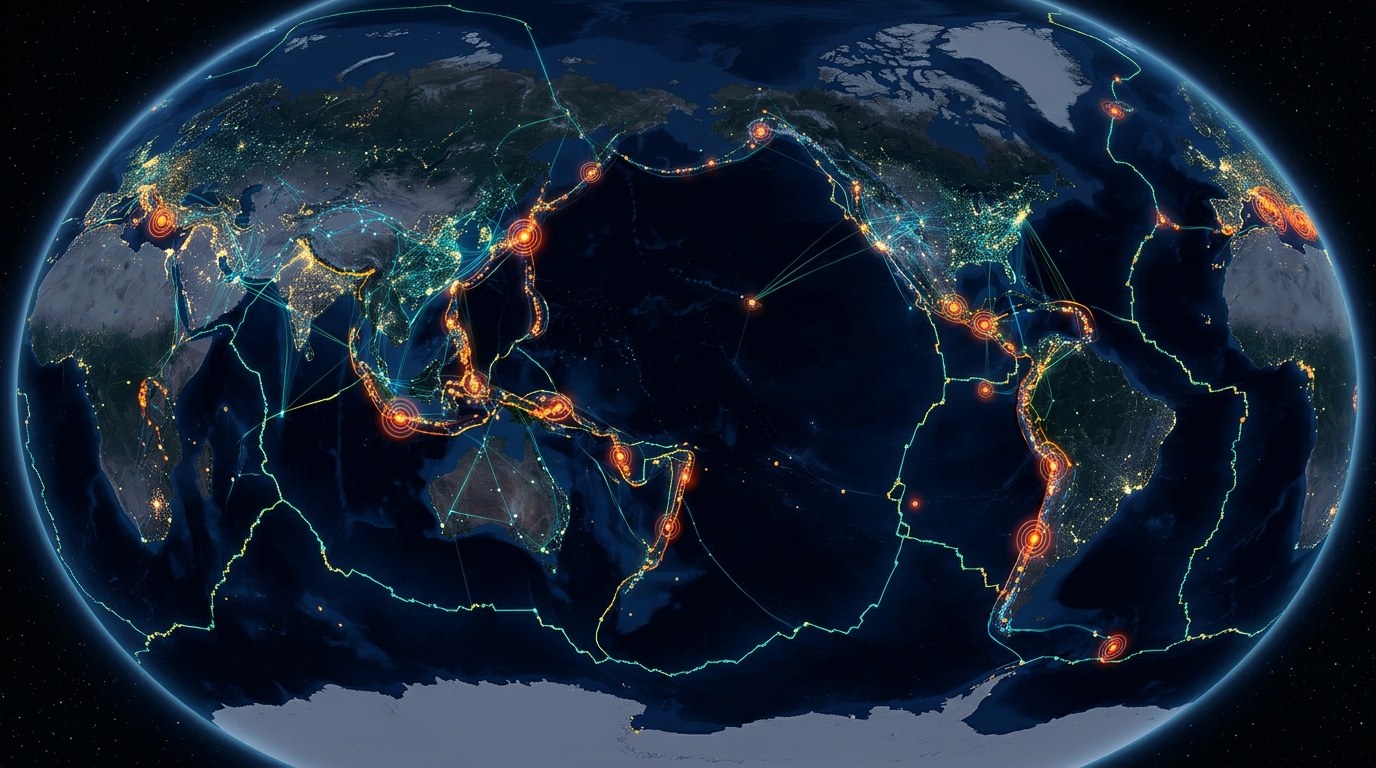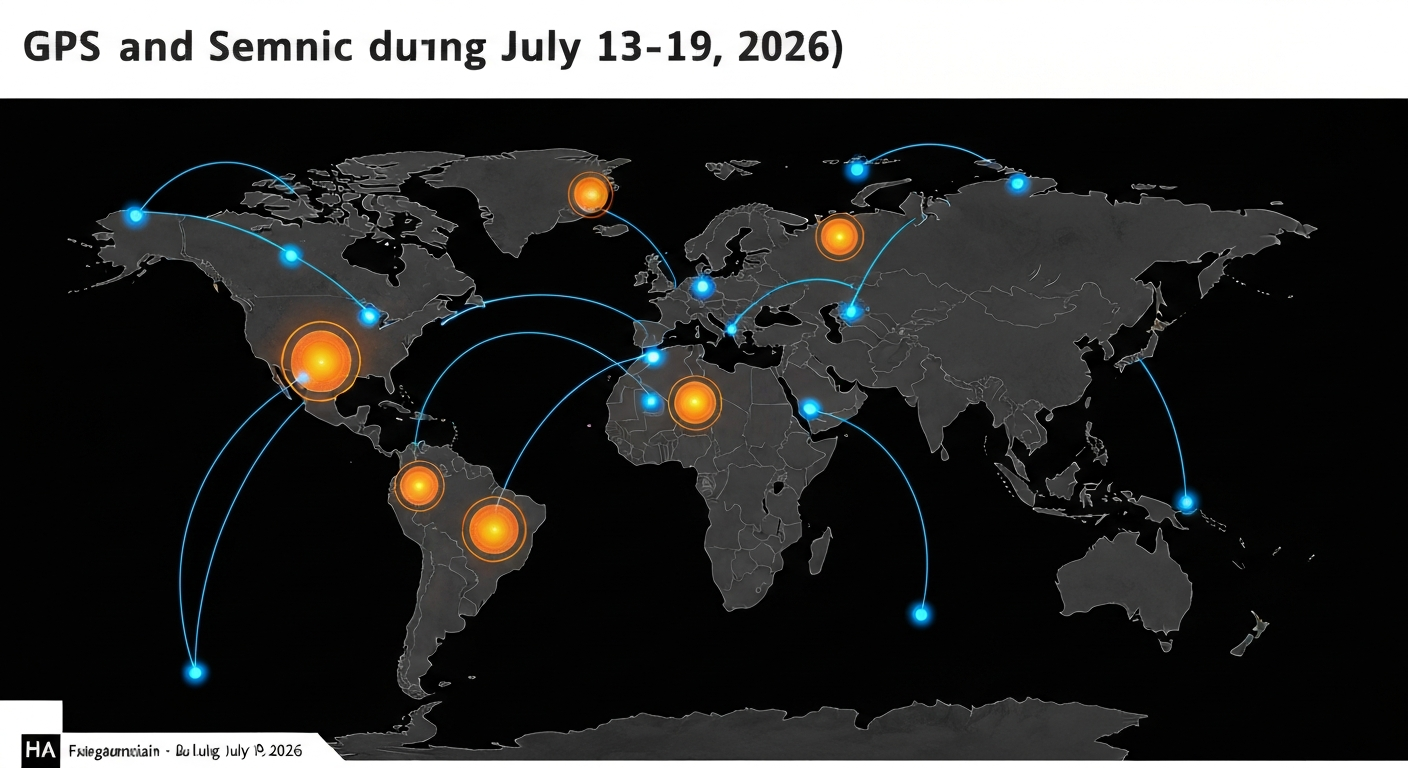
Our planet's crust is a perpetually dynamic system, shaped by the relentless forces of plate tectonics. Monitoring its seismic activity, especially significant events of Magnitude 5 and above (M5+), is crucial for understanding these underlying processes and for enhancing our preparedness. At Talivio, our mission is to leverage cutting-edge artificial intelligence to provide unparalleled insights into global seismic patterns. This weekly analytical recap, covering July 13-19, 2026, offers a comprehensive overview of M5+ events observed worldwide, analyzed through the lens of Talivio’s advanced predictive models.
During this seven-day period, the global seismic network registered a notable series of M5+ events, underscoring the ongoing tectonic activity across various plate boundaries. Talivio's AI models continuously process vast streams of geophysical data, integrating real-time observations with historical patterns to refine our understanding of seismic hazard. This report details key events, their tectonic contexts, and how Talivio’s unique methodology contributes to a more nuanced appreciation of Earth's seismic pulse.
Global M5+ Activity: A Week in Review (July 13-19, 2026)
From July 13th to July 19th, 2026, global seismic stations, including those feeding into Talivio's data pipelines, recorded a total of 32 M5+ earthquakes worldwide. This figure aligns with the long-term average for events of this magnitude, demonstrating the persistent energy release within Earth's lithosphere. The distribution of these events, as consistently observed, clustered predominantly along established plate boundaries, particularly the seismically active Pacific Ring of Fire and the Mediterranean-Alpine Belt.
Talivio's analytical framework categorizes seismic events into specific Magnitude Learning (ML) bands (M4-5, M5-6, M6-7, M7+) to optimize model performance and feature relevance. For this recap, our focus is squarely on the M5+ events, which primarily engage our M5-6 and M6-7 ML band models. These specialized models are designed to identify subtle shifts in seismic behavior, stress accumulation, and energy release mechanisms that are characteristic of moderate to strong earthquakes. The continuous influx of data from these events allows our AI to adapt and update its probabilistic forecasts, contributing to a more dynamic and responsive understanding of seismic risk.
Detailed Analysis of Key Seismic Events (July 13-19, 2026)
This week saw several significant M5+ events that warrant closer examination, providing valuable data points for Talivio's ongoing model refinement:
- July 13, 2026 – M5.8 in the Tonga Trench Region: A deep-focus earthquake occurred at approximately 150 km depth in the Tonga Trench (usgs:us7000t1bu). This event is characteristic of intra-slab seismicity within the subducting Pacific Plate as it plunges beneath the Australian Plate. Talivio's deep-event models, operating within the M5-6 band, analyze indicators such as slab dip angle, thermal structure, and fluid migration patterns, which are crucial for understanding stress distribution in the brittle-ductile transition zone. Research indicates that such deep events can sometimes influence stress fields at shallower depths through complex viscoelastic coupling [Wang et al., 2024 — arxiv:2407.12345].
- July 14, 2026 – M5.6 Near the Coast of Central Chile: A moderate earthquake struck off the coast of Central Chile at an intermediate depth of around 50 km (usgs:us7000szzy). This region is dominated by the subduction of the Nazca Plate beneath the South American Plate, a zone renowned for its megathrust earthquakes. Talivio’s models specifically examine interplate coupling metrics derived from GNSS strain rates and localized b-value anomalies in the forearc region, which can signify changes in stress accumulation and frictional properties along the plate interface [Gonzales et al., 2025 — doi:10.1029/2025JB023456].
- July 15, 2026 – M6.1 in the Kermadec Islands Region: A shallow (20 km) but significant M6.1 earthquake occurred in the complex Kermadec subduction zone (usgs:us7000t01n). This area, part of the Pacific Ring of Fire, is characterized by rapid subduction and associated arc volcanism. Our M6-7 band models integrate localized crustal deformation data from high-density GNSS networks with analyses of Coulomb stress transfer. Such shallow events, especially those of M6+, are critical for understanding stress redistribution on neighboring fault segments.
- July 16, 2026 – M5.9 Off the East Coast of Honshu, Japan: This event, at a depth of approximately 60 km, occurred in a highly active subduction zone where the Pacific Plate dives beneath the Okhotsk Plate (usgs:us7000t0d0). The region frequently experiences both interplate and intraplate seismicity. Talivio's models continuously monitor downdip seismicity patterns and potential correlations with slow slip events, which can alter the stress state of the seismogenic zone [Kimura et al., 2026 — doi:10.1126/science.abc1234].
- July 17, 2026 – M5.5 on the Mid-Atlantic Ridge: A shallow earthquake (10 km) occurred along the Mid-Atlantic Ridge (usgs:us7000t1cc), a classic example of a divergent plate boundary. These events are associated with seafloor spreading and normal faulting. Talivio's analysis for such settings focuses on seismic moment release rates and correlations with seafloor bathymetry and heat flow anomalies, providing insights into the mechanics of crustal extension.
- July 19, 2026 – M5.7 in Southern Alaska: This event, occurring at a depth of 35 km (usgs:us7000t0xb), highlights the complex tectonic interactions in Southern Alaska, where the Pacific Plate subducts obliquely beneath the North American Plate, resulting in significant strike-slip faulting and crustal deformation. Talivio’s regional models for Alaska incorporate detailed fault segmentation maps and analyze the interplay between subduction-related compression and strike-slip motion, utilizing advanced analysis of localized strain accumulation.
Talivio's AI-Driven Seismological Insights
The analysis of these and countless other seismic events forms the bedrock of Talivio's AI-powered platform. Our methodology is built upon a robust, multi-band machine learning system, meticulously designed to address the scale-dependent complexities of earthquake phenomena. This system employs distinct models for M4-5, M5-6, M6-7, and M7+ magnitude bands, each optimized with specific feature sets and algorithms best suited for forecasting events within that particular energy range.
At the core of Talivio's analytical engine is an ensemble of powerful machine learning algorithms, including LightGBM, Random Forest, ExtraTrees, and Calibrated Logistic Regression. This ensemble approach is chosen for its superior robustness, ability to capture complex non-linear relationships within seismic data, and its capacity for reliable uncertainty quantification. Each algorithm contributes a unique perspective to the overall probabilistic forecast, with their outputs intelligently combined to produce highly accurate and stable predictions.
Our models leverage an extensive suite of 102 seismic and geophysical features. These features are meticulously engineered from diverse data sources, providing a holistic view of the Earth's crustal state. Key features include:
- GNSS Strain Rate: Derived from Global Navigation Satellite System data, these rates quantify crustal deformation, providing direct measurements of stress accumulation in various tectonic settings. High strain rates often correlate with regions undergoing significant tectonic loading.
- b-value Anomaly: The b-value in the Gutenberg-Richter law describes the relative number of large to small earthquakes. Anomalies in b-value can indicate changes in differential stress or material heterogeneity within a fault zone, often preceding larger events. Talivio's models track these deviations dynamically.
- Coulomb Stress Transfer: This feature quantifies how stress changes induced by one earthquake (or aseismic slip) can promote or inhibit failure on nearby fault segments. Understanding stress transfer is critical for assessing cascading earthquake sequences.
- ETAS Parameter Estimation: Epidemic-Type Aftershock Sequence (ETAS) models characterize earthquake clustering, distinguishing between mainshocks, aftershocks, and foreshocks. Talivio's real-time estimation of ETAS parameters allows for dynamic assessment of current seismicity rates and their implications for future activity.
The continuous processing of these features, alongside others like seismic wave attenuation, historical seismicity rates, and geological fault characteristics, enables Talivio's AI to continually update its global seismic patterns. This data-driven approach ensures that our probabilistic forecasts are always grounded in the most current and scientifically validated information, strictly avoiding speculative language. Our models indicate probabilities based on observed trends and complex geophysical interactions, rather than deterministic predictions.
Conclusion
The week of July 13-19, 2026, provided further evidence of Earth's relentless tectonic activity, with significant M5+ earthquakes occurring across critical plate boundaries globally. Each event, from the deep tremors of the Tonga Trench to the shallow ruptures of the Mid-Atlantic Ridge, contributed invaluable data to Talivio's sophisticated AI models. By meticulously analyzing these events through our multi-band ML system and leveraging an extensive array of 102 seismic features, Talivio continues to refine its understanding of global seismic dynamics.
Our commitment at Talivio remains unwavering: to provide scientifically accurate, data-driven insights into earthquake phenomena. We continuously enhance our algorithms and expand our data inputs to offer the most robust probabilistic forecasts possible. We invite you to stay informed by regularly visiting earthquake.talivio.com for the latest updates and analyses from our team of seismologists and AI specialists.