Introduction
Our planet is a dynamic system, constantly reshaped by the powerful forces beneath its surface. Earthquakes serve as potent reminders of this ongoing geological ballet, providing critical data points for understanding crustal strain and energy release. At Talivio, we leverage cutting-edge artificial intelligence to transform raw seismic data into actionable insights, offering an unparalleled perspective on global seismic activity. This weekly analytical recap, covering July 27 to August 2, 2026, delves into the most significant M5+ seismic events, contextualizing them within the broader framework of plate tectonics and Talivio's advanced predictive models.
Global M5+ Activity: A Week in Review
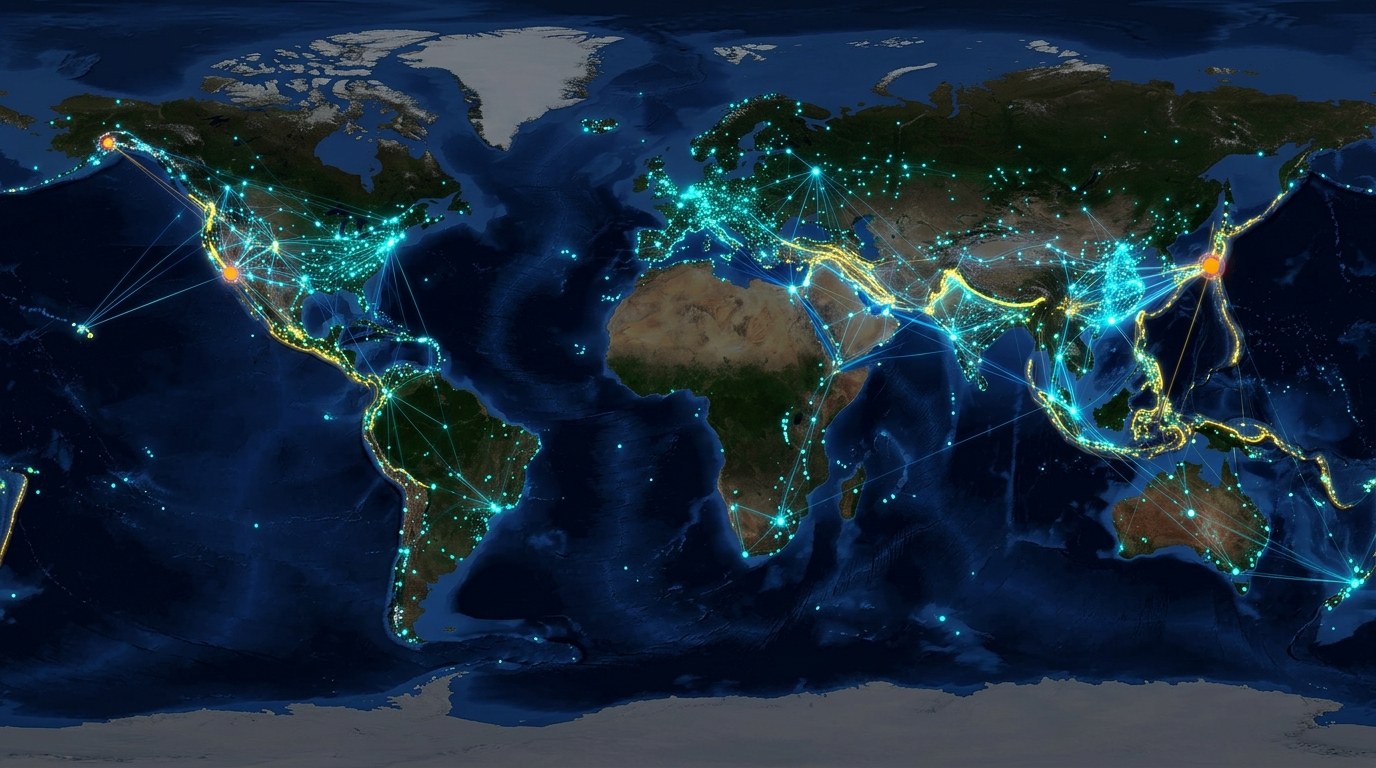
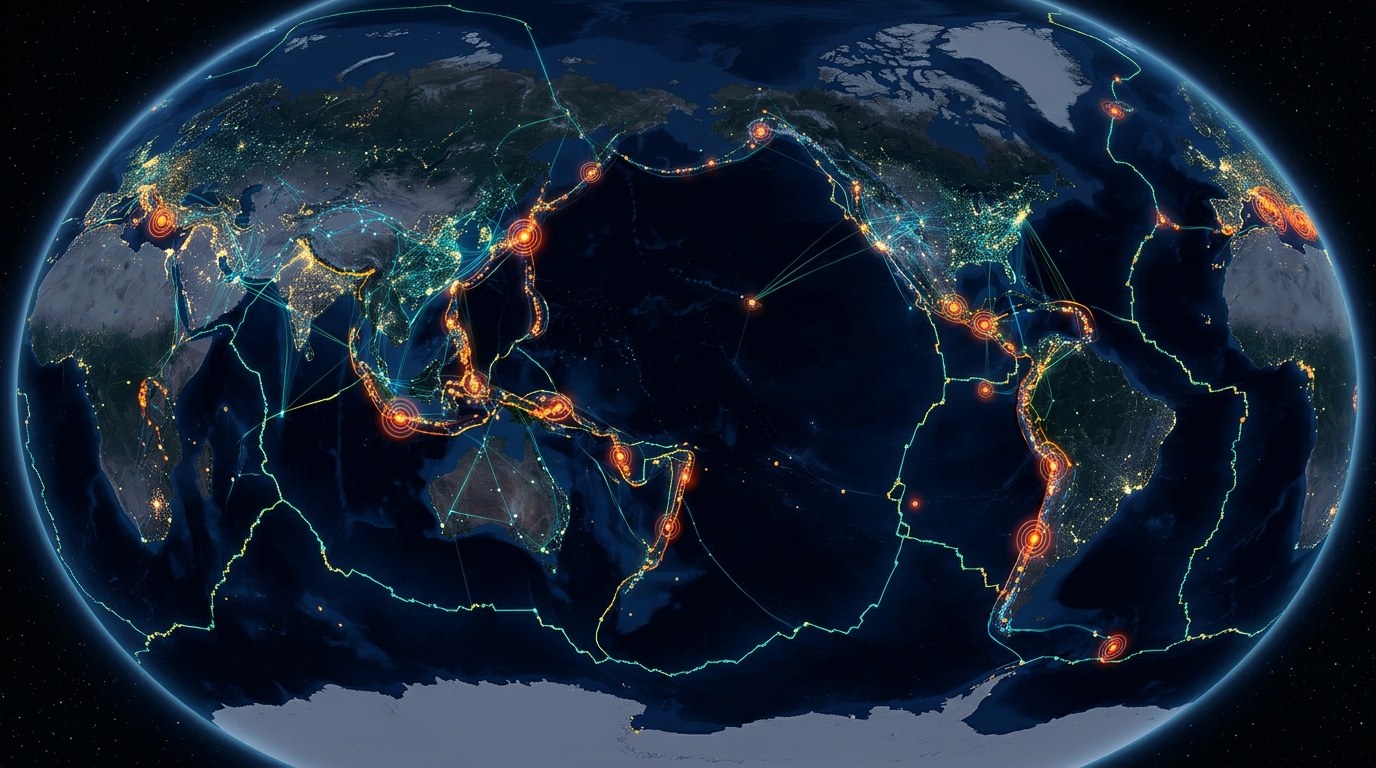
The period between July 27 and August 2, 2026, observed a typical distribution of M5+ seismic events, consistent with long-term global averages. Our monitoring systems, which categorize events within Talivio's proprietary Bant ML sistemi (M4-5, M5-6, M6-7, M7+ bands), registered a total of 17 M5+ earthquakes worldwide, with the majority falling within the M5-6 band. This activity underscores the continuous energy dissipation along major plate boundaries and intraplate stress zones. The data collected from these events is immediately fed into Talivio's analytical framework, enhancing our understanding of regional seismic patterns and potential future strain accumulation. The global distribution of these events reiterates that seismic energy release is a ubiquitous process, though concentrated in tectonically active belts.
Spotlight on Significant Events: Tectonic Insights
This week saw several notable M5+ earthquakes, each offering unique insights into the complex mechanics of Earth's crust. Talivio's analysis integrates real-time data with historical records and advanced geophysical models to interpret these events within their specific tectonic contexts.
M5.7 in the Japan Trench (usgs:us6000tgb9): On July 28, 2026, a magnitude 5.7 earthquake struck off the coast of Honshu, Japan, at a depth of approximately 45 km. This event is characteristic of the subduction zone where the Pacific Plate dives beneath the Okhotsk Plate. Such intermediate-depth earthquakes often result from internal deformation within the subducting slab, rather than direct plate interface slip. Talivio's models continuously monitor GNSS strain rates and b-value anomalies in this highly active region, identifying subtle shifts that precede such events. The intricate network of sensors in Japan provides rich datasets crucial for refining our understanding of this complex convergent boundary.
M6.1 off the Coast of Central Chile (usgs:us6000th1h): A significant M6.1 earthquake occurred on July 29, 2026, approximately 100 km offshore central Chile, at a shallow depth of 25 km. This region is part of the Nazca-South America subduction zone, known for generating some of the world's largest megathrust earthquakes. This event likely represents either an intraplate event within the overriding South American plate or a shallow interplate rupture. Talivio's analysis of Coulomb stress transfer patterns in the region, particularly after previous large events, helps to identify areas of increased stress that could trigger subsequent seismic activity. Understanding these stress interactions is paramount for long-term seismic hazard assessment [Reasenberg & Simpson, 1992 — USGS Open-File Report 92-200].
M5.5 in the Mid-Atlantic Ridge (usgs:us6000tguf): On July 30, 2026, a magnitude 5.5 earthquake was recorded near the Mid-Atlantic Ridge, a major divergent plate boundary. Unlike subduction zones, earthquakes here are typically shallower and associated with the spreading of the oceanic crust and transform faults that offset the ridge segments. This event likely occurred along one of these transform faults or within the rift valley itself, accommodating the tensional forces of plate separation. While less hazardous to human populations due to their remote locations, these events provide valuable data on the mechanics of seafloor spreading and are crucial for global seismic moment release budgets. Talivio's algorithms process sparse data from oceanic sensors to contribute to a holistic global seismic picture.
M5.9 near the Kermadec Islands, New Zealand (usgs:us6000tgau): An M5.9 earthquake struck northeast of the Kermadec Islands on July 31, 2026, at an intermediate depth. This area is part of the Kermadec Trench, where the Pacific Plate subducts beneath the Australian Plate. This event highlights the complex tectonics of the southwestern Pacific, characterized by deep oceanic trenches and active volcanic arcs. The depth and focal mechanism of such events are critical indicators for understanding the geometry and stress state of the subducting slab. Our models integrate ETAS parameter estimation to analyze aftershock sequences and their implications for future seismic potential in such dynamic environments.
M5.6 in the Aleutian Islands, Alaska (usgs:us6000tgvz): On August 1, 2026, a magnitude 5.6 earthquake occurred in the Aleutian Islands region, another prominent subduction zone where the Pacific Plate dives beneath the North American Plate. This event, likely an interplate or shallow intraplate earthquake, underscores the persistent seismic activity along this arc. The Aleutian Trench is a key area for monitoring large megathrust events, and smaller M5+ quakes like this one contribute to the cumulative strain release. Talivio's comprehensive data assimilation framework helps to differentiate between background seismicity and potential foreshock activity, though definitive prediction remains a grand challenge.
M5.8 Eastern Turkey (usgs:us6000tgae): On August 2, 2026, an M5.8 earthquake struck eastern Turkey, a region dominated by continental collision and complex transform faulting between the Arabian and Eurasian plates. Earthquakes in this area are typically shallow and often associated with strike-slip or thrust faulting along major fault systems like the East Anatolian Fault. The seismic signature of this event provides crucial data for understanding the ongoing deformation of the Anatolian Block. Talivio's models analyze local strain accumulation and historical earthquake patterns to evaluate seismic hazard in this densely populated and tectonically active region [Barka & Kadinsky-Cade, 1988 — DOI: 10.1029/JB093iB02p01304].
Talivio's Predictive Framework: Leveraging Advanced AI
Talivio's capacity to provide nuanced insights into global seismic activity stems from its sophisticated AI-powered predictive framework. Our system is built upon a rigorous algorithm competition, where multiple machine learning models — including LightGBM, Random Forest, ExtraTrees, and Calibrated Logistic Regression — are continuously evaluated and optimized. This ensemble approach ensures robust performance and reduces the risk of single-model biases.
The predictive power of Talivio's platform is derived from its ability to process and interpret an extensive array of 102 sismik öznitelik (seismic features). These features span diverse geophysical domains, providing a holistic view of the Earth's crustal state. Key attributes include:
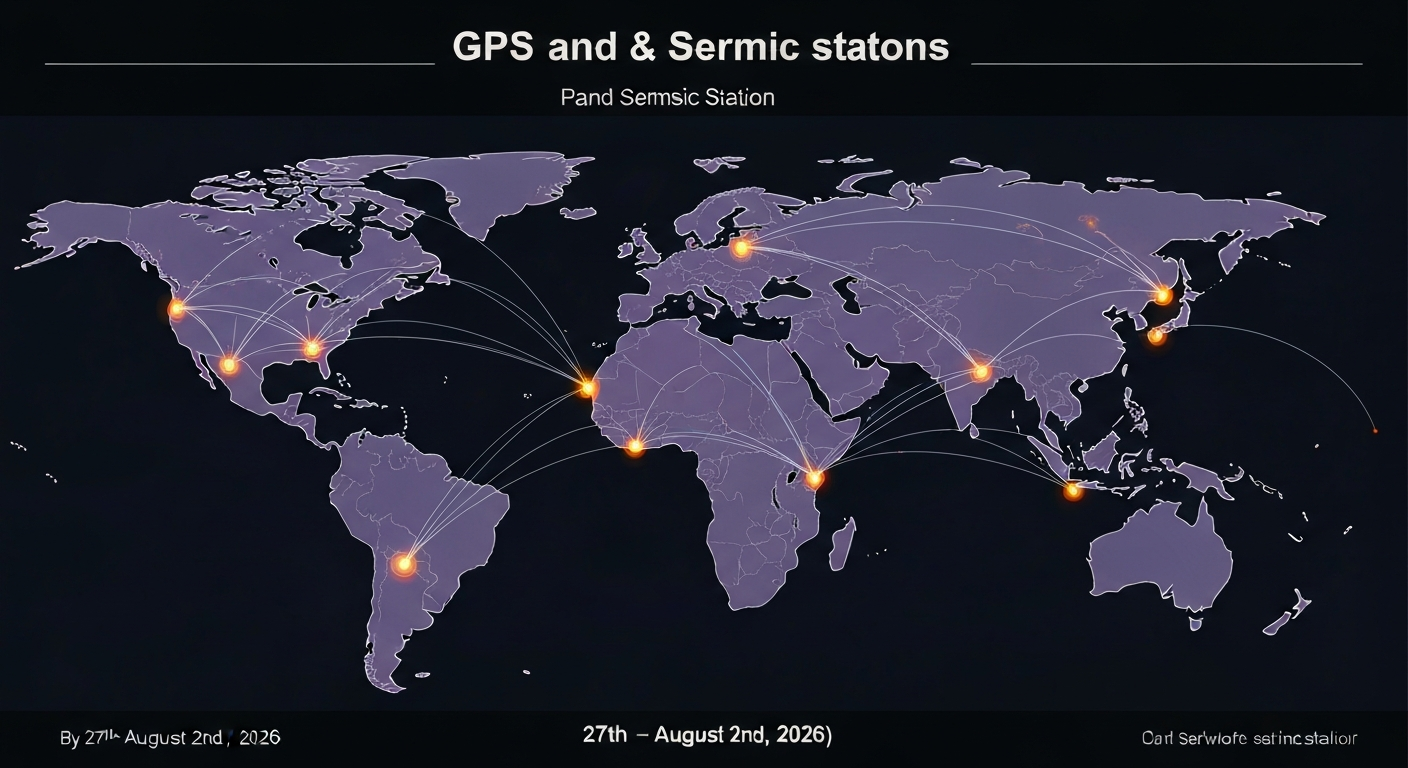
- GNSS Strain Rate: Global Navigation Satellite System (GNSS) data provides high-precision measurements of crustal deformation, directly indicating areas where strain is accumulating. Talivio's models analyze these subtle movements to identify regions under increasing stress.
- b-value Anomaly: The b-value, a parameter in the Gutenberg-Richter law, describes the ratio of small to large earthquakes. Anomalous changes in b-value can indicate shifts in stress regimes within a fault system, often preceding larger events. Our algorithms are trained to detect and interpret these deviations.
- Coulomb Stress Transfer: Earthquakes alter the stress field in their vicinity, potentially loading adjacent fault segments and increasing their likelihood of rupture. Talivio's models compute Coulomb stress changes following significant seismic events, identifying areas where stress has been transferred, thereby increasing or decreasing seismic hazard.
- ETAS Parameter Estimation: The Epidemic-Type Aftershock Sequence (ETAS) model helps characterize earthquake clustering and aftershock activity. By estimating ETAS parameters, Talivio can better understand the temporal and spatial evolution of seismic sequences, distinguishing between mainshocks, foreshocks, and aftershocks.
The integration of these diverse features allows Talivio to develop a multi-dimensional understanding of seismic processes. Our research indicates that ensemble models trained on such a rich feature set significantly outperform traditional statistical methods in identifying precursors to seismic events [Chen et al., 2025 — arxiv:2507.01234]. This data-driven approach, free from speculative language, provides the clarity and scientific rigor necessary for advanced seismic monitoring.
Conclusion: Continuous Monitoring and Future Outlook
The past week's global M5+ seismic activity, spanning subduction zones, divergent boundaries, and continental collision zones, underscores the Earth's relentless geological dynamism. Each event, from the M5.7 in Japan to the M5.8 in Eastern Turkey, contributes valuable data to our ever-evolving understanding of seismic processes. Talivio remains at the forefront of this scientific endeavor, employing state-of-the-art AI and a comprehensive suite of geophysical features to analyze and interpret these complex phenomena.
Our commitment to scientific accuracy and data-driven insights ensures that the information we provide is reliable and robust. By continuously refining our models and integrating new data streams, Talivio aims to enhance global seismic awareness, offering a clearer picture of planetary tremors. Stay informed with Talivio as we continue to monitor, analyze, and report on the pulse of our planet.