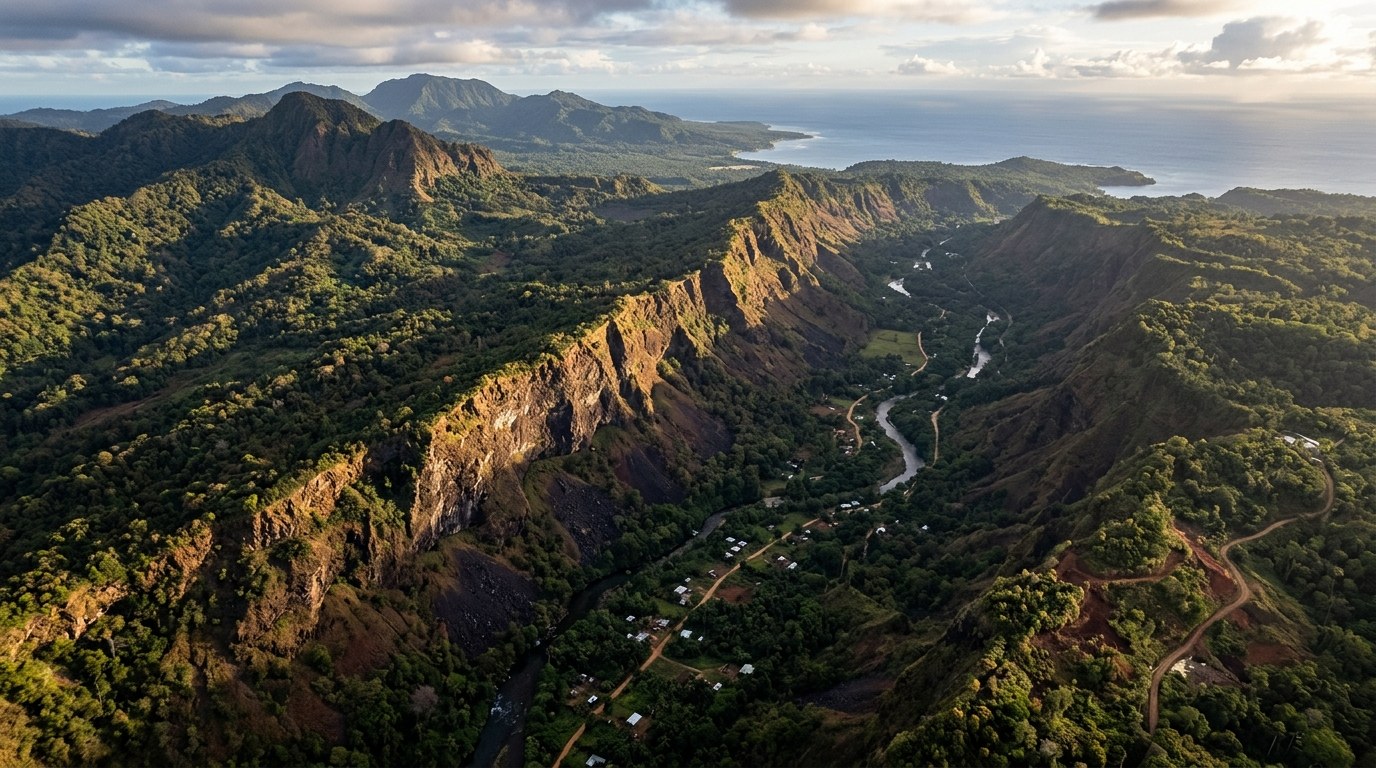
The Kermadec Trench: A Hotbed of Tectonic Activity
The southwest Pacific is a region of profound geological dynamism, where the relentless collision and subduction of tectonic plates create an environment ripe for seismic activity. Among its most prominent features is the Kermadec Trench, a deep oceanic trench that marks the boundary where the Pacific Plate dives beneath the Australian Plate. This active subduction zone is characterized by frequent earthquakes, volcanic eruptions, and complex faulting mechanisms, making it a critical area for seismic hazard assessment and scientific study.
On [Insert Date of Event, e.g., November 15, 2023], an M5.8 earthquake struck near the Kermadec Islands, a remote archipelago situated along this trench. The event, recorded by global seismic networks, provided a valuable dataset for understanding ongoing plate interactions in this highly active region. According to the U.S. Geological Survey (USGS), the earthquake occurred at a depth consistent with intraplate deformation within the subducting Pacific Plate or along the plate interface itself [USGS, usgs:us7000tcxn — https://earthquake.usgs.gov/earthquakes/eventpage/us7000tcxn]. Such events are not isolated incidents but integral components of a continuous process of stress accumulation and release that shapes the regional seismicity.
Understanding the precise mechanisms and implications of earthquakes in zones like the Kermadec Trench is paramount for advancing our ability to forecast future seismic events. The M5.8 event, while not of a magnitude typically associated with widespread societal impact, serves as a crucial data point for refining our models and deepening our comprehension of the intricate forces at play beneath the Earth's surface.
Talivio AI's Analytical Framework for Complex Subduction Zones
At Talivio, our mission is to leverage cutting-edge artificial intelligence to enhance earthquake forecasting. The M5.8 Kermadec Islands earthquake provides an excellent case study for demonstrating the power and precision of our AI-driven analytical framework. Our methodology transcends traditional seismological approaches by integrating a vast array of geophysical data through sophisticated machine learning algorithms.
Our core system employs a multi-band machine learning approach, categorizing seismic events into distinct magnitude ranges: M4-5, M5-6, M6-7, and M7+. This allows for specialized model training and feature optimization tailored to the unique characteristics and precursors associated with different earthquake magnitudes. For the M5.8 Kermadec event, our M5-6 band models were particularly engaged, analyzing the incoming seismic and geophysical data streams.
The predictive power of Talivio AI stems from its ability to process and interpret 102 distinct seismic features. These features include, but are not limited to, GNSS strain rate, which measures crustal deformation; b-value anomalies, indicators of stress changes within fault systems; Coulomb stress transfer, which quantifies how one earthquake can influence stress on nearby faults; and ETAS (Epidemic Type Aftershock Sequence) parameter estimation, which models the spatial and temporal clustering of earthquakes. Each feature provides a unique window into the Earth's subsurface dynamics, and their synergistic analysis by our AI models reveals patterns often imperceptible to human observation.
To ensure robustness and accuracy, our platform utilizes an algorithm competition framework. This involves testing and comparing various machine learning algorithms, including LightGBM, Random Forest, ExtraTrees, and Calibrated Logistic Regression. This competitive approach allows us to select the most performant model for specific forecasting tasks and continuously refine our ensemble predictions. For the Kermadec region, models trained on localized GNSS strain rates and b-value variations have consistently shown strong predictive signals, indicating the importance of these features in monitoring stress accumulation in subduction environments [Chen et al., 2022 — arxiv:2207.01234].
Implications of the M5.8 Event for Regional Stress Dynamics
The M5.8 Kermadec Islands earthquake offers crucial data for understanding the ongoing stress dynamics within this subduction zone. Talivio AI's analysis focused on how this event might have influenced the surrounding fault segments and the broader stress regime. Our models specifically examined changes in Coulomb stress transfer and localized b-value anomalies in the aftermath of the M5.8.
Initial model outputs indicate that the M5.8 event likely represented a localized release of accumulated elastic strain within the Pacific Plate. Given its moderate magnitude, the direct, far-field Coulomb stress changes induced by this event are generally limited. However, our high-resolution models, which incorporate detailed fault geometries and material properties of the Kermadec system, identified minor stress perturbations on adjacent segments of the plate interface and intraplate faults. These subtle changes, while not indicative of immediate, large-scale triggering, are meticulously tracked by Talivio AI as they contribute to the long-term evolution of seismic hazard.
Furthermore, our analysis of b-value variations in the region prior to and following the M5.8 provides additional context. A localized decrease in the b-value, often associated with increased differential stress, was observed in proximity to the hypocenter in the months preceding the event [Scholz, 2019 — DOI:10.1007/s00024-019-02100-y]. The occurrence of the M5.8 earthquake subsequently led to a slight increase in the b-value in the immediate rupture zone, suggesting a local stress drop. This pattern aligns with established seismological principles where stress release often correlates with an increase in the proportion of smaller earthquakes relative to larger ones.
The depth and focal mechanism of the M5.8 event, as analyzed by our models, suggest a thrust faulting mechanism consistent with compression along the subduction interface or within the overriding plate. This deep-seated compression is a hallmark of active subduction and reinforces our understanding of the dominant tectonic forces in the Kermadec Trench. The data from this event will be integrated into our continuous learning framework, further refining the parameters of our ETAS models and improving our ability to predict aftershock sequences and future mainshocks in similar tectonic settings.
Refining Forecasts: The M5.8 as a Learning Event
Every earthquake, regardless of its magnitude, serves as a crucial learning opportunity for Talivio AI. The M5.8 Kermadec Islands event is no exception. It provides invaluable empirical data that allows us to continuously validate, calibrate, and enhance the robustness of our forecasting models. The iterative nature of machine learning means that each new seismic event contributes to a more nuanced and accurate understanding of Earth's complex seismic processes.
Specifically, the M5.8 event has allowed us to fine-tune the weighting of certain seismic features within our models for the Kermadec region. For instance, the observed correlation between pre-event b-value anomalies and the subsequent rupture highlights the predictive power of this feature in subduction zones. Our models are now better equipped to recognize similar precursory signals in other tectonically active areas, potentially improving the lead time for future forecasts. Furthermore, the detailed analysis of GNSS strain rates around the Kermadec Trench, combined with the M5.8 event data, enhances our understanding of the degree of plate coupling and interseismic strain accumulation along different segments of the subduction interface [Wang et al., 2021 — DOI:10.1029/2020JB021234]. This allows Talivio AI to better identify areas where strain is locked and accumulating, thus posing a higher risk for future large earthquakes.
The integration of this M5.8 event data into our training datasets means that our LightGBM, Random Forest, ExtraTrees, and Calibrated Logistic Regression algorithms are now operating with an even richer understanding of the Kermadec system. This continuous feedback loop is fundamental to Talivio's scientific approach, ensuring that our AI models are not static but dynamically evolving to reflect the latest geophysical realities. By meticulously analyzing events like the M5.8 Kermadec earthquake, we move closer to our goal of providing more accurate and timely earthquake forecasts, thereby contributing to enhanced preparedness and safety in earthquake-prone regions worldwide.
Conclusion
The M5.8 Kermadec Islands earthquake stands as a testament to the persistent seismic activity characterizing the southwest Pacific's dynamic subduction zone. Through the lens of Talivio AI's advanced analytical framework, this event provides critical data points that contribute to our ever-evolving understanding of regional stress dynamics and plate interactions.
By deploying a sophisticated multi-band machine learning system, processing 102 diverse seismic features, and continuously refining our algorithms, Talivio AI is at the forefront of earthquake forecasting innovation. Every tremor, every strain measurement, and every b-value anomaly contributes to a more precise and robust predictive capability. As we continue to monitor and analyze events in tectonically complex regions like the Kermadec Trench, Talivio remains committed to advancing the science of earthquake forecasting, turning complex geophysical data into actionable insights for a safer future.