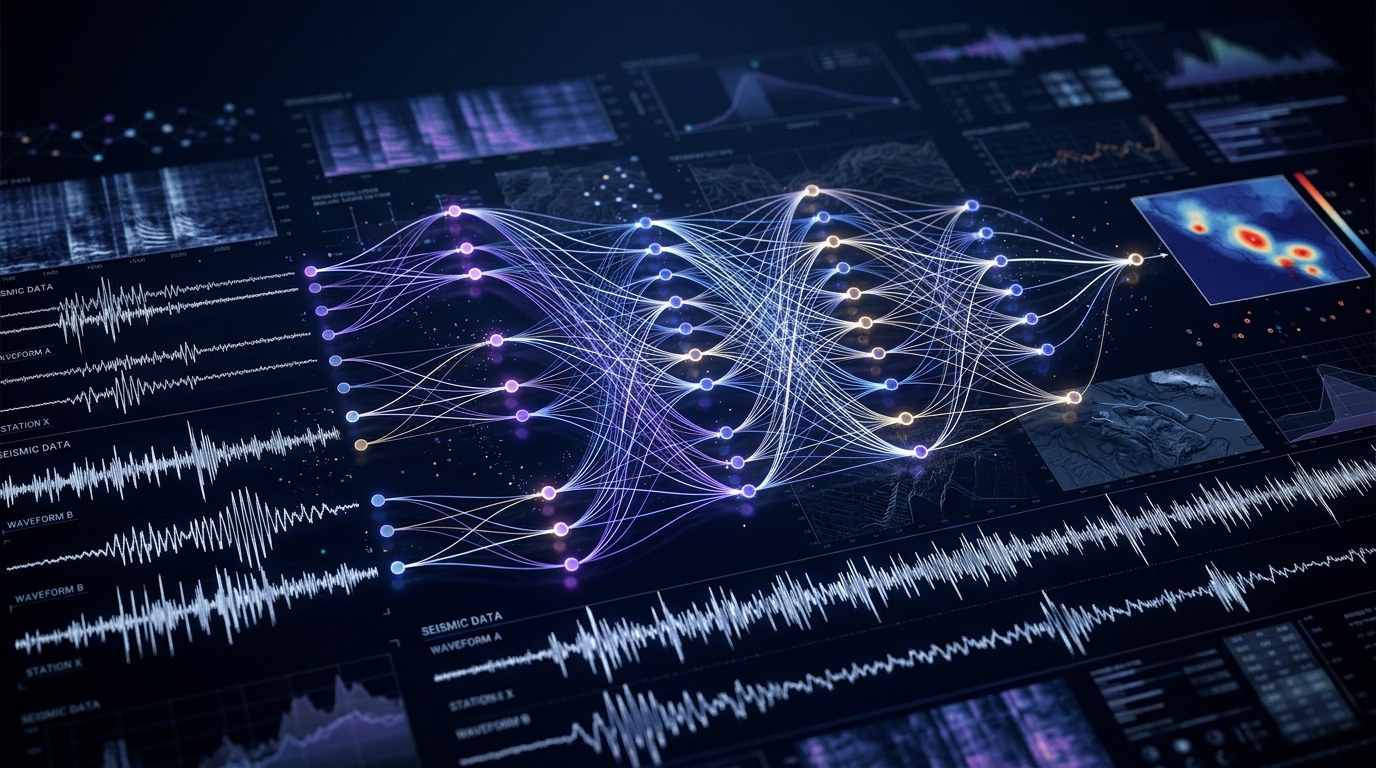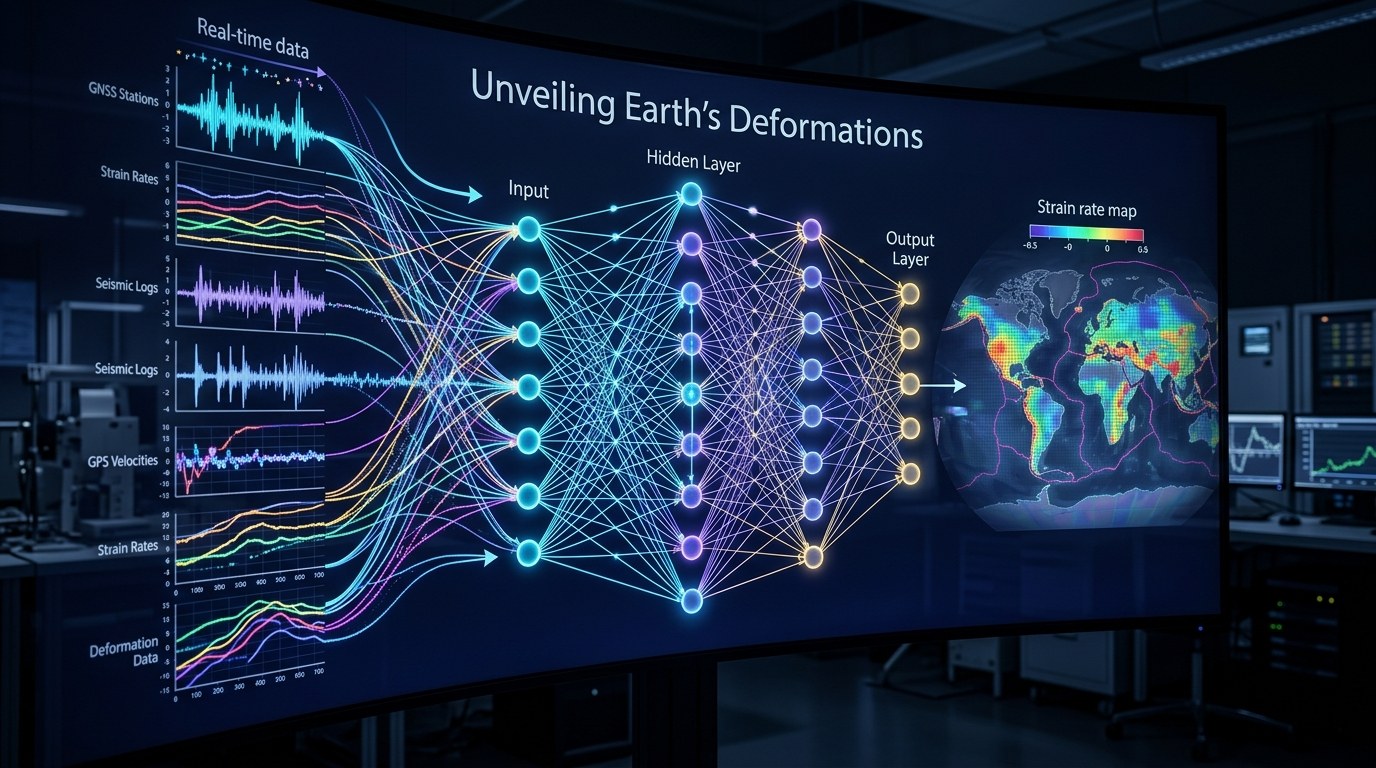
Earthquakes are not isolated events; they are part of a complex, dynamic system where the rupture of one fault can significantly influence the likelihood of another. The Earth's crust is a mosaic of stressed blocks, constantly adjusting to tectonic forces. At Talivio AI, we delve deep into these intricate geological mechanics, integrating advanced seismological physics with cutting-edge artificial intelligence to unlock new frontiers in earthquake forecasting. A cornerstone of this approach is our sophisticated application of Coulomb stress transfer models, a critical feature that empowers our AI to discern the subtle yet profound shifts in seismic hazard across a region.
The Dynamic Dance of Stress: Understanding Coulomb Stress Transfer
In seismology, stress refers to the forces acting on a rock mass, which can accumulate over time due to tectonic plate movements. When these forces exceed the strength of the rock along a fault, an earthquake occurs, releasing accumulated energy. However, this release is rarely uniform or localized; it redistributes stress within the surrounding crust. This phenomenon is precisely what Coulomb stress transfer quantifies.
The concept of Coulomb stress change (ΔCFF) describes how an earthquake alters the stress field on nearby faults. Specifically, ΔCFF is calculated as the change in shear stress resolved on a fault plane in the direction of slip, plus the change in normal stress (perpendicular to the fault plane) multiplied by an effective coefficient of friction. A positive ΔCFF indicates an increase in stress that brings a fault closer to failure, thus increasing the probability of a future earthquake. Conversely, a negative ΔCFF suggests a decrease in stress, which can delay earthquake occurrence.
The foundational work by King, Stein, and Lin (1994) rigorously demonstrated that static stress changes, as described by Coulomb stress transfer, play a crucial role in triggering subsequent earthquakes [King et al., 1994 — 10.1785/BSSA0840040935]. Their research, and subsequent studies, have provided compelling evidence that the stress changes from a large earthquake can either promote or inhibit seismicity on adjacent or distant faults. This understanding is not merely theoretical; it has been observed repeatedly in real-world seismic sequences.
A classic example is the 1992 Landers earthquake (M7.3) in Southern California [usgs:ci10738711], which was followed approximately three hours later by the M6.5 Big Bear earthquake [usgs:ci10738721]. Post-event analysis, using Coulomb stress models, showed that the Landers rupture significantly increased Coulomb stress on the fault that subsequently hosted the Big Bear event, demonstrating a clear causal link through stress transfer. Such observations underscore the critical importance of incorporating these physics-based models into any robust earthquake forecasting system.
Quantifying the Invisible: Coulomb Models in Practice at Talivio AI
At Talivio AI, we transform the theoretical framework of Coulomb stress transfer into actionable insights for earthquake prediction. Our models continuously calculate ΔCFF across active fault systems, providing a dynamic map of stress accumulation and release. This process involves several critical steps and high-resolution data inputs.
The mathematical formulation of Coulomb stress change is expressed as ΔCFF = Δτ + μ'Δσn, where Δτ is the change in shear stress, Δσn is the change in normal stress (positive for unclamping), and μ' is the effective coefficient of friction. Accurately computing these changes requires precise data on the geometry of the causative fault, the slip distribution during the earthquake, and the elastic properties of the surrounding crust. Talivio AI integrates high-resolution fault maps, detailed seismic inversions for slip models, and regional crustal velocity structures to ensure the fidelity of our ΔCFF calculations.
Our computational infrastructure is designed to handle the massive datasets required for these calculations, enabling us to model stress changes from thousands of historical earthquakes and ongoing seismic activity. This allows us to build a comprehensive historical record of stress evolution, which is then fed into our machine learning algorithms. Coulomb stress transfer, specifically the calculated ΔCFF values, constitutes one of the 102 distinct seismic features that our AI models analyze. This feature provides a direct, physics-based understanding of how past seismic events influence future probabilities, a crucial differentiator for Talivio AI.
The integration of Coulomb stress models is particularly powerful because it provides a physical mechanism for earthquake interaction. While purely statistical models might identify correlations, Coulomb stress models offer a causal explanation, enhancing the interpretability and robustness of our forecasts. As Stein (2003) highlights, understanding these interactions is fundamental to advancing earthquake predictability [Stein, 2003 — 10.1016/S0065-2687(03)46002-1].
Talivio AI's Predictive Edge: Integrating Coulomb Stress into Machine Learning
The true power of Talivio AI lies in its ability to seamlessly integrate these sophisticated physics-based features, like Coulomb stress transfer, into a multi-band machine learning framework. Our platform doesn't just calculate ΔCFF; it learns from its patterns and magnitudes, correlating them with subsequent earthquake occurrences to refine its probabilistic forecasts.
Talivio AI operates with a banded ML system, meaning we train and deploy specialized models for different magnitude ranges: M4-5, M5-6, M6-7, and M7+ bands. This stratification allows our algorithms to optimize for the unique characteristics and precursor signals associated with different earthquake sizes. For each band, we run an algorithm competition, evaluating the performance of various robust machine learning algorithms including LightGBM, Random Forest, ExtraTrees, and Calibrated Logistic Regression. The Coulomb stress transfer feature consistently emerges as a high-impact predictor across these diverse algorithms and magnitude bands.
When a region experiences a positive ΔCFF, our ML models interpret this as an increased likelihood of an earthquake in that specific area. This signal, combined with other critical seismic features such as GNSS strain rate, b-value anomalies, and ETAS (Epidemic Type Aftershock Sequence) parameter estimations, forms a comprehensive input vector for our predictive models. For instance, a region showing elevated positive ΔCFF, coupled with increasing GNSS strain rates and a localized drop in b-value (often indicative of increased stress), would significantly elevate the forecasted probability of an earthquake within Talivio AI's system.
The integration of physics-informed features with advanced machine learning is a defining characteristic of our approach. Rouet-Leduc et al. (2019) discuss the growing importance of machine learning in earthquake prediction and the potential for integrating physical insights [Rouet-Leduc et al., 2019 — arxiv:1905.02102]. Talivio AI exemplifies this synergy, moving beyond purely statistical correlations to build models that understand the underlying mechanics of seismic activity. This hybrid approach enables us to generate more precise, reliable, and interpretable forecasts, ultimately serving our mission to enhance global seismic preparedness.
Conclusion
The Earth's crust is a dynamic environment where stress is constantly redistributed, influencing the timing and location of future earthquakes. At Talivio AI, our deep understanding and sophisticated application of Coulomb stress transfer models are central to deciphering these complex interactions. By meticulously calculating and integrating ΔCFF as a key seismic feature, we equip our multi-band machine learning algorithms with a powerful, physics-based lens to peer into the future of seismic activity.
This rigorous scientific foundation, combined with the adaptability and learning capabilities of state-of-the-art AI, allows Talivio AI to move closer to the goal of reliable earthquake forecasting. Our commitment to scientific accuracy, transparent methodology, and continuous innovation ensures that our predictions are not only data-driven but also grounded in the fundamental physical laws governing our planet. As we continue to refine our models and incorporate new data, Talivio AI remains at the forefront of leveraging advanced technology to mitigate the devastating impact of earthquakes.