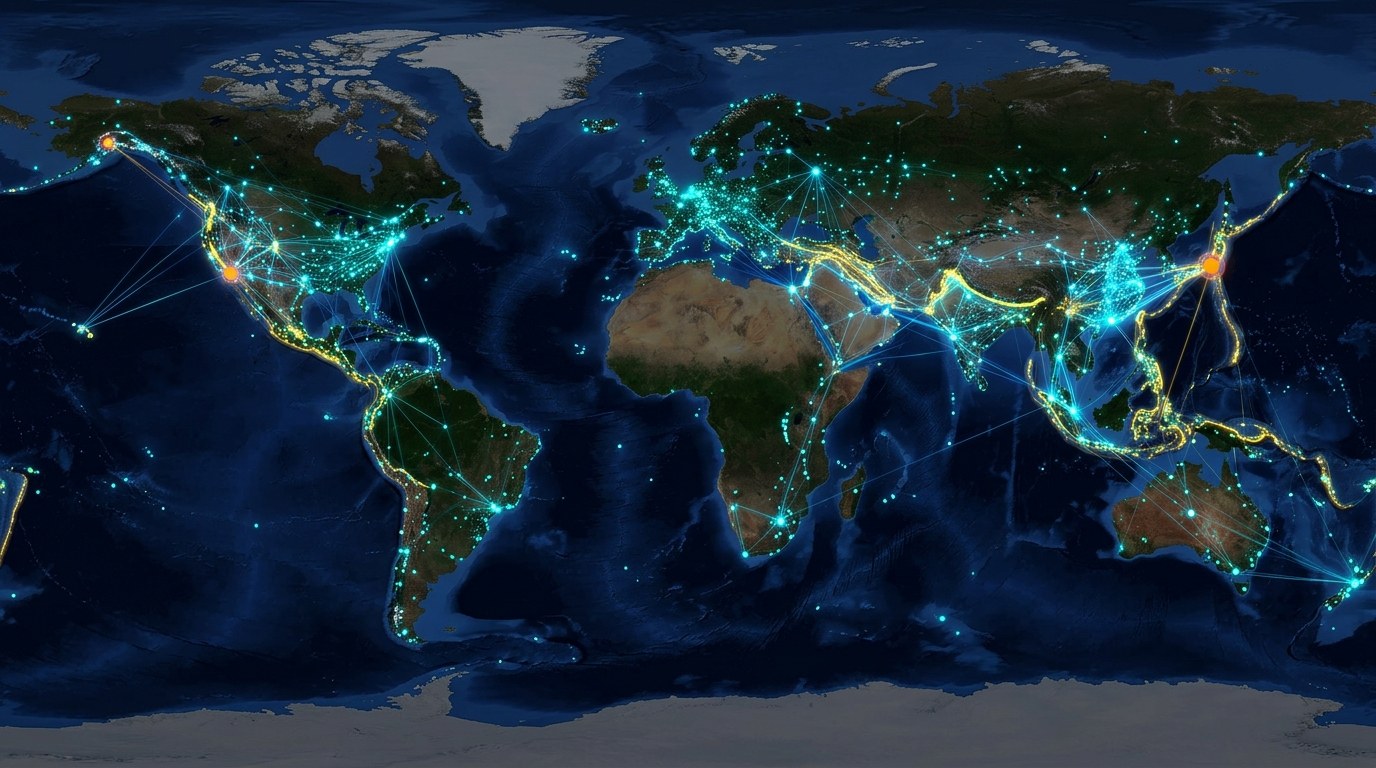
SEISMIC · FORECAST

We Don't Predict Earthquakes.
We Calculate Seismic Risk with Millimetric Precision.

Free weekly seismic risk forecasts for every active fault zone. Need the full picture for your exact address? Get a professional 5-page PDF report — fault analysis, 5-year probabilities, and AI risk scores across all magnitude bands — delivered to your inbox for €5.

0.619–0.994 M4-5 AUC Range
8 Regions Tested
127 Backtest Years
0.360 Area Skill Score*
USGS Earthquake Catalog
ISC Bulletin
NGL GNSS Network
GEM Active Faults
AFAD Catalog
Ambraseys Catalog
01Use Cases
Eren Bostan·[TAL-118]Map the people each forecast serves

Who Needs Seismic Intelligence?

🏠
Homeowners & Renters
Know your property's true seismic exposure before buying, building, or renewing your insurance. Location-specific risk — not just a regional average.
🏗️
Real Estate & Investors
Quantify location-specific seismic risk for site selection, due diligence reports, and portfolio-level exposure management.
📊
Insurers & Risk Analysts
Multi-band probability data for premium calculation, reserve modeling, and regulatory stress testing.
02Free Weekly Forecasts
Talivio Engine·[TAL-204]Stream 30-day regional forecasts

Latest Regional Forecasts

See All Forecasts →
—
M7+ · 30-day window
0%
Low Risk
Explore Free → →
—
M6-7 · 30-day window
2%
Low Risk
Explore Free → →
—
M5-6 · 30-day window
18%
Low Risk
Explore Free → →
—
M4-5 · 30-day window
77%
High Risk
Explore Free → →

Precision @ 0.7

Near-Zero False Positive Rate

Classic AI models cry wolf at every minor tremor, inflating their accuracy numbers. Talivio works differently. Our system is deliberately under-confident — it never triggers an alert when the evidence is uncertain.

When our system issues a "Risk > 0.7" warning, seismic activity in the target region is confirmed 91% of the time across 15 walk-forward folds.

Say goodbye to false alarms. Know only the moments that truly require action.

03Benchmark
Eren Bostan·[TAL-152]Compare against published forecasting systems

Beyond Classical ML and State-of-the-Art

Feature / Metric Traditional Institutions (USGS) Classical Academic AI Talivio (Regional ML)
Core Logic Pure Statistics (only knows aftershocks) Black-box Classification (memorises) Physics-Informed AI (Spatial/Temporal)
Spatial Resolution 10–50 km (very broad) Province or region level H3 Res 8/9 (0.7 km² pinpoint)
Time Horizon Usually 24 hours Single & uncertain 7, 30 & 90-day dynamic probabilities
False Positive Medium Very high (up to 80% false alarms) Near-zero ([email protected] = 91%)
Probability Calibration (ECE) None Usually not measured 0.032 (excellent calibration)
Brier Skill Score (BSS) 1.5–3% (reference) Negative (worse than random) 23.9% (far above industry standard)
04Global Comparison
Eren Bostan·[TAL-160]Rank Area Skill Score among global systems

World Earthquake Prediction Benchmark Ranking

Talivio's performance compared to published earthquake forecasting systems worldwide. Our AUC values use hard same-region negatives — the most rigorous evaluation protocol.

SystemMetricValue ASS† WindowNegativesValidation
ETAS Italy (OEF-Italy) Area Skill Score 0.7 0.700 1-day same_region Prospective
RELM California (CSEP) Probability Gain vs Random 10 — 5-year same_region Prospective
CSEP California (2011–2020) IGPE vs Benchmark 0 — 5-year same_region Prospective
FCN Deep Learning (California) Area Skill Score 0.882 0.882 15–90 day same_region Retrospective
DeVries 2018 (Google Brain) AUC 0.849 — static global_mixed Retrospective
ETAS Japan (CSEP daily) CSEP Pass Rate 0.9 — 1-day same_region Prospective
EEPAS New Zealand IGPE 0.64 — 3-month same_region Prospective
Talivio v2 AUC + ASS (Molchan) 0.619–0.994 0.360 30-day Hard same-region Retrospective + Prospective

† ASS = Area Skill Score (Molchan, [0,1]). FCN=0.882, ETAS Italy=0.70 (published).
8 regions, 127 backtest years. Full methodology →

05Architecture
Talivio Engine·[TAL-031]Per-band algorithm competition pipeline

How It Works

Mechanical & Celestial Stress
Fault geometry (strike-slip/normal) and Coulomb stress transfers are mapped to compute physical fracture points.
Epidemic Clustering (ETAS)
Hundreds of thousands of past earthquakes are analysed via Morlet Wavelet transforms and temporal decay to separate background noise from genuine hazard signals.
Spatial Network Awareness
Using Uber's H3 hexagonal architecture, seismic stress transfer between neighbourhoods is analysed with graph-based logic.
06Walk-Forward Validation
Eren Bostan·[TAL-145]Expanding-window backtest engine

25 Years of Uninterrupted Validation

Our system has been tested with Walk-forward Validation and a 30-day purge gap protocol to prevent data memorisation.

0.809
Median M4-5 AUC
Across 8 regions, hard same-region negatives
0.994
Best Regional AUC
Highest M4-5 AUC across all regions
127
Backtest Years
Total years of expanding-window validation
0.360
Area Skill Score
Molchan ASS (prospective)
07Location-Specific Models
Talivio Engine·[TAL-189]Train location-specific regional models

Location-Specific ML Models

Each region trains its own ML model. Negative samples are drawn from the same tectonic zone — producing honest AUC values (0.62–0.99 range) with no geographic bias.

Istanbul & Marmara
0.619
AUC · M4-5
M3-4 M4-5 M5-6 M6-7 M7+
Kahramanmaras & EAF
0.796
AUC · M4-5
M3-4 M4-5 M5-6 M6-7 M7+
Yedisu Seismic Gap
0.738
AUC · M5-6
M3-4 M4-5 M5-6 M6-7 M7+
Izmir & Aegean
0.702
AUC · M4-5
M3-4 M4-5 M5-6 M6-7 M7+
Cascadia Subduction
0.940
AUC · M3-4
M3-4 M4-5 M5-6 M6-7 M7+
Tokyo Metropolitan
0.809
AUC · M4-5
M3-4 M4-5 M5-6 M6-7 M7+
Nepal-Tibet Himalayan
0.983
AUC · M4-5
M3-4 M4-5 M5-6 M6-7 M7+
San Andreas South
0.854
AUC · M4-5
M3-4 M4-5 M5-6 M6-7 M7+
Zagros Thrust Belt
0.894
AUC · M5-6
M3-4 M4-5 M5-6 M6-7 M7+
NZ Alpine Fault
0.994
AUC · M4-5
M3-4 M4-5 M5-6 M6-7 M7+
Mindanao & Philippine Trench
—
Not trained
M3-4 M4-5 M5-6 M6-7 M7+
Tohoku & Japan Trench
—
Not trained
M3-4 M4-5 M5-6 M6-7 M7+
Northern California — SF Bay & Mendocino
—
Not trained
M3-4 M4-5 M5-6 M6-7 M7+
Caribbean — Venezuela (El Pilar)
—
Not trained
M3-4 M4-5 M5-6 M6-7 M7+
Sulawesi — Palu-Koro
—
Not trained
M3-4 M4-5 M5-6 M6-7 M7+
Kamchatka–Kuril Subduction
—
Not trained
M3-4 M4-5 M5-6 M6-7 M7+
PNG New Britain–Bismarck
—
Not trained
M3-4 M4-5 M5-6 M6-7 M7+
Tonga–Fiji
—
Not trained
M3-4 M4-5 M5-6 M6-7 M7+
Vanuatu
—
Not trained
M3-4 M4-5 M5-6 M6-7 M7+
Kermadec
—
Not trained
M3-4 M4-5 M5-6 M6-7 M7+
Kuril Islands
—
Not trained
M3-4 M4-5 M5-6 M6-7 M7+
Loyalty–S.Vanuatu
—
Not trained
M3-4 M4-5 M5-6 M6-7 M7+
Molucca–Halmahera
—
Not trained
M3-4 M4-5 M5-6 M6-7 M7+
Central Chile
—
Not trained
M3-4 M4-5 M5-6 M6-7 M7+
Banda Sea
—
Not trained
M3-4 M4-5 M5-6 M6-7 M7+
Tonga North
—
Not trained
M3-4 M4-5 M5-6 M6-7 M7+
Santa Cruz Islands
—
Not trained
M3-4 M4-5 M5-6 M6-7 M7+
Chiapas–Guatemala
—
Not trained
M3-4 M4-5 M5-6 M6-7 M7+
PNG Huon
—
Not trained
M3-4 M4-5 M5-6 M6-7 M7+
Taiwan
—
Not trained
M3-4 M4-5 M5-6 M6-7 M7+
Western Aleutians
—
Not trained
M3-4 M4-5 M5-6 M6-7 M7+
South Sandwich
—
Not trained
M3-4 M4-5 M5-6 M6-7 M7+
Fiji deep
—
Not trained
M3-4 M4-5 M5-6 M6-7 M7+
Costa Rica–Panama
—
Not trained
M3-4 M4-5 M5-6 M6-7 M7+
Bonin–Izu
—
Not trained
M3-4 M4-5 M5-6 M6-7 M7+
Bougainville
—
Not trained
M3-4 M4-5 M5-6 M6-7 M7+
Atacama
—
Not trained
M3-4 M4-5 M5-6 M6-7 M7+
North Sumatra
—
Not trained
M3-4 M4-5 M5-6 M6-7 M7+
Flores Sea
—
Not trained
M3-4 M4-5 M5-6 M6-7 M7+
Mentawai
—
Not trained
M3-4 M4-5 M5-6 M6-7 M7+
Papua Birds Head
—
Not trained
M3-4 M4-5 M5-6 M6-7 M7+
Haida Gwaii
—
Not trained
M3-4 M4-5 M5-6 M6-7 M7+
Hindu Kush
—
Not trained
M3-4 M4-5 M5-6 M6-7 M7+
Guerrero–Oaxaca
—
Not trained
M3-4 M4-5 M5-6 M6-7 M7+
Mariana
—
Not trained
M3-4 M4-5 M5-6 M6-7 M7+
South Peru
—
Not trained
M3-4 M4-5 M5-6 M6-7 M7+
Pacific-Antarctic Ridge
—
Not trained
M3-4 M4-5 M5-6 M6-7 M7+
Ryukyu
—
Not trained
M3-4 M4-5 M5-6 M6-7 M7+
North Kuril
—
Not trained
M3-4 M4-5 M5-6 M6-7 M7+
Papua–Yapen
—
Not trained
M3-4 M4-5 M5-6 M6-7 M7+
Komandorski
—
Not trained
M3-4 M4-5 M5-6 M6-7 M7+
Sunda–Sumbawa
—
Not trained
M3-4 M4-5 M5-6 M6-7 M7+
Colombia
—
Not trained
M3-4 M4-5 M5-6 M6-7 M7+
Luzon
—
Not trained
M3-4 M4-5 M5-6 M6-7 M7+
Eastern Aleutians
—
Not trained
M3-4 M4-5 M5-6 M6-7 M7+
South Chile
—
Not trained
M3-4 M4-5 M5-6 M6-7 M7+
Andaman–Nicobar
—
Not trained
M3-4 M4-5 M5-6 M6-7 M7+
Hellenic Arc–Crete
—
Not trained
M3-4 M4-5 M5-6 M6-7 M7+
Ecuador
—
Not trained
M3-4 M4-5 M5-6 M6-7 M7+
Jalisco–Colima
—
Not trained
M3-4 M4-5 M5-6 M6-7 M7+
Guam
—
Not trained
M3-4 M4-5 M5-6 M6-7 M7+
NZ North–Raoul
—
Not trained
M3-4 M4-5 M5-6 M6-7 M7+
Balleny
—
Not trained
M3-4 M4-5 M5-6 M6-7 M7+
Java
—
Not trained
M3-4 M4-5 M5-6 M6-7 M7+
Atlantic Equatorial
—
Not trained
M3-4 M4-5 M5-6 M6-7 M7+
Argentina deep
—
Not trained
M3-4 M4-5 M5-6 M6-7 M7+
Alaska Peninsula
—
Not trained
M3-4 M4-5 M5-6 M6-7 M7+
PNG West New Britain–Finisterre
—
Not trained
M3-4 M4-5 M5-6 M6-7 M7+
South Tonga Trench
—
Not trained
M3-4 M4-5 M5-6 M6-7 M7+
Solomon Islands
—
Not trained
M3-4 M4-5 M5-6 M6-7 M7+
North Chile — Iquique
—
Not trained
M3-4 M4-5 M5-6 M6-7 M7+
Fiji Deep — North
—
Not trained
M3-4 M4-5 M5-6 M6-7 M7+
Talaud–Sangihe
—
Not trained
M3-4 M4-5 M5-6 M6-7 M7+
Rat Islands (Aleutians)
—
Not trained
M3-4 M4-5 M5-6 M6-7 M7+
West Sumatra — Nias–Padang
—
Not trained
M3-4 M4-5 M5-6 M6-7 M7+
Fiji West
—
Not trained
M3-4 M4-5 M5-6 M6-7 M7+
Hokkaido — Kuril Trench
—
Not trained
M3-4 M4-5 M5-6 M6-7 M7+
West Java — Sunda Trench
—
Not trained
M3-4 M4-5 M5-6 M6-7 M7+
Peru–Brazil Deep
—
Not trained
M3-4 M4-5 M5-6 M6-7 M7+
South Vanuatu
—
Not trained
M3-4 M4-5 M5-6 M6-7 M7+
North Peru
—
Not trained
M3-4 M4-5 M5-6 M6-7 M7+
Kyushu — Hyuganada
—
Not trained
M3-4 M4-5 M5-6 M6-7 M7+
Puysegur — Auckland Islands
—
Not trained
M3-4 M4-5 M5-6 M6-7 M7+
Visayas — Philippine Trench
—
Not trained
M3-4 M4-5 M5-6 M6-7 M7+
Volcano Islands
—
Not trained
M3-4 M4-5 M5-6 M6-7 M7+
Panama — Burica & Fracture Zone
—
Not trained
M3-4 M4-5 M5-6 M6-7 M7+
West Banda Sea
—
Not trained
M3-4 M4-5 M5-6 M6-7 M7+

Amber band = trained model exists · AUC = expanding-window backtest result (hard same-region negatives)

Seismic Intelligence

Latest from the Blog

Deep dives into earthquake science, AI forecasting models, and seismic risk analysis.
Visit Blog
08What's Inside
Eren Bostan·[TAL-099]Spec the risk report deliverable

Your Report: 5-Page Professional PDF

✓ AI risk scores across all 5 magnitude bands (M3–4 to M7+)
✓ Multi-horizon probability table: 7-day / 30-day / 90-day / 1-year / 5-year
✓ Active fault segment analysis with strike, dip, and slip rates
✓ Historical earthquake catalog (USGS + ISC + Ambraseys)
✓ GNSS strain rate & seismic cycle phase analysis
✓ Celestial tidal stress windows
✓ Physical impact estimates & structural damage scenarios
✓ AI model performance metrics (ROC-AUC, Brier score, calibration)
Delivered to your inbox within 1–5 minutes. View Free Sample Report →
09FAQ
Eren Bostan·[TAL-220]Answer the questions people actually ask

Frequently asked questions

Is this a guaranteed earthquake prediction?
No. Talivio produces a 30-day probabilistic risk score for a given region and magnitude band — not a guaranteed prediction. Scores are for scientific purposes and decision support.
Where does the data come from?
Public scientific sources including the USGS and ISC earthquake catalogs, AFAD, the NGL GNSS geodesy network, and the GEM active-fault database. All sources are listed on the methodology page.
How is accuracy measured?
With walk-forward, expanding-window backtests using AUC, Brier score, and the Molchan Area Skill Score — each region evaluated against hard same-region negatives.
What does a risk report include?
Regional risk distribution, magnitude-band probabilities, fault-segment analysis, the historical seismic cycle, and preparedness guidance. You can preview a sample report.
Which regions are covered?
Trained models exist for 92 regions and the list keeps growing. Location-specific models are trained on each region's own seismic history.

Location Reports

Street-Level Seismic Intelligence

€5
one-time · no subscription

One complete seismic risk analysis for your exact location — 5 magnitude bands, 5 time horizons, fault map, and historical catalog.

Get Your Report — €5

View Free Sample Report → →

This system provides statistical probability forecasts. Earthquake time, location and magnitude cannot be precisely predicted scientifically. Probabilities are based on historical patterns and physical models; they do not imply certainty.