We Don't Predict Earthquakes.
We Calculate Seismic Risk with Millimetric Precision.
Free weekly seismic risk forecasts for every active fault zone. Need the full picture for your exact address? Get a professional 5-page PDF report — fault analysis, 5-year probabilities, and AI risk scores across all magnitude bands — delivered to your inbox for €5.
Who Needs Seismic Intelligence?
Latest Regional Forecasts
Precision @ 0.7
Near-Zero False Positive Rate
Classic AI models cry wolf at every minor tremor, inflating their accuracy numbers. Talivio works differently. Our system is deliberately under-confident — it never triggers an alert when the evidence is uncertain.
Say goodbye to false alarms. Know only the moments that truly require action.
Beyond Classical ML and State-of-the-Art
| Feature / Metric | Traditional Institutions (USGS) | Classical Academic AI | Talivio (Regional ML) |
|---|---|---|---|
| Core Logic | Pure Statistics (only knows aftershocks) | Black-box Classification (memorises) | Physics-Informed AI (Spatial/Temporal) |
| Spatial Resolution | 10–50 km (very broad) | Province or region level | H3 Res 8/9 (0.7 km² pinpoint) |
| Time Horizon | Usually 24 hours | Single & uncertain | 7, 30 & 90-day dynamic probabilities |
| False Positive | Medium | Very high (up to 80% false alarms) | Near-zero ([email protected] = 91%) |
| Probability Calibration (ECE) | None | Usually not measured | 0.032 (excellent calibration) |
| Brier Skill Score (BSS) | 1.5–3% (reference) | Negative (worse than random) | 23.9% (far above industry standard) |
World Earthquake Prediction Benchmark Ranking
Talivio's performance compared to published earthquake forecasting systems worldwide. Our AUC values use hard same-region negatives — the most rigorous evaluation protocol.
| System | Metric | Value | ASS† | Window | Negatives | Validation |
|---|---|---|---|---|---|---|
| ETAS Italy (OEF-Italy) | Area Skill Score | 0.7 | 0.700 | 1-day | same_region | Prospective |
| RELM California (CSEP) | Probability Gain vs Random | 10 | — | 5-year | same_region | Prospective |
| CSEP California (2011–2020) | IGPE vs Benchmark | 0 | — | 5-year | same_region | Prospective |
| FCN Deep Learning (California) | Area Skill Score | 0.882 | 0.882 | 15–90 day | same_region | Retrospective |
| DeVries 2018 (Google Brain) | AUC | 0.849 | — | static | global_mixed | Retrospective |
| ETAS Japan (CSEP daily) | CSEP Pass Rate | 0.9 | — | 1-day | same_region | Prospective |
| EEPAS New Zealand | IGPE | 0.64 | — | 3-month | same_region | Prospective |
| Talivio v2 | AUC + ASS (Molchan) | 0.619–0.994 | 0.360 | 30-day | Hard same-region | Retrospective + Prospective |
† ASS = Area Skill Score (Molchan, [0,1]). FCN=0.882, ETAS Italy=0.70 (published).
8 regions, 127 backtest years. Full methodology →
How It Works
25 Years of Uninterrupted Validation
Our system has been tested with Walk-forward Validation and a 30-day purge gap protocol to prevent data memorisation.
Location-Specific ML Models
Each region trains its own ML model. Negative samples are drawn from the same tectonic zone — producing honest AUC values (0.62–0.99 range) with no geographic bias.
Amber band = trained model exists · AUC = expanding-window backtest result (hard same-region negatives)
Seismic Intelligence
Latest from the Blog
Deep dives into earthquake science, AI forecasting models, and seismic risk analysis.

Unraveling Vanuatu's Seismic Tapestry: Talivio AI Analyzes the M6.3 Earthquake
Vanuatu, a region of intense tectonic activity, recently experienced a significant M6.3 earthquake. Talivio AI provides an in-depth analysis of this event, exploring the complex interplay of subduction zone dynamics and local faulting that defines this highly active arc.
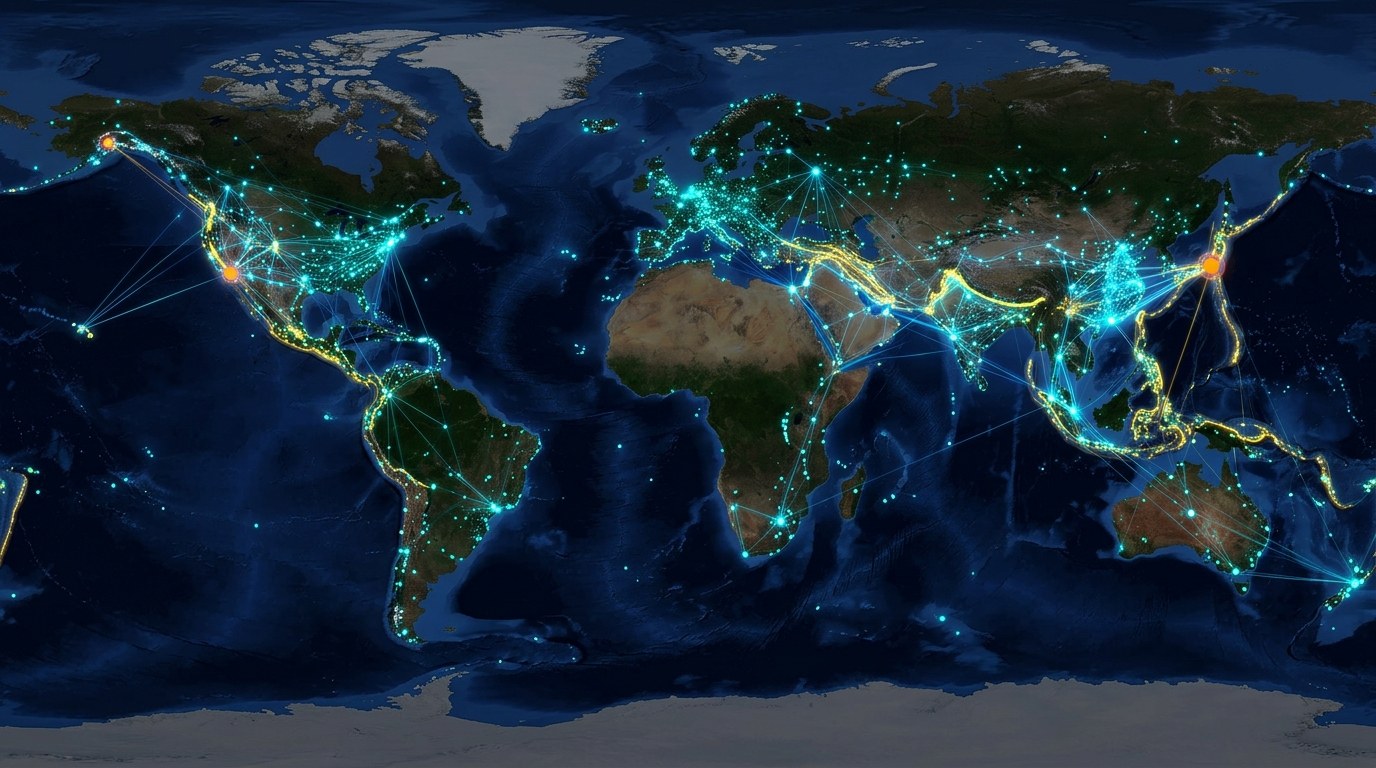
Global M5+ Seismic Activity: Talivio's Weekly Analytical Recap (Oct 11-17, 2026)
Talivio AI presents its weekly analytical recap of global M5+ seismic events from October 11-17, 2026. This period saw notable activity in key tectonic regions, with our monitoring systems identifying specific patterns and informing continuous model updates. We delve into significant tremors and the AI methodologies applied.

The b-Value: A Critical Seismic Statistic for Advanced Earthquake Forecasting with Talivio AI
The seismic b-value, derived from the Gutenberg-Richter law, quantifies the relationship between earthquake magnitude and frequency. It's a vital indicator of stress accumulation and fault behavior, integrated into Talivio AI's advanced forecasting models.
Your Report: 5-Page Professional PDF
Frequently asked questions
Is this a guaranteed earthquake prediction?
Where does the data come from?
How is accuracy measured?
What does a risk report include?
Which regions are covered?
Location Reports
Street-Level Seismic Intelligence
One complete seismic risk analysis for your exact location — 5 magnitude bands, 5 time horizons, fault map, and historical catalog.
Get Your Report — €5This system provides statistical probability forecasts. Earthquake time, location and magnitude cannot be precisely predicted scientifically. Probabilities are based on historical patterns and physical models; they do not imply certainty.